Mr. Gamfield
Oliver TwistMr. Gamfield, a chimney sweep, is a minor but memorable figure in Oliver Twist, representing the brutal exploitation of parish apprentices. His attempt to acquire Oliver as an apprentice nearly succeeds, and his character serves as a stark illustration of the dangers that awaited pauper children under the Poor Law. The episode underscores the systemic cruelty that Oliver must navigate and the precariousness of his early life.
Identity and Introduction
Mr. Gamfield is introduced as a chimney sweep deeply in debt, "cogitating in his mind his ways and means of paying certain arrears of rent" . He is a coarse, violent man, as shown by his treatment of his donkey: he "bestowed a blow on his head, which would inevitably have beaten in any skull but a donkey's" and later gives it "another blow on the head, just to stun him till he came back again" . His appearance is villainous, with a "villainous countenance" that is "a regular stamped receipt for cruelty" . He speaks in a rough dialect, referring to his trade as a "right pleasant trade, in a good 'spectable chimbley-sweepin' bisness" .
Attempt to Apprentice Oliver
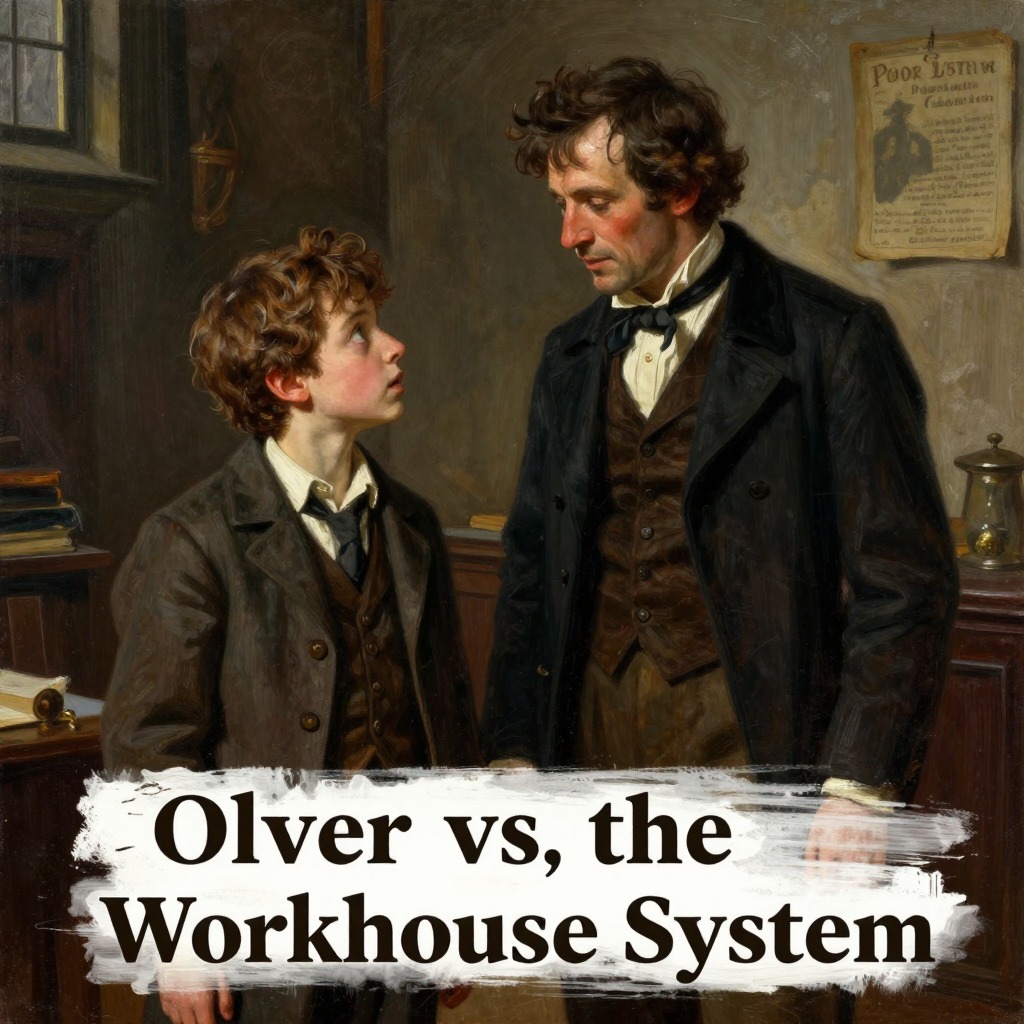
When Mr. Gamfield sees the parish's advertisement offering five pounds to anyone who would take Oliver Twist off their hands, he immediately recognizes an opportunity. The gentleman in the white waistcoat, who has predicted Oliver will be hanged, sees Gamfield as "exactly the sort of master Oliver Twist wanted" . Gamfield, for his part, knows that Oliver, having been fed on workhouse gruel, "would be a nice small pattern, just the very thing for register stoves" . During the negotiation with the board, he defends his trade's dangers by arguing that a "good hot blaze" is the most effective way to make a boy come down a chimney, claiming it is "humane too" because it makes them "struggle to hextricate theirselves" . The board, despite knowing Gamfield has "bruised three or four boys to death already" , ultimately bargains him down from the five-pound premium to three pounds ten shillings, and the indentures are nearly signed .
Oliver's Escape and Aftermath
Oliver's fate is averted only by chance. The half-blind magistrate, about to sign the indentures, happens to look up and see Oliver's "pale and terrified face" and his "mingled expression of horror and fear" . Oliver falls to his knees and begs to be sent back to the dark room, starved, beaten, or killed rather than go with "that dreadful man" . The magistrate refuses to sanction the indentures, and Oliver is returned to the workhouse. That evening, the gentleman in the white waistcoat reaffirms his belief that Oliver will be hanged, and Mr. Gamfield expresses the wish that Oliver "might come to him" . The next morning, the advertisement is renewed, offering five pounds to anyone who will take Oliver .
Narrative Role and Significance
Mr. Gamfield functions as a threshold guardian in Oliver's journey, representing a fate worse than the workhouse. His character is a flat, Dickensian type, embodying the cruelty and greed of those who exploited the parish apprentice system. The near-miss of his apprenticeship is a pivotal moment, demonstrating the arbitrary nature of Oliver's survival and the pervasive danger that surrounds him. The episode also serves as a sharp satire of the Poor Law, where the board is willing to hand over a child to a known abuser for a few pounds. Gamfield's later mention in the context of a newspaper advertisement for Oliver and his continued presence in the narrative's background reinforces the persistent threat of such figures in Oliver's world.