
Mr. Collins's Absurd Character and Marriage
Pride and PrejudiceThe pompous Reverend William Collins, heir to Longbourn, provides comic relief while also illustrating the absurdities of social climbing and the economic pressures on women.
increasing Bearing strength in each event
 decreasing
Bearing strength in each eventdecreasingThe Letter of Reconciliation
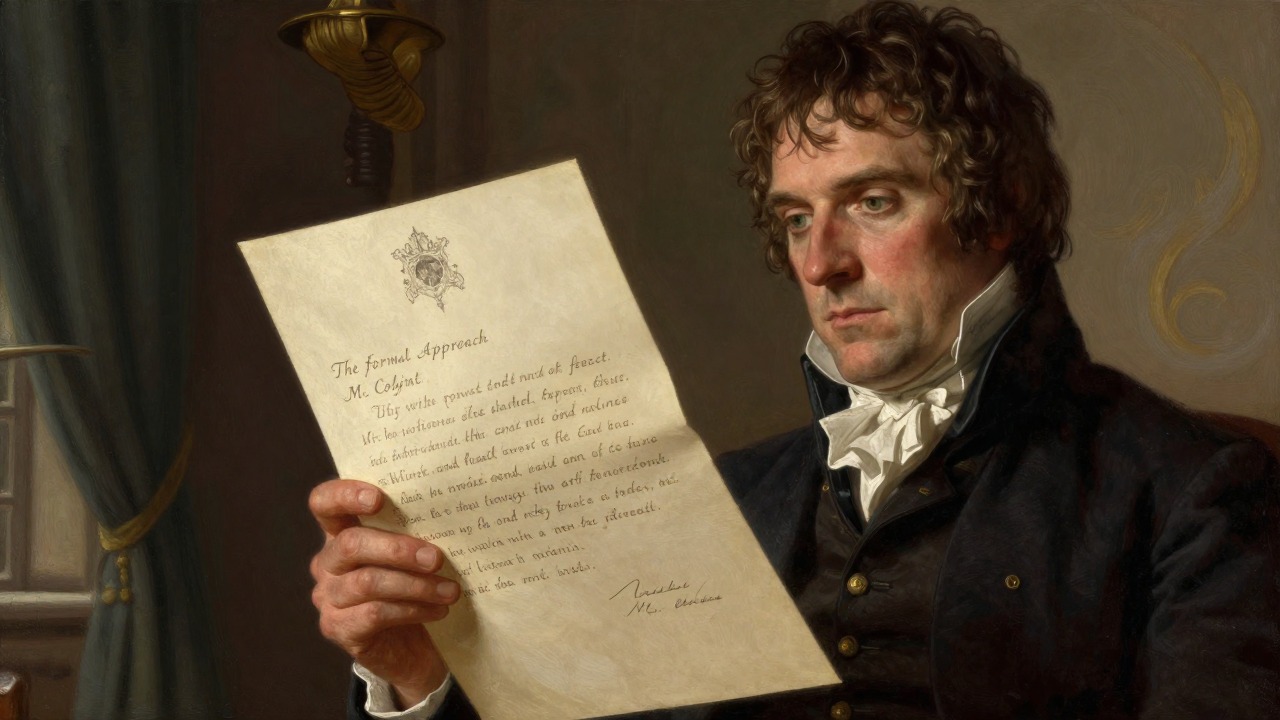
The Letter of Reconciliation
The Formal Approach
Mr. Collins writes a letter to Mr. Bennet, proposing to heal the family rift. The letter is a masterpiece of obsequious pomposity, filled with compliments to Lady Catherine and self-important references to his own position. Mr. Bennet reads it aloud to the family with amusement.
The Family's Reaction
Mrs. Bennet is initially hostile, but Collins's mention of his intention to marry one of the daughters softens her. Elizabeth is struck by his deference to Lady Catherine and his absurd formality. The letter sets the tone for Collins's character: a mixture of servility and self-importance.
The Arrival
Collins arrives and is exactly as his letter promised: tall, heavy-looking, and formal. He compliments the house and the daughters, and begins his campaign to secure a wife.
The Proposal to Elizabeth
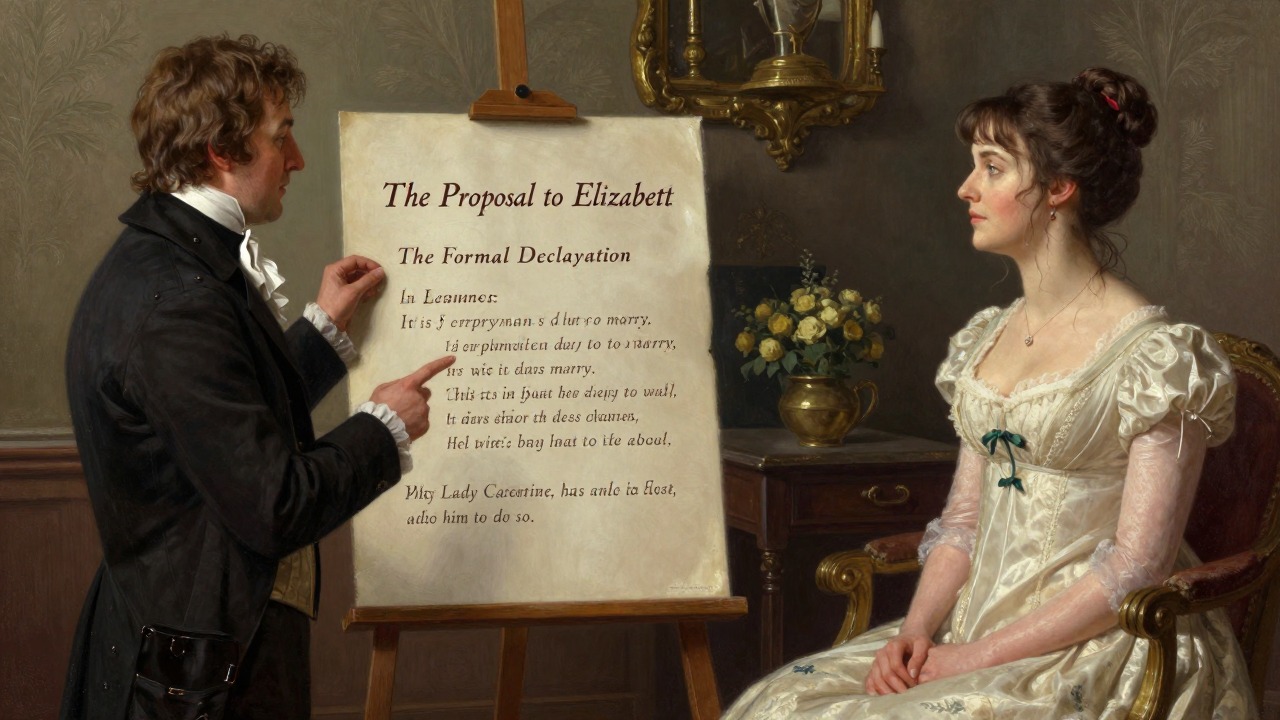
The Proposal to Elizabeth
The Formal Declaration
Mr. Collins, after deciding to marry Elizabeth, makes his proposal in a formal, rehearsed speech. He lists his reasons: it is a clergyman's duty to marry, he thinks it will add to his happiness, and Lady Catherine has advised him to do so. He also notes that he is doing the Bennet family a favor by taking one of the daughters off their hands.
Elizabeth's Refusal
Elizabeth refuses him politely but firmly. Collins, however, cannot believe she is serious. He assumes that her refusal is a form of female modesty and that she will eventually accept. He persists, even after she makes her rejection clear.
The Aftermath
Mrs. Bennet is furious and tries to force Elizabeth to accept. Mr. Bennet, however, supports Elizabeth's choice. Collins, humiliated but still self-absorbed, quickly transfers his affections to Charlotte Lucas. The proposal scene is both comic and revealing, showing Collins's lack of self-awareness and the economic desperation that drives marriage decisions.
Marriage to Charlotte Lucas
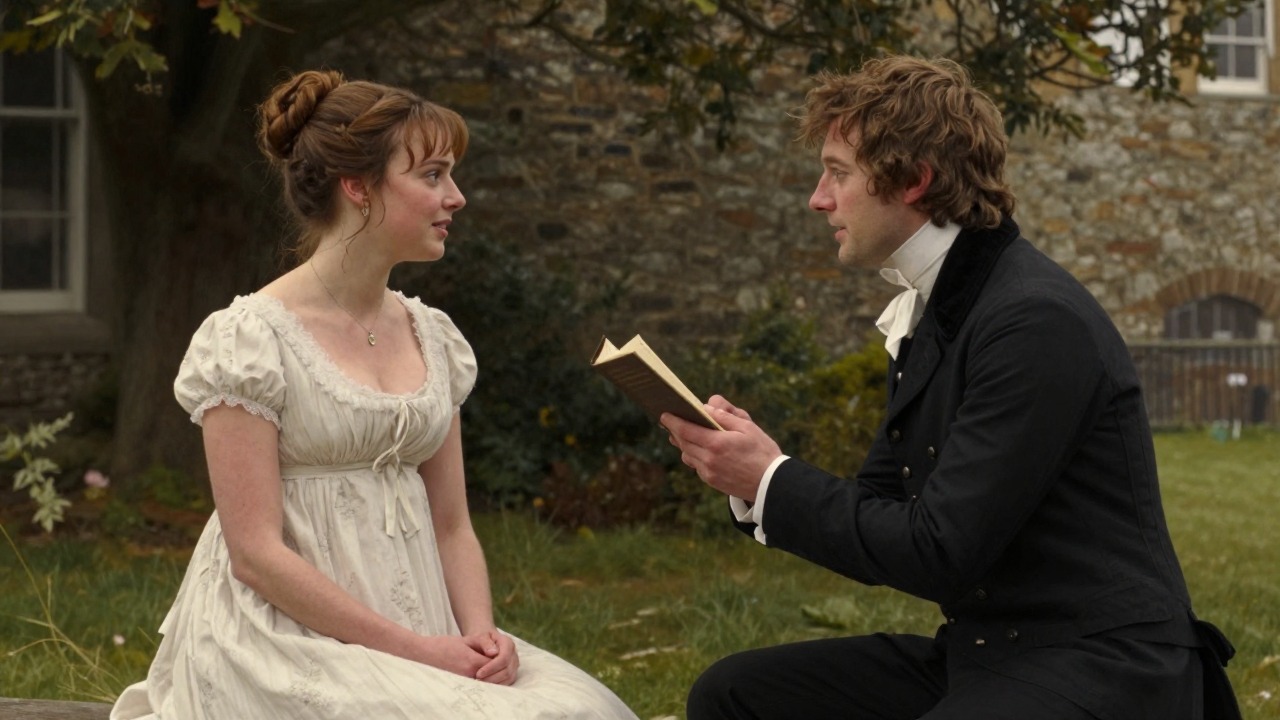
Marriage to Charlotte Lucas
The Swift Courtship
After Elizabeth's refusal, Collins quickly proposes to Charlotte Lucas, who accepts him on the same day. Charlotte's motives are purely practical: she wants a comfortable home and security. Collins is overjoyed, and the marriage is arranged with astonishing speed.
The Wedding and Honeymoon
Collins and Charlotte are married and settle at Hunsford. Charlotte manages the household and tolerates her husband's absurdities. She creates a separate life for herself, spending time in her own room and encouraging Collins to work in the garden.
Elizabeth's Visit
Elizabeth visits the Collinses at Hunsford and sees firsthand the reality of Charlotte's compromise. The house is neat, but the conversation is tedious. Charlotte seems content, but Elizabeth feels that her friend has sacrificed too much. The marriage is a stark illustration of the novel's themes: the difference between marrying for love and marrying for security.
Collins's Obsequiousness to Lady Catherine
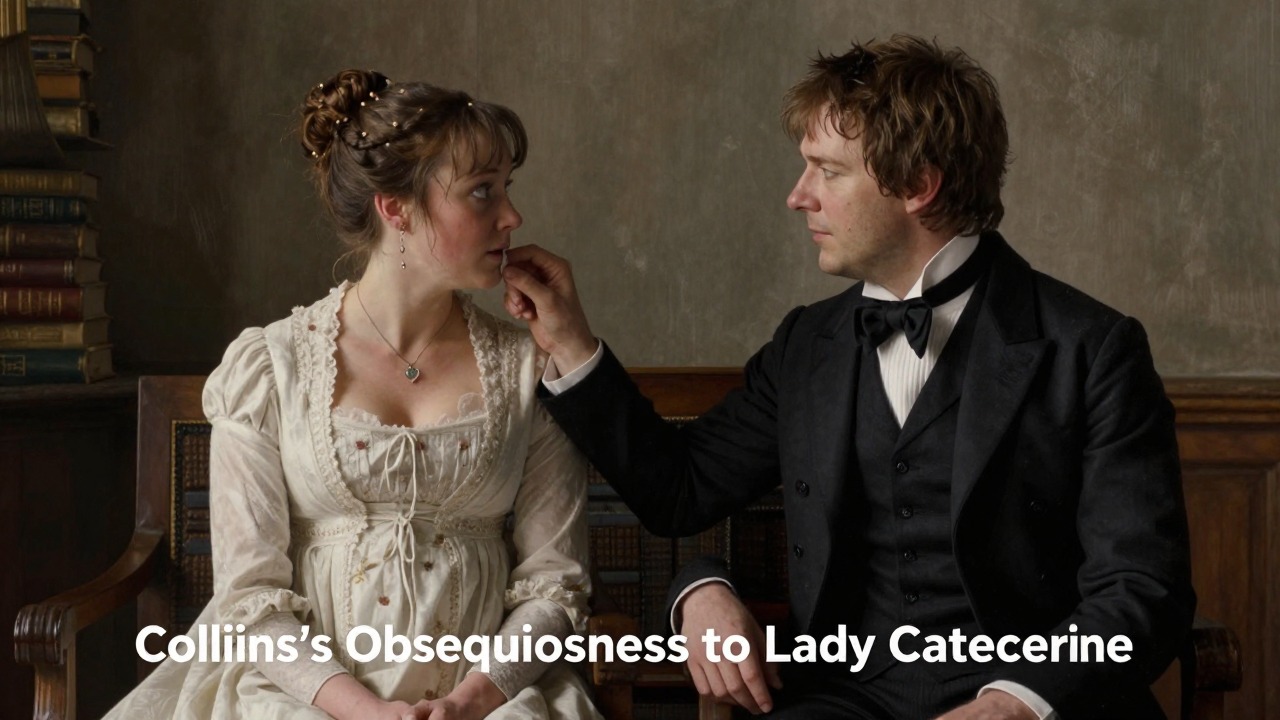
Collins's Obsequiousness to Lady Catherine
The Patroness Worship
At Hunsford, Collins constantly praises Lady Catherine and defers to her every whim. He is eager to please her, and he sees his relationship with her as the greatest honor of his life. Elizabeth is amused and disgusted by his sycophancy.
The Dinner at Rosings
Collins is at his most ridiculous at Rosings, where he fawns over Lady Catherine, agrees with everything she says, and thanks her for every small favor. His behavior is a parody of the social climbing that Austen criticizes.
The Contrast with Darcy
Collins's servility contrasts sharply with Darcy's pride. Darcy is also connected to Lady Catherine, but he maintains his dignity. Collins's character highlights the absurdity of blind deference to rank and wealth, a theme that runs throughout the novel.
Collins's Letter of Condolence
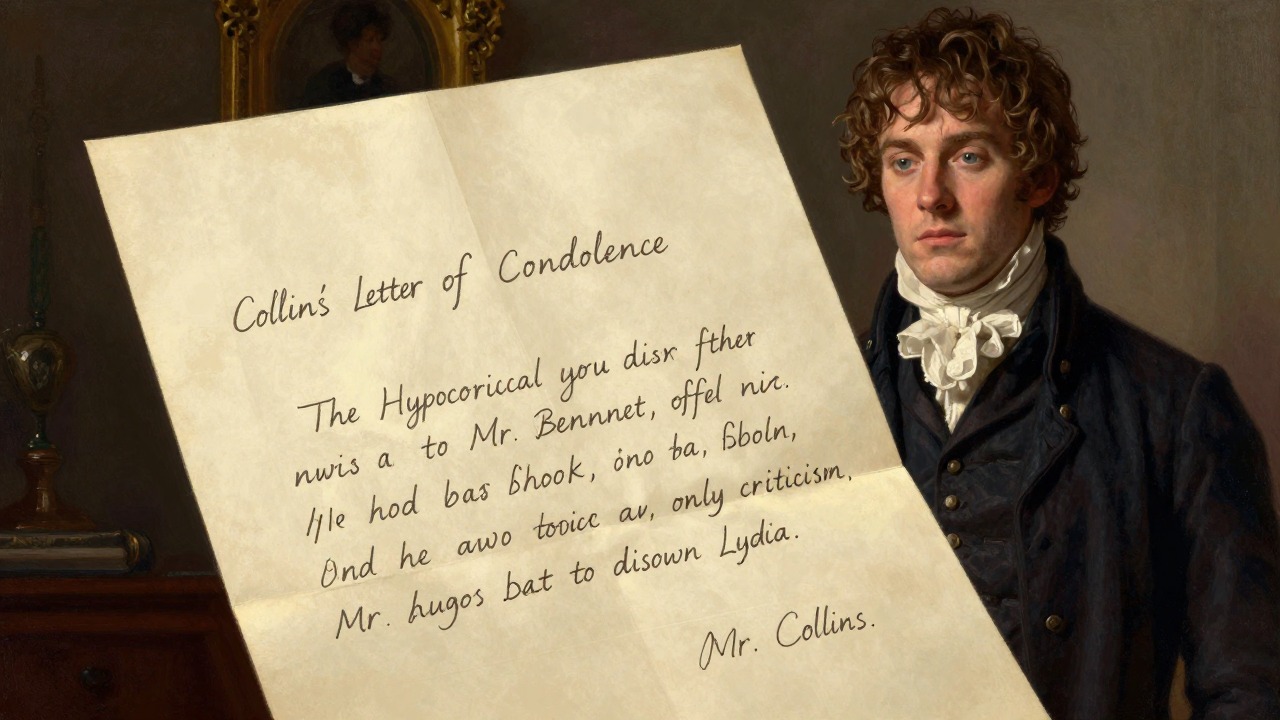
Collins's Letter of Condolence
The Hypocritical Condolence
When news of Lydia's elopement reaches Hunsford, Mr. Collins writes a letter to Mr. Bennet expressing his shock and disapproval. He offers no help, only criticism, and he advises Mr. Bennet to disown Lydia. The letter is a model of self-righteousness and lack of compassion.
The Family's Reaction
Jane reads the letter aloud to Elizabeth. They are both angered by Collins's coldness. Elizabeth notes that Collins is more concerned with the family's reputation than with their actual distress. The letter reinforces the sense that the Bennets are surrounded by people who care more about social standing than about them.
The Final Irony
Collins's letter also warns that the scandal will hurt the other sisters' chances of marriage. This proves ironic, as both Elizabeth and Jane will marry well despite the scandal. Collins's narrow-mindedness is contrasted with the generosity of Darcy, who actually helps the family.
Collins's Congratulations on Elizabeth's Marriage
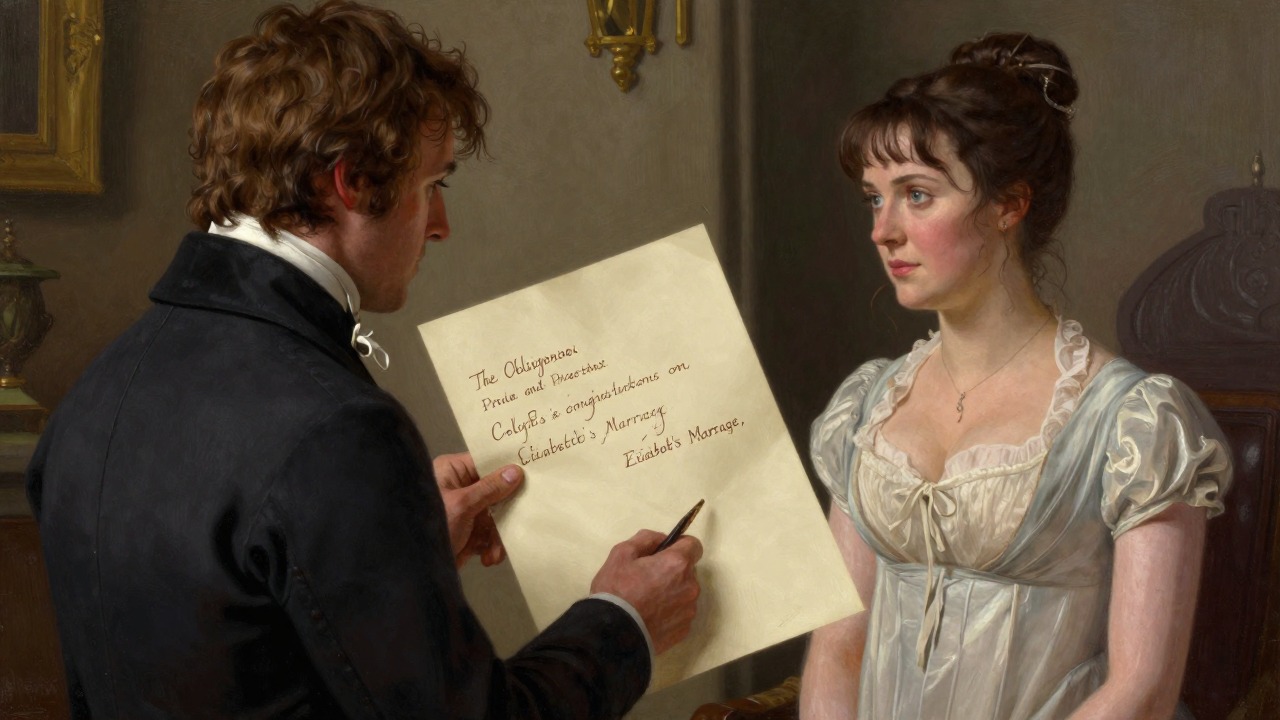
Collins's Congratulations on Elizabeth's Marriage
The Obligatory Letter
When Elizabeth becomes engaged to Darcy, Mr. Collins writes a letter of congratulations. He is now eager to be associated with the wealthy Darcy, and he offers his sincere thanks that Lady Catherine will now be pleased. The letter is a perfect example of his sycophantic nature.
The Change of Tone
Collins's earlier letter had condemned the Bennet family, but now he is all praise. He even suggests that he will come to visit. Elizabeth is amused by his inconsistency. She knows that Lady Catherine is furious, but Collins chooses to ignore that.
The Final Comic Touch
Collins's letter provides a final dose of comedy. His character remains unchanged to the end: pompous, self-serving, and oblivious. He serves as a foil to the more genuine characters, and his presence in the story underscores the novel's critique of social climbing and empty formality.
Before Mr. Collins's first visit to Longbourn
During Mr. Collins's visit to Longbourn
After Collins leaves Longbourn, when he proposes to Charlotte
During Elizabeth's stay at Hunsford
After Lydia's elopement
After Elizabeth's engagement to Darcy
