Charlotte Lucas
Pride and PrejudiceCharlotte Lucas, the eldest daughter of Sir William and Lady Lucas, is Elizabeth Bennet's intimate friend and a woman of twenty-seven whose clear-eyed pragmatism about marriage stands in stark contrast to Elizabeth's romantic idealism. Described as a "sensible, intelligent young woman," Charlotte is neither handsome nor wealthy, and she has long understood that for a well-educated woman of small fortune, marriage is not a matter of love but of economic survival. Her defining characteristic is a calm, unillusioned rationality that leads her to treat matrimony as a practical arrangement rather than an emotional destiny.
Identity and Background
Charlotte lives at Lucas Lodge, within a short walk of Longbourn, and her family is particularly intimate with the Bennets. Her father, Sir William Lucas, made a tolerable fortune in trade and rose to knighthood during his mayoralty, after which he retired to the country with a somewhat inflated sense of his own importance. Her mother, Lady Lucas, is a very good kind of woman, not too clever to be a valuable neighbour to Mrs. Bennet. Charlotte herself is described as a "sensible, intelligent young woman, about twenty-seven," and she is Elizabeth's closest confidante. From the earliest chapters, she reveals a worldview shaped by necessity: when Elizabeth expresses confidence that Jane Bennet's guarded manner will protect her from the suspicions of the impertinent, Charlotte replies that a woman who conceals her affection too well may lose the opportunity of fixing the man, adding her famous maxim: "Happiness in marriage is entirely a matter of chance." She believes it is better to know as little as possible of a partner's defects before marriage, a philosophy that directly anticipates her own choice.
Pragmatic Marriage to Mr. Collins
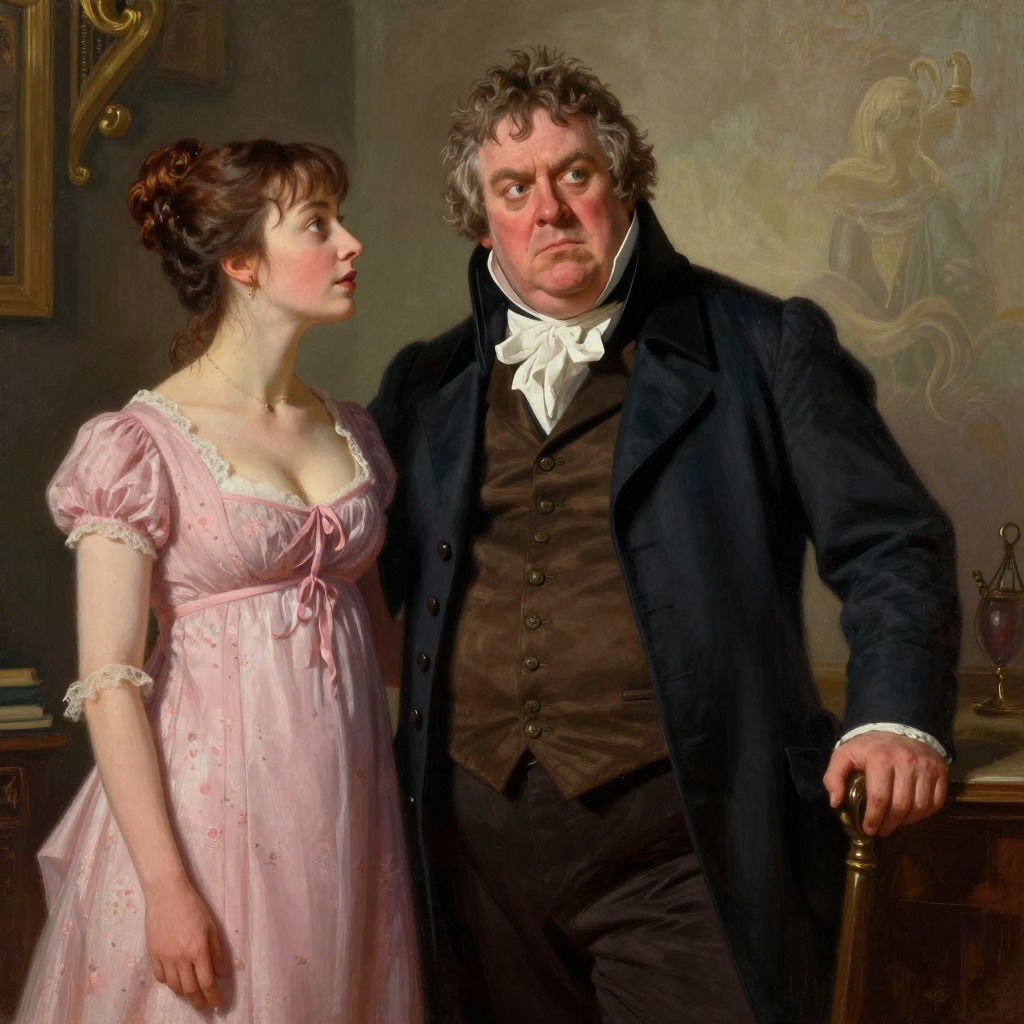
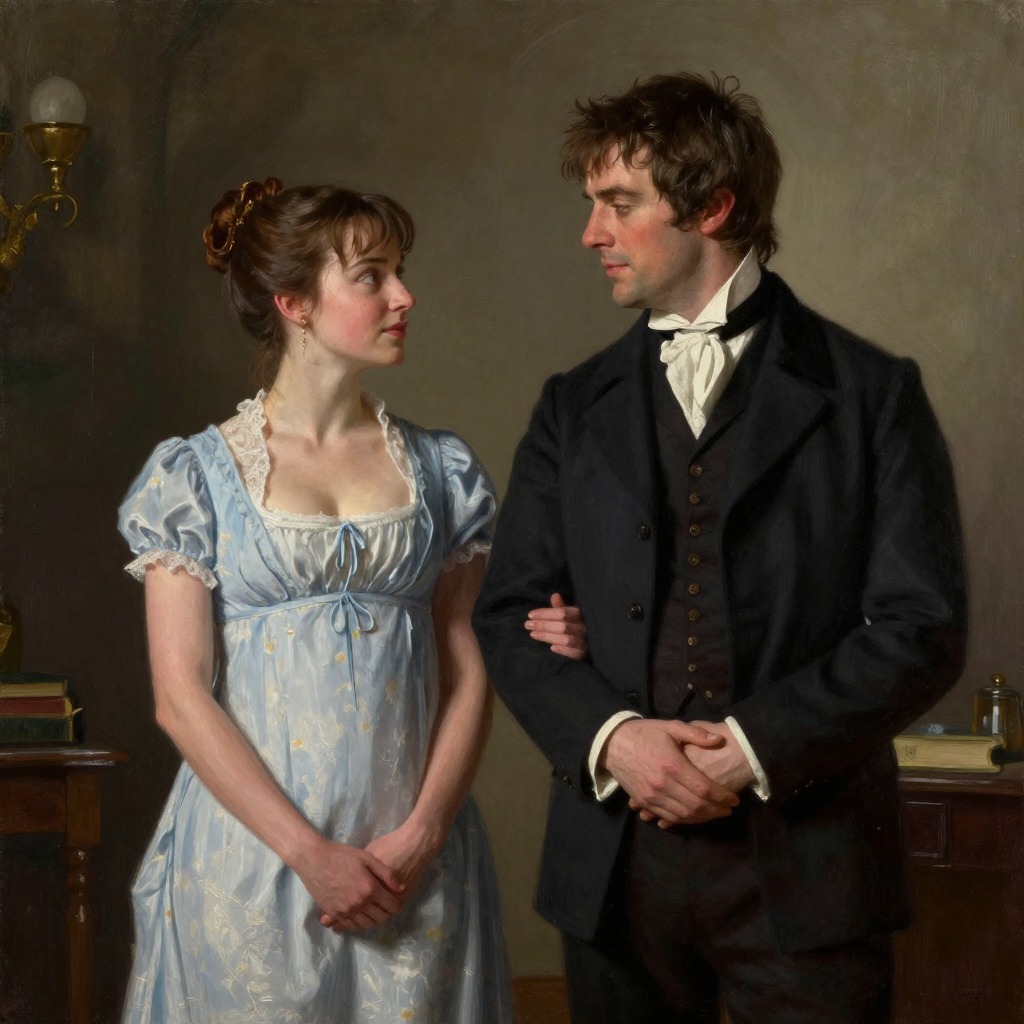
After Mr. Collins's proposal to Elizabeth is decisively refused, Charlotte acts with remarkable speed and calculation. She engages Mr. Collins's attention during his remaining days at Longbourn, listening to him with patient civility while Elizabeth thanks her for keeping him in good humour. Charlotte's scheme is to secure him for herself, and she succeeds: the morning after his departure from Longbourn, he returns to Lucas Lodge and throws himself at her feet. She accepts him "solely from the pure and disinterested desire of an establishment," caring not how soon that establishment is gained. Her parents consent with joyful alacrity, calculating how many years Mr. Bennet is likely to live. Charlotte herself is tolerably composed: she has gained her point. Without thinking highly of men or matrimony, marriage has always been her object, and at twenty-seven, without ever having been handsome, she feels all the good luck of it. The least agreeable circumstance is the surprise it must occasion to Elizabeth, whose friendship she values beyond that of any other person.
Friendship with Elizabeth Bennet
Elizabeth's reaction to Charlotte's engagement is one of profound shock and disappointment. She cries out, "Engaged to Mr. Collins! My dear Charlotte—impossible!" and later reflects that Charlotte has sacrificed every better feeling to worldly advantage. The marriage strikes Elizabeth as a "most humiliating picture," and she is convinced that her friend cannot be tolerably happy in the lot she has chosen. Charlotte, for her part, defends her decision with characteristic composure: "I am not romantic, you know; I never was. I ask only a comfortable home." The friendship between them is permanently altered. Elizabeth feels that no real confidence can ever subsist between them again, and their correspondence, though regular, is never again unreserved. When Elizabeth visits the Collinses at Hunsford, she observes Charlotte's management of her husband with a mixture of admiration and pity: Charlotte wisely does not hear when Mr. Collins says something of which she might reasonably be ashamed, and she encourages his gardening as a way to keep him occupied. Elizabeth gives Charlotte credit for arranging the sitting-room so that Mr. Collins prefers his own book-room, thus sparing the ladies his constant company.
Life at Hunsford and Relationship with Lady Catherine
As Mrs. Collins, Charlotte settles into a life of domestic management at the Hunsford Parsonage, a small but well-built and convenient house that she has arranged with neatness and consistency. She dines at Rosings twice a week and endures the constant interference of Lady Catherine de Bourgh, who examines into her employments, finds fault with the arrangement of her furniture, and advises her on the management of her cows and poultry. Charlotte bears all this with equanimity, describing Lady Catherine as "a very respectable, sensible woman indeed, and a most attentive neighbour." Elizabeth perceives that Charlotte's evident enjoyment of her home depends on Mr. Collins being often forgotten, and she admires her friend's address in guiding and composure in bearing with her husband. Charlotte's contentment is real within its limits: her home, her housekeeping, her parish, and her poultry have not yet lost their charms.
Thematic Significance
Charlotte Lucas embodies the economic logic that governs marriage for women of limited means in Regency England. Her choice is neither foolish nor wicked but a rational calculation made visible: she secures a comfortable home and financial security in exchange for enduring a husband she cannot respect. Elizabeth's horror at the match reflects her own romantic idealism, but the novel does not condemn Charlotte. Instead, Charlotte's pragmatism serves as a foil to Elizabeth's journey, illustrating the very real pressures that make Elizabeth's eventual refusal of Mr. Collins—and her later acceptance of Mr. Darcy on her own terms—acts of genuine moral courage. Charlotte's marriage also deepens the novel's critique of a social system in which a woman's only respectable provision is matrimony, and in which a sensible woman must choose between poverty and a companion she cannot esteem.