George Wickham
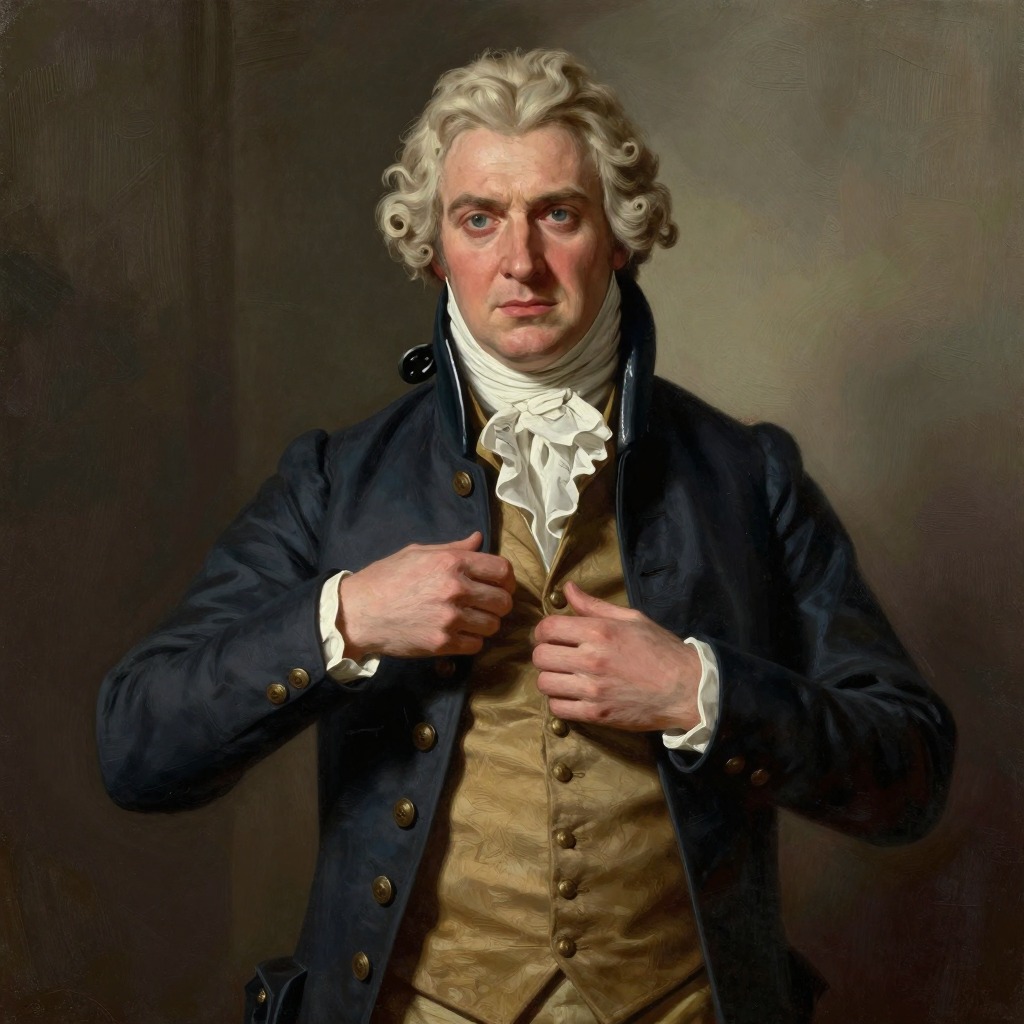
Pride and PrejudiceGeorge Wickham enters the novel as a figure of almost irresistible charm, a young man whose handsome countenance, pleasing address, and easy manners immediately captivate the society of Meryton. He is introduced walking with Mr. Denny, an officer of the militia regiment newly quartered in the neighbourhood, and his appearance is so striking that Kitty and Lydia Bennet, already eager for any connection to the officers, lead their sisters across the street to secure an introduction. Wickham's effect is instantaneous: he has all the best part of beauty, a fine countenance, a good figure, and a very pleasing address, and his conversation is marked by a happy readiness that is both correct and unassuming. Elizabeth Bennet, who has already formed a strong dislike for Darcy, is particularly drawn to him, and the two quickly establish a rapport that will shape much of the novel's early conflict.
False Claims and the Poisoning of Elizabeth's Mind
At a party at Mrs. Phillips's house, Wickham seizes the opportunity to sit beside Elizabeth and, with apparent reluctance, begins to reveal the history of his connection to Darcy. He claims that the late Mr. Darcy, his godfather, was one of the best men who ever breathed and that he was excessively attached to Wickham, bequeathing him the next presentation of the best living in his gift. But when the living fell vacant, Wickham asserts, the present Mr. Darcy chose to disregard his father's will, treating it as a merely conditional recommendation and asserting that Wickham had forfeited all claim by extravagance and imprudence. Wickham attributes Darcy's cruelty to a thorough, determined dislike, which he believes stems from jealousy over the late Mr. Darcy's uncommon attachment to him. Elizabeth, already predisposed to think ill of Darcy, is horrified and declares that Darcy deserves to be publicly disgraced. Wickham, however, adopts a posture of noble restraint, saying that he can never defy or expose Darcy while he still remembers the father's kindness. This performance of injured virtue deepens Elizabeth's trust and her prejudice against Darcy, and she leaves the party with her head full of Wickham, convinced of his goodness and Darcy's villainy.
The Mask Begins to Slip
Wickham's behaviour, however, gradually reveals inconsistencies that Elizabeth, in her initial infatuation, overlooks. He boasts that he has no fear of seeing Darcy and that Darcy may leave the country but he will stand his ground, yet he deliberately avoids the Netherfield ball the very next week, claiming that being in the same room with Darcy for so many hours would be more than he could bear. After the Netherfield family quits the country, Wickham tells his story to everyone, having previously assured Elizabeth that respect for the late Mr. Darcy would always prevent him from exposing the son. His attentions to Miss King, who has just inherited ten thousand pounds, reveal a mercenary streak that Elizabeth's aunt, Mrs. Gardiner, is quick to notice. Elizabeth herself later acknowledges that his apparent partiality to her subsided when a more financially advantageous prospect appeared, and she admits that she was never much in love with him. The final unmasking comes through Darcy's letter, which reveals that Wickham, far from being the victim, had attempted to elope with Darcy's fifteen-year-old sister, Georgiana, for the sake of her thirty-thousand-pound fortune, and that he had accepted three thousand pounds in lieu of the living, only to return years later demanding it again when his circumstances were desperate.
The Elopement and Its Consequences
Wickham's true character is fully exposed when he elopes with Lydia Bennet, the youngest and most reckless of the Bennet sisters, from Brighton. The elopement is not a romantic flight but a calculated act of predation: Wickham, burdened by gaming debts and a reputation for profligacy, has no intention of marrying Lydia. He leaves a trail of debts in Meryton and Brighton, and it is only through the secret intervention of Darcy, who tracks them down, bribes Wickham, and forces him to marry Lydia by paying his debts and purchasing his commission, that any semblance of respectability is salvaged. Even after the marriage, Wickham's behaviour shows no genuine reform. He continues to live extravagantly, moving from place to place in search of cheap lodgings, and his affection for Lydia soon sinks into indifference. He is never received at Pemberley, though Darcy, for Elizabeth's sake, assists him further in his profession. Lydia occasionally visits Pemberley when her husband is away, and the Bingleys find their hospitality so abused by the couple's prolonged stays that even Bingley's good humour is overcome.
Narrative Role and Thematic Significance
Wickham functions as the novel's primary agent of deception and the catalyst for Elizabeth's moral education. His charm and apparent openness embody the danger of judging by appearances, a lesson Elizabeth must learn through painful disillusionment. He is the shadow to Darcy's light: where Darcy is proud but principled, Wickham is amiable but corrupt. His successful manipulation of Elizabeth's prejudice reveals her own fallibility and forces her to confront the limits of her discernment. The elopement with Lydia, meanwhile, exposes the precariousness of female reputation in Regency society and the devastating consequences of parental neglect. Wickham's ultimate fate—a loveless marriage, perpetual financial dependence, and exclusion from the inner circle of Pemberley—serves as a moral counterpoint to the genuine unions of Elizabeth and Darcy and Jane and Bingley, underscoring the novel's central argument that lasting happiness in marriage requires not just attraction but character, principle, and mutual respect.