
The Theme of Panspermia
Project Hail MaryThe novel suggests that life on Earth and Erid may share a common ancestor, seeded by an Astrophage-like organism.
increasing Bearing strength in each event
 decreasing
Bearing strength in each eventdecreasingThe Similarity of Life
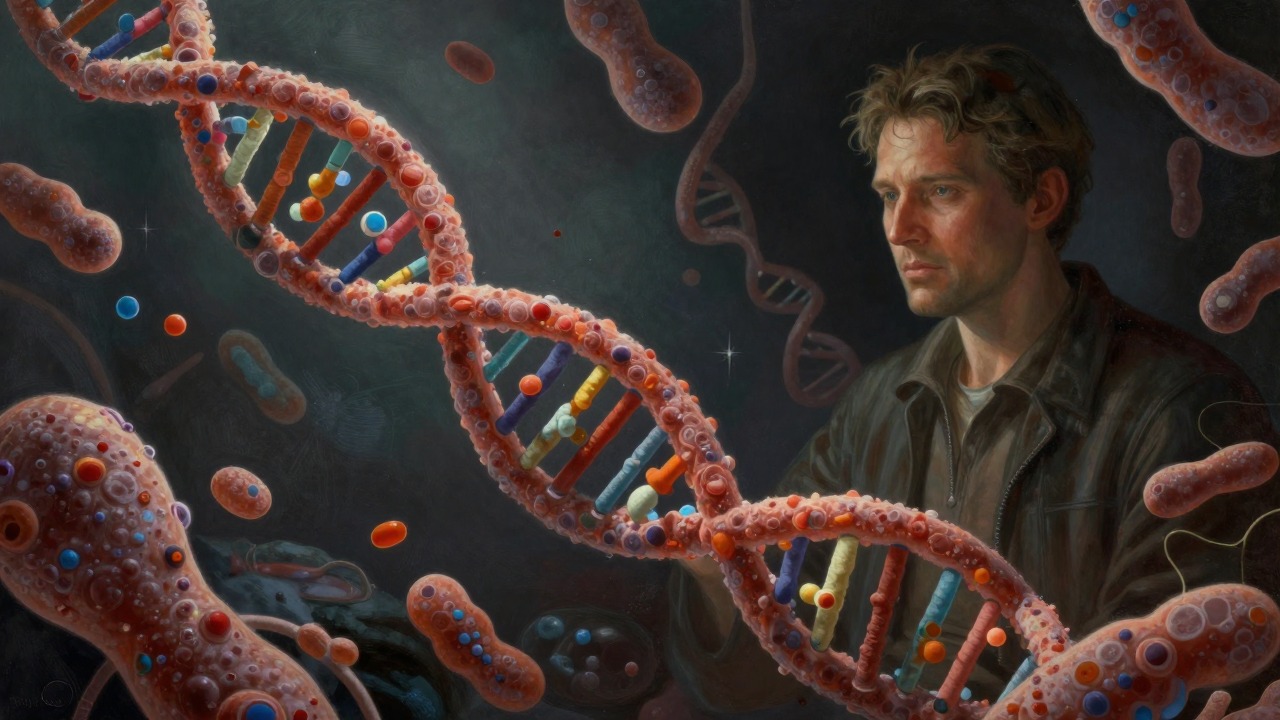
The Common Biochemistry
DNA and Mitochondria
Grace discovers that Astrophage has DNA, mitochondria, and uses ATP, just like Earth life. The similarity is striking. He argues with Dr. Lokken about whether it is independent evolution or panspermia.
The Mitochondrial Comparison
Astrophage mitochondria are 98% identical to Earth mitochondria. Lokken claims it is convergent evolution, but Grace believes it is evidence of a common ancestor. The debate is a central scientific theme.
The Implication
If Earth and Erid share a common ancestor, then life may be widespread in the galaxy. The panspermia theory is supported by the fact that Astrophage can travel between stars. Grace and Rocky's meeting is not a coincidence but a result of a shared biological heritage.
The Family Connection
The Theory Confirmed
Rocky's Insight
Rocky suggests that he and Grace might be 'family' because their life forms are so similar. Grace realizes that the same progenitor species likely seeded both Earth and Erid. The idea is profound.
The Evolutionary Divergence
Despite the common origin, billions of years of evolution have produced vastly different forms. The tree of life on Earth and Erid branched off from a common root. This explains the similarities in biochemistry and the differences in physiology.
The Implications for the Future
If panspermia is common, then the galaxy may be full of life, all related. The discovery of Taumoeba and its ability to adapt to different environments supports this. The novel ends with a sense of wonder about the universe.
During Grace's analysis of Astrophage
During Grace's conversation with Rocky
