
Nekhludoff's Moral Awakening and Redemption
ResurrectionTraces Prince Dmitri Nekhludoff's journey from a dissolute aristocrat to a man awakened by guilt and conscience, seeking to atone for his past sin against Katusha Maslova.
increasing Bearing strength in each event
 decreasing
Bearing strength in each eventdecreasingThe Jury Duty
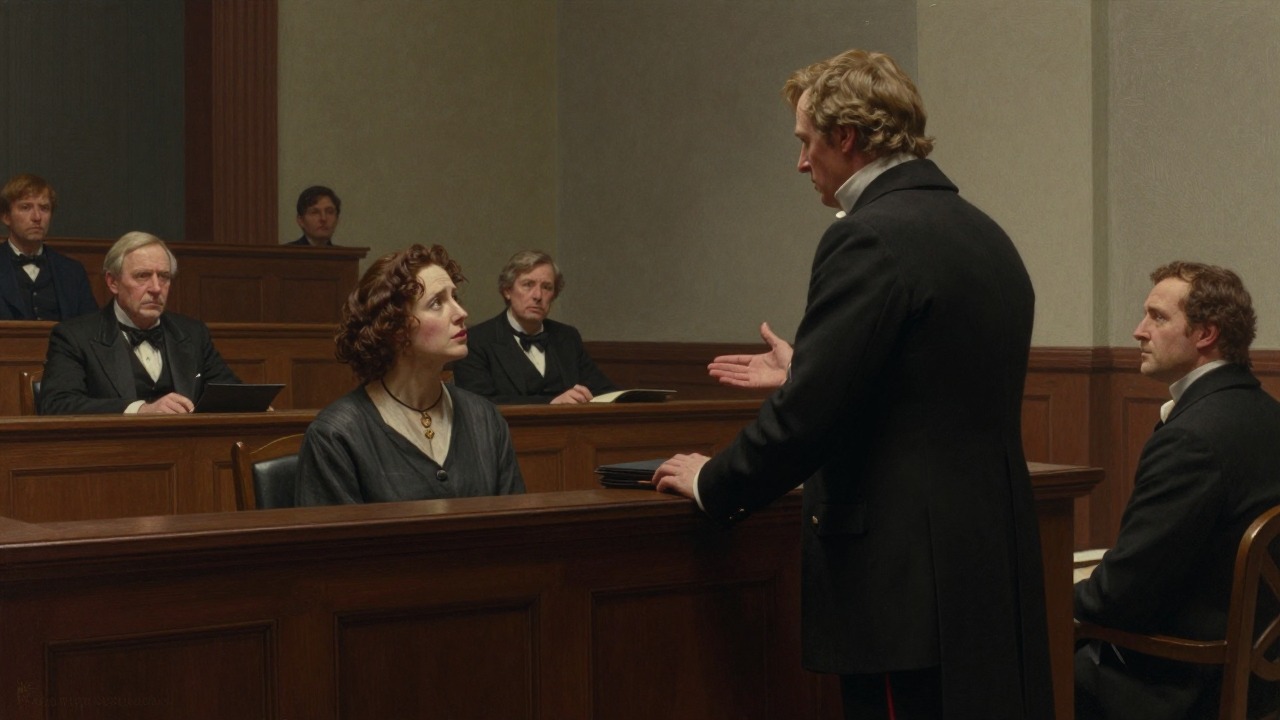
The Jury Duty
The Unexpected Encounter
Prince Dmitri Nekhludoff, a wealthy aristocrat serving on a jury, is shocked to recognize the prisoner Katusha Maslova as the woman he seduced and abandoned years ago. The courtroom is filled with the formalities of justice, but for Nekhludoff, the proceedings become a mirror reflecting his own moral decay.
The Weight of Memory
As the trial unfolds, Nekhludoff is flooded with memories of his innocent love for Katusha and his subsequent betrayal. He realizes that his own actions set her on the path to ruin. The contrast between the sterile courtroom and the vivid, painful past creates a profound inner turmoil.
The First Stirrings of Conscience
Nekhludoff's initial reaction is fear of exposure and shame. Yet, as he watches Maslova's stoic despair, something stirs within him. He begins to understand that his entire life of privilege has been built on the suffering of others, and this recognition marks the beginning of his spiritual awakening.
The Decision to Atone
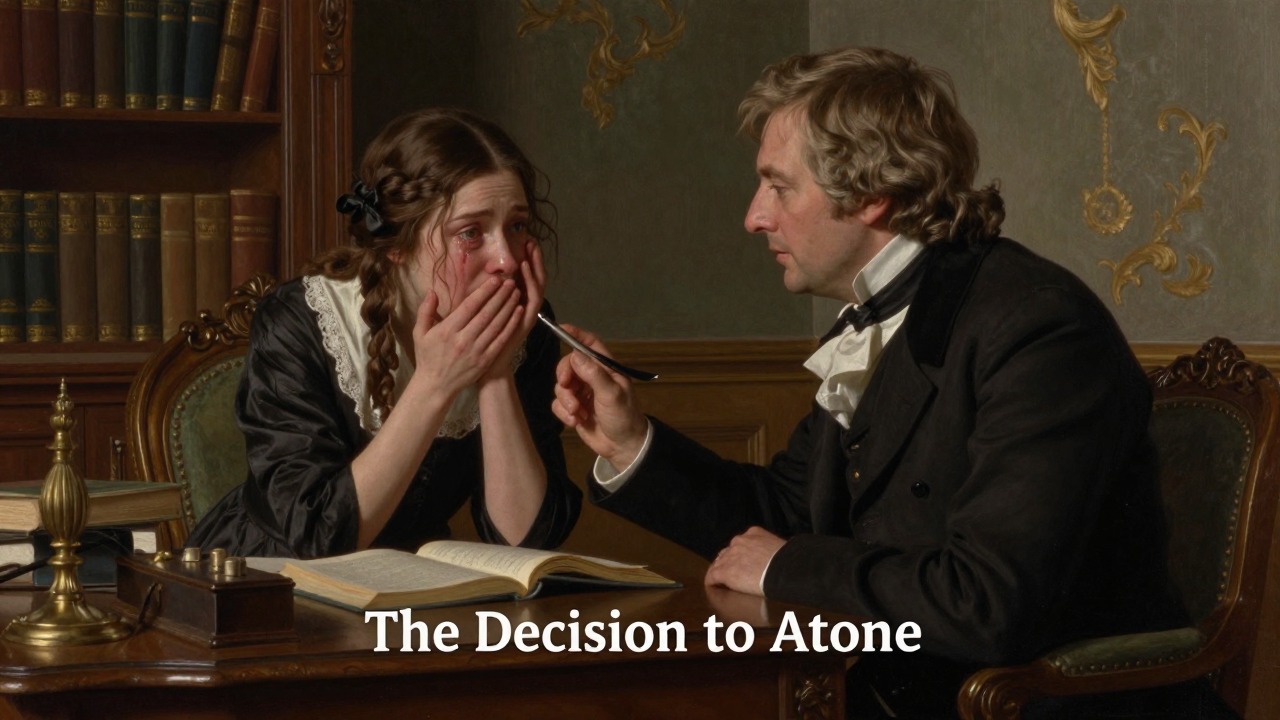
The Decision to Atone
A Night of Reckoning
Returning home, Nekhludoff is haunted by the image of Maslova's tearful face and the injustice of her sentence. He paces his luxurious study, wrestling with the voice of his conscience that demands he take responsibility for his sin. The memory of his youthful idealism clashes with the reality of his current corrupt life.
Confession to the Procureur
The next morning, Nekhludoff resolves to act. He goes to the Procureur's office and confesses his past relationship with Maslova, declaring his intention to marry her. This shocking admission exposes him to ridicule and disbelief, but he feels a strange sense of liberation. The Procureur, though skeptical, grants him a permission to visit the prison.
The First Step
Nekhludoff's decision marks a break from his former life. He begins to see the emptiness of his aristocratic circle and the hypocrisy of the social order. His commitment to follow Maslova to Siberia, if necessary, becomes a fixed point in his new moral universe.
Breaking with the Past
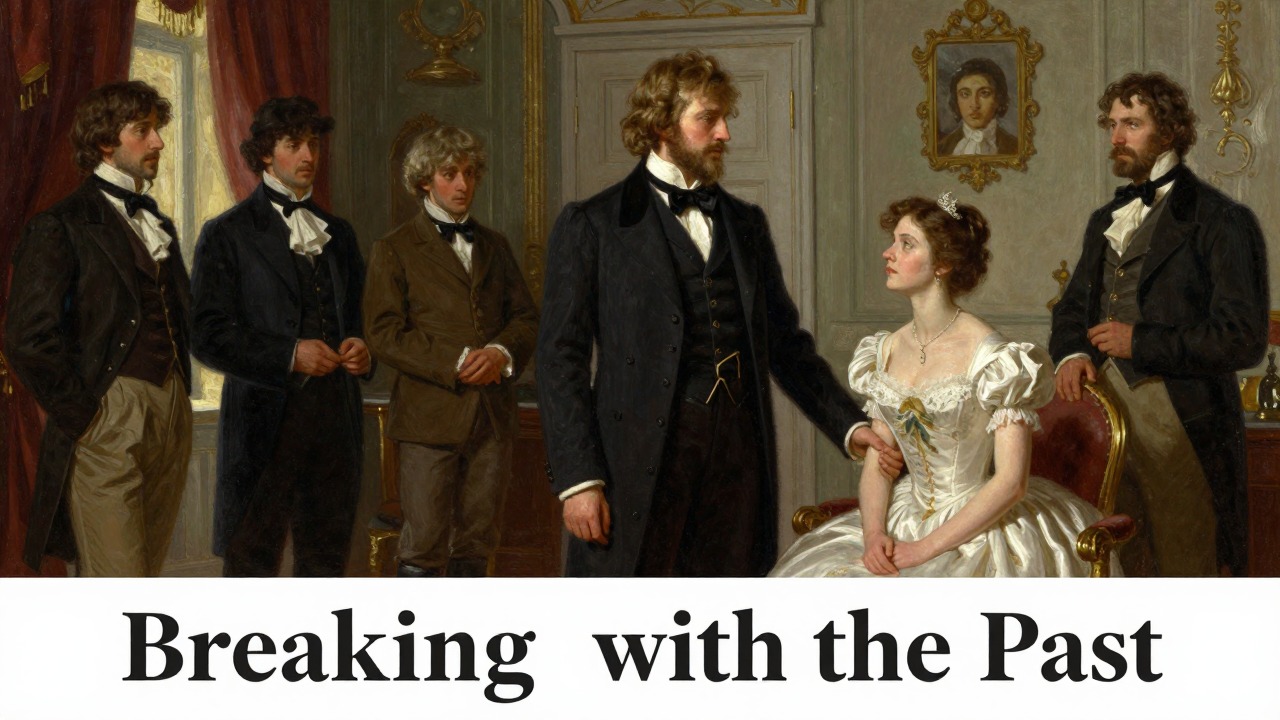
Breaking with the Past
Severing Ties
Nekhludoff begins to dismantle his old life. He dismisses his servants, closes his luxurious house, and breaks off his ambiguous engagement with Princess Missy Korchagin. Each action is a deliberate rejection of the privilege and lies that defined his existence. His sister Nathalie visits, and their conversation reveals the deep rift between his new path and her conventional life.
Confronting the Land Question
Traveling to his estates, Nekhludoff confronts the injustice of land ownership. He decides to give his land to the peasants, following the principles of Henry George. This decision is not merely charitable but a moral imperative, as he recognizes that the poverty of the peasants is directly linked to his own wealth.
The Inner Transformation
With each renunciation, Nekhludoff feels a growing sense of peace and purpose. The 'animal man' that once ruled him gives way to the 'spiritual man'. He begins to see the world through new eyes, feeling compassion for the suffering he once ignored.
The Journey to Siberia
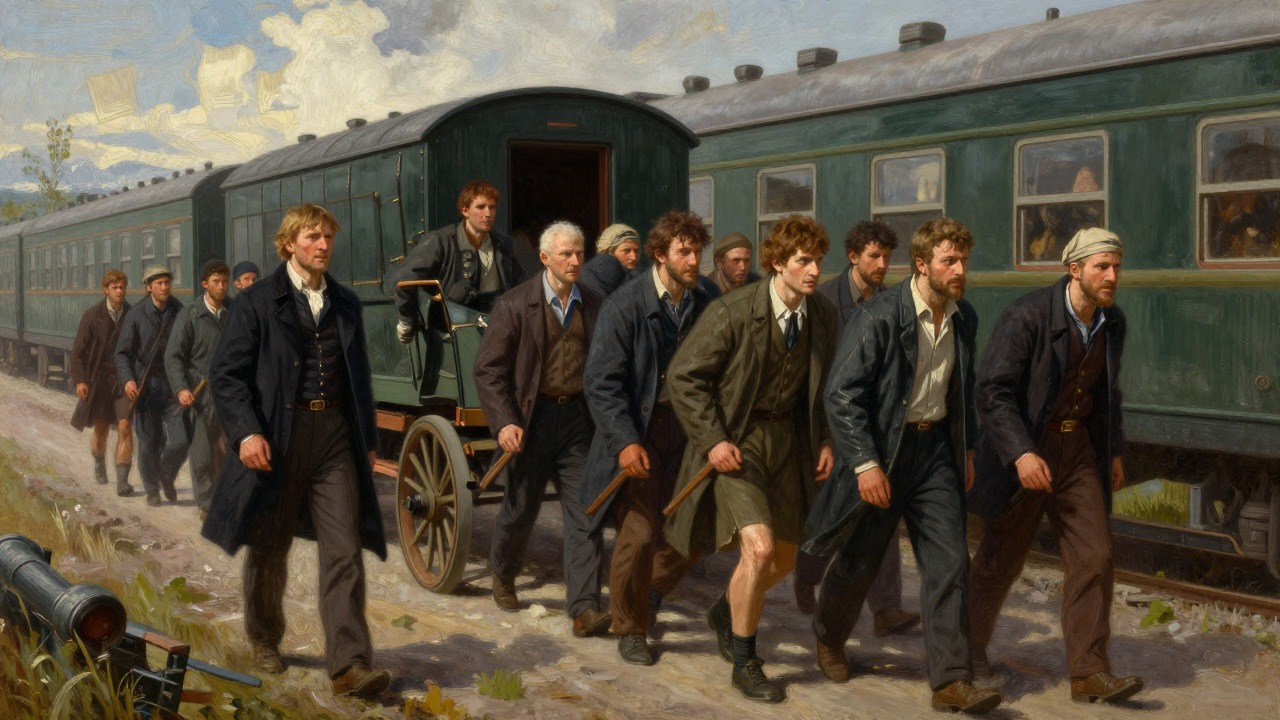
The Journey to Siberia
Following the Convicts
Nekhludoff abandons his comfortable life to follow the gang of prisoners that includes Maslova. He travels by train, cart, and on foot, sharing the hardships of the road. The physical journey mirrors his spiritual pilgrimage, as he witnesses the brutal reality of the penal system.
Encounters with Suffering
On the road, Nekhludoff sees convicts dying of sunstroke, a child separated from her father, and the degradation of prison life. Each encounter deepens his horror and his determination to fight against such injustice. He meets political prisoners, including the dying Kryltzoff, whose story of execution and revolutionary zeal shakes him.
The Meaning of Sacrifice
Nekhludoff's journey is not only about saving Maslova but about saving his own soul. He learns that true love requires sacrifice without expectation of return. The journey strips away his remaining pride and forces him to confront the limits of his own power to change the system.
The Final Release
The Final Release
The Mitigation Arrives
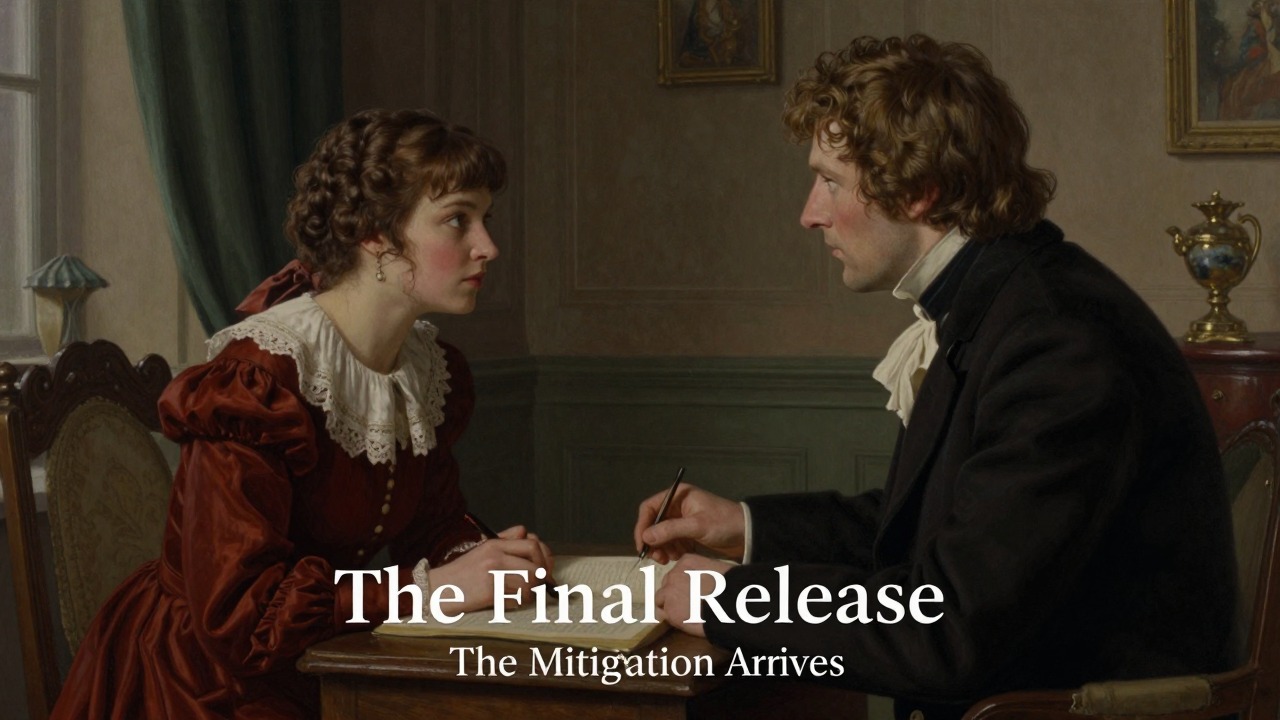
Nekhludoff receives news that Maslova's sentence has been commuted to exile. The petition to the Emperor has succeeded. This is a moment of triumph, but also of complexity, as Maslova has already chosen to stay with Simonson. Nekhludoff must accept that his role in her redemption is not to marry her but to support her choice.
Accepting Her Decision
In a final interview, Maslova tells Nekhludoff that she will go with Simonson. She thanks him but makes it clear that she does not wish to burden him. Nekhludoff realizes that her refusal is not out of hatred but out of love and a desire to set him free. He recognizes the purity of her sacrifice.
A New Dawn
That night, alone in his hotel room, Nekhludoff reads the Gospel and finds the answer to his search for meaning. The five commandments of the Sermon on the Mount become the guiding principles for his new life. He understands that forgiveness and love are the only true remedies for the world's evil. The book ends with the promise of a new beginning, though the path ahead is unknown.
28 April 188-
Evening after the trial
Following days in Moscow
Summer 188-
Near the end of the novel
