
The Trial and Conviction of Maslova
ResurrectionFollows the judicial process that condemns an innocent woman to hard labor, exposing the absurdity and cruelty of the legal system.
increasing Bearing strength in each event
 decreasing
Bearing strength in each eventdecreasingThe Courtroom Assembly
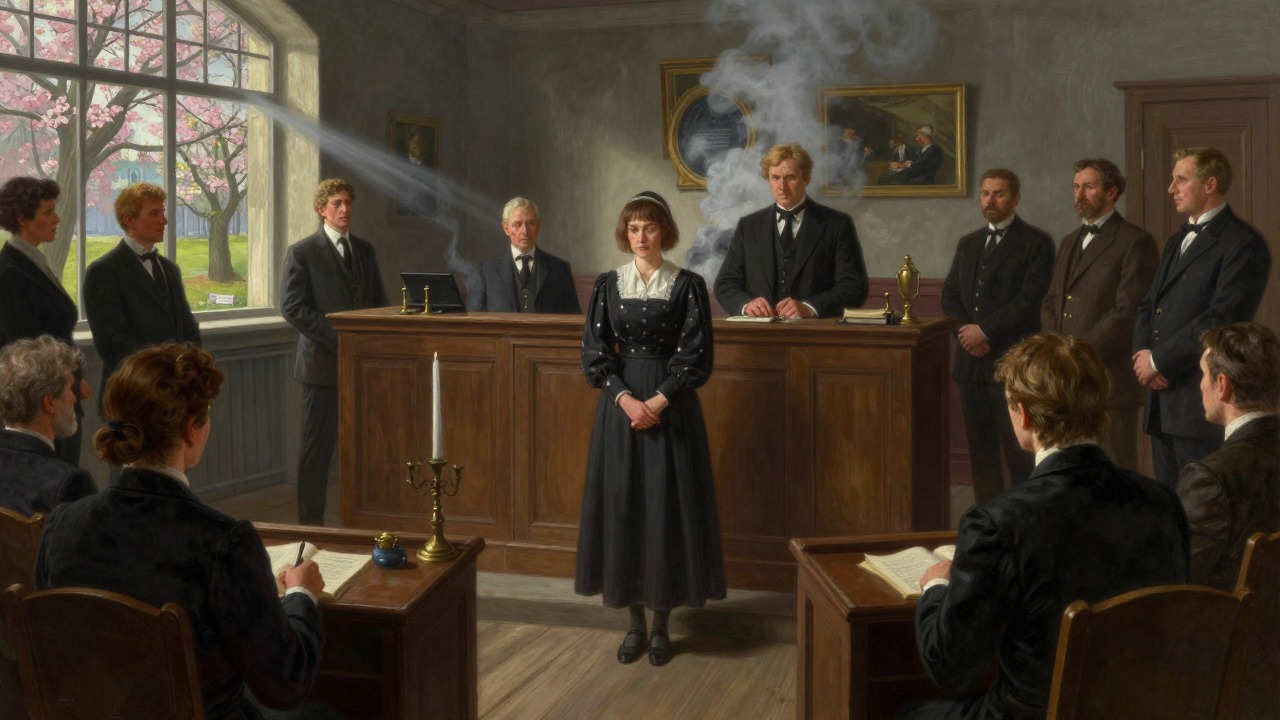
The Courtroom Assembly
The Prisoner Arrives
Maslova, a former prostitute accused of poisoning a merchant, is brought to court. The chapter opens with a vivid contrast between the beauty of spring outside and the stench and oppression inside the prison. The judges and jury, including Nekhludoff, are preoccupied with their own trivial concerns.
The Judges' Indifference
The president of the court is thinking about his mistress; the other judges are distracted by personal quarrels and health worries. The public prosecutor, Breve, is unprepared and seeks a conviction to advance his career. The entire machinery of justice is shown as a farce, driven by vanity and routine rather than truth.
The Reading of the Indictment
The indictment is read in a monotonous drone, detailing the alleged poisoning of the merchant Smelkoff. The document is full of legal jargon but devoid of real evidence. The prisoners—Simeon Kartinkin, Euphemia Botchkova, and Maslova—plead not guilty, but their words are drowned in the formalities.
Cross-Examination
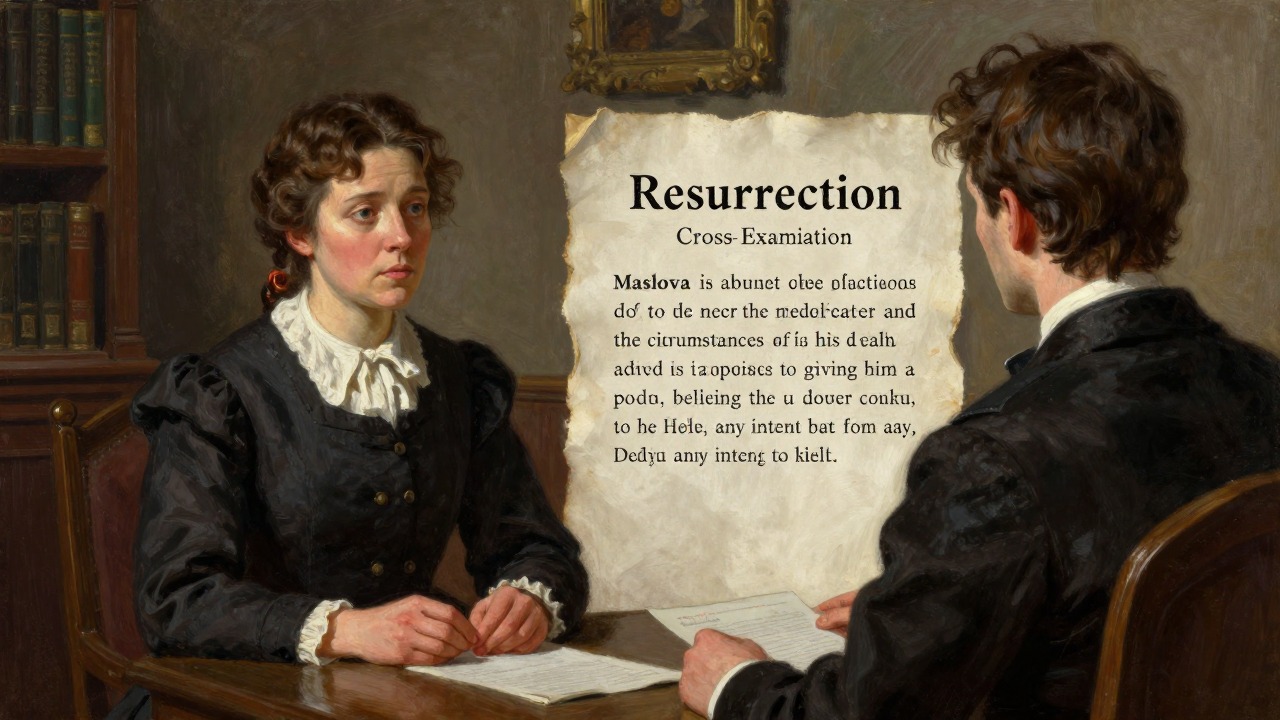
Cross-Examination
Maslova's Testimony
Maslova is questioned about her relationship with the merchant and the circumstances of his death. She admits to giving him a powder, believing it to be a sleeping draught, but denies any intent to kill. Her answers are simple and direct, but the prosecutor twists them into evidence of guilt.
The Prosecutor's Rhetoric
The public prosecutor delivers a speech full of pseudoscientific jargon about heredity and criminal types, painting Maslova as a depraved monster. His eloquence is hollow, but the jury is swayed by his confidence. The defense lawyer, a weak young man, fails to counter the prosecutor's attack.
Nekhludoff's Recognition
During the trial, Nekhludoff gradually realizes that the prisoner is the Katusha he once loved. This recognition shatters his composure. He is torn between the impulse to expose the truth and the fear of his own shame. The trial becomes a personal crucible.
The Jury's Deliberation
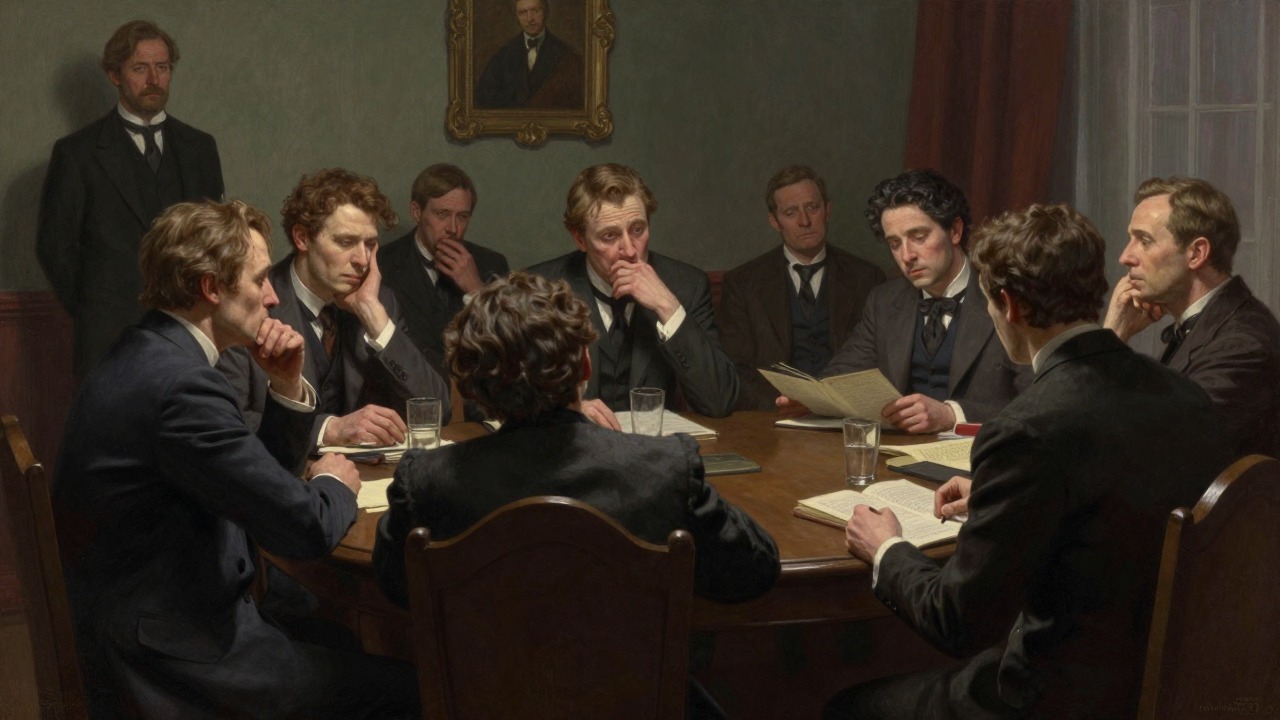
The Jury's Deliberation
Confusion and Fatigue
The jury retires to a smoke-filled room. They are tired, hungry, and eager to finish. The foreman, a pedantic official, tries to impose order, but the discussion is chaotic. The merchant, Baklasheff, sympathizes with Maslova because of her looks, while others are swayed by the prosecutor's arguments.
The Fatal Omission
In their haste, the jury fails to include the crucial phrase 'without intent to cause death' in their verdict. They answer 'guilty' to the charge of poisoning, which automatically condemns Maslova to hard labor. The merchant and a few others object, but they are overruled by fatigue and indifference.
The Verdict Pronounced
When the verdict is read, Maslova cries out in protest. The judges, realizing the error, have the power to correct it but choose not to, fearing criticism. The sentence is pronounced: four years of penal servitude in Siberia. The injustice is done, and the machinery of law grinds on.
The Aftermath in Prison
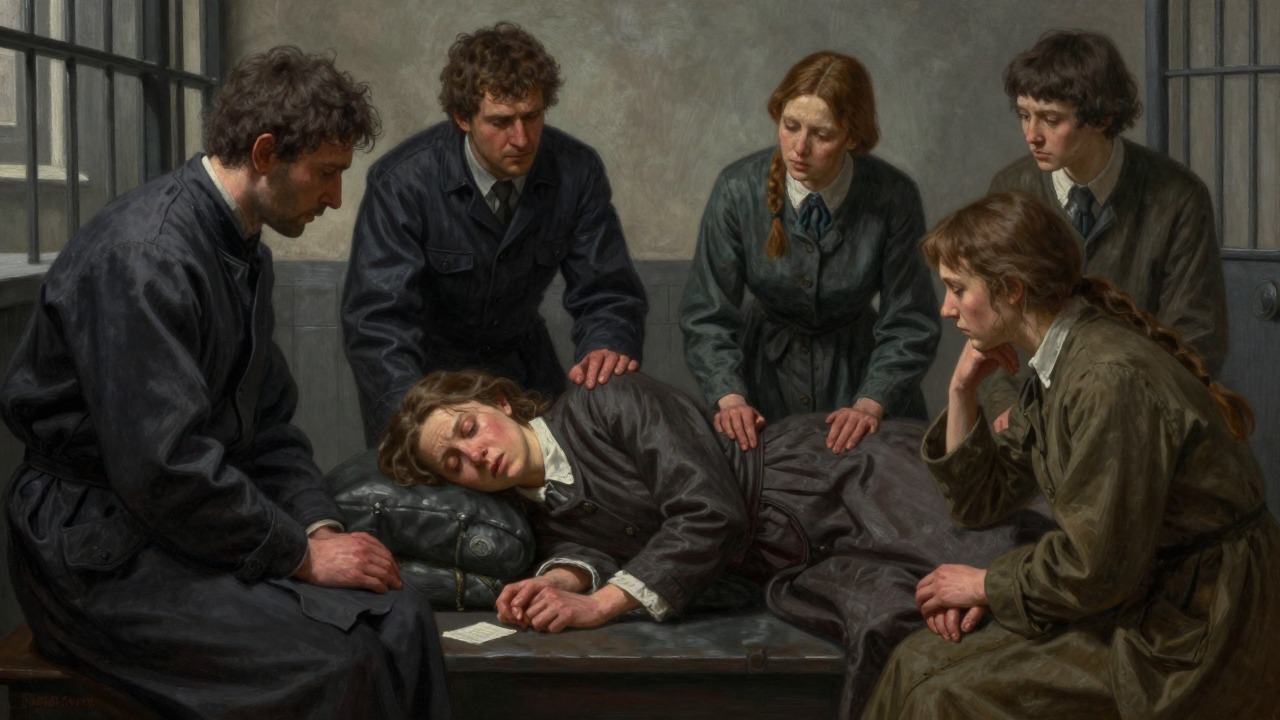
The Aftermath in Prison
Return to the Cell
Maslova is taken back to the prison, exhausted and hungry. She is tormented by the unexpected sentence and the realization that she is now a convict. Her fellow prisoners, including the tough Korableva and the gentle Theodosia, try to comfort her, but she is numb with despair.
The Desire for Oblivion
Maslova uses the money given by Kitaeva to buy vodka and cigarettes. She drinks to forget the pain and the memory of Nekhludoff, whom she partly recognized. The camaraderie of the prison cell offers a brief respite, but the underlying misery is palpable.
The Fight
A quarrel erupts between the red-haired woman and Korableva, leading to a violent scuffle. The warder intervenes, but the tension remains. Maslova lies awake, thinking of escape or death, but eventually succumbs to the numbing effect of alcohol. This night marks the beginning of her long journey through the penal system.
The Appeal to the Senate
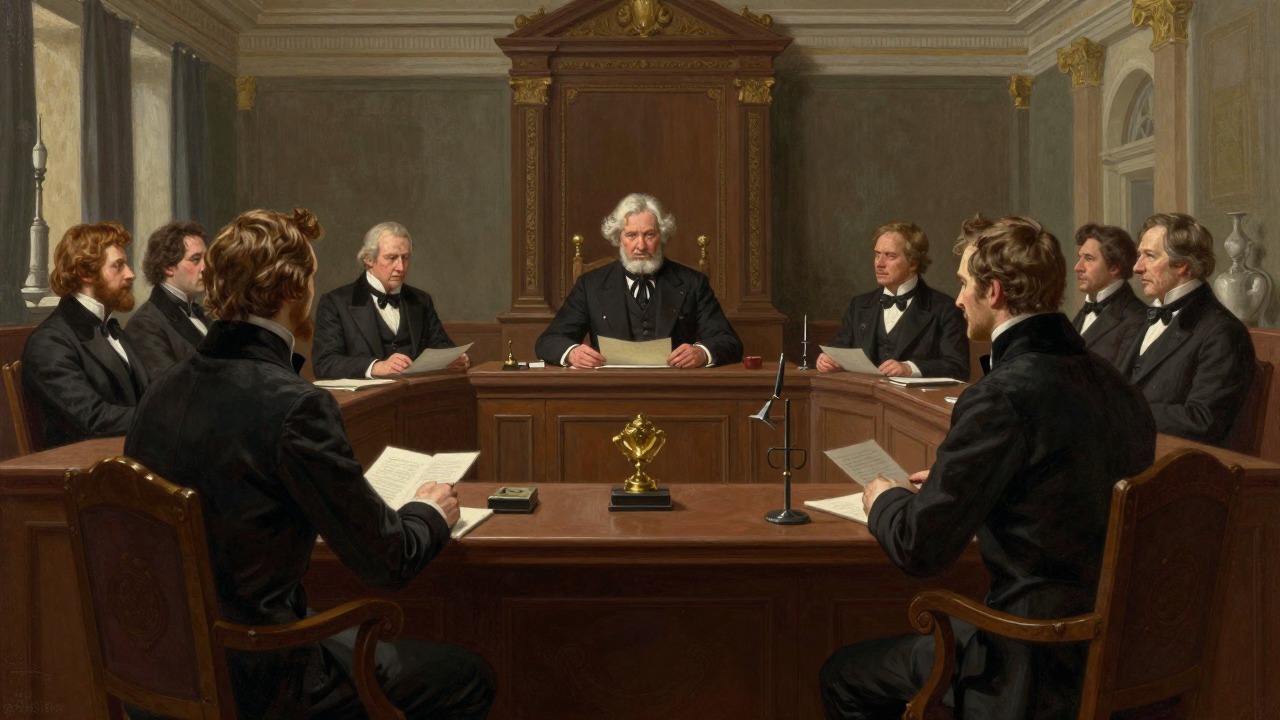
The Appeal to the Senate
Nekhludoff's Efforts
Nekhludoff hires the famous advocate Fanarin to appeal the verdict. The case is brought before the Senate in St. Petersburg. Nekhludoff hopes that the higher court will correct the error, but the process is steeped in legal technicalities.
The Senate Hearing
The Senate chamber is as formal and indifferent as the lower court. The senators, including Wolf, Skovorodnikoff, and Bay, are more concerned with their own positions and political games. The public prosecutor Selenin, an old friend of Nekhludoff, argues against the appeal, citing the lack of formal grounds.
The Rejection
Despite Fanarin's eloquent arguments, the Senate rejects the appeal. The decision is shaped by personal animosities and bureaucratic inertia. Nekhludoff is devastated but not surprised. The legal system proves itself to be a barrier to justice, not a vehicle for it.
Morning of 28 April 188-
Same day, late morning
Afternoon of 28 April
Evening of 28 April
Late spring, after the trial
