
The Quest for the Self
SiddharthaSiddhartha's lifelong path from Brahman ritual through asceticism, worldliness, and despair to the wordless peace of the river.
increasing Bearing strength in each event
 decreasing
Bearing strength in each eventdecreasingDoubt in Sacred Knowledge

Doubt in Sacred Knowledge
Context
Siddhartha performs every sacrifice and recitation flawlessly, yet the holy words do not quiet the thirst inside him.
Rift
The Brahmans teach about Atman, but none of them seems to live in that peace, and Siddhartha begins to suspect that knowledge itself is the obstacle.
Meaning
This seed of dissatisfaction grows into his decision to leave every school behind.
Life with the Samanas
Life with the Samanas
Context
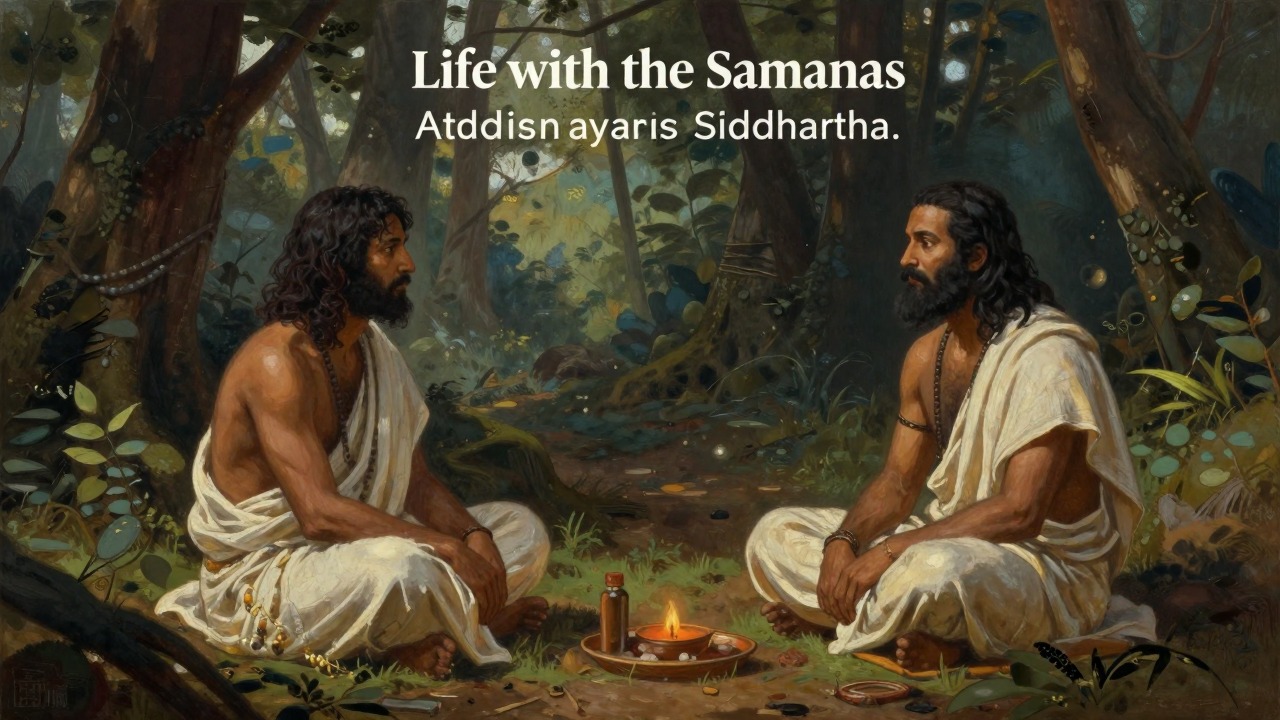
Siddhartha and Govinda follow the ascetics into the forest, fasting, holding their breath, and trying to empty the self.
Disillusionment
After three years Siddhartha sees that these escapes end in numbness, not liberation, and that no Samana has reached nirvana.
Meaning
The Samana years teach him discipline but also expose the futility of self-denial as an end in itself.
Rejection of the Buddha's Teaching
Rejection of the Buddha's Teaching
Context
Gotama's doctrine appears seamless and proves the chain of cause and effect, yet Siddhartha finds a gap in the promise of salvation.
Conversation
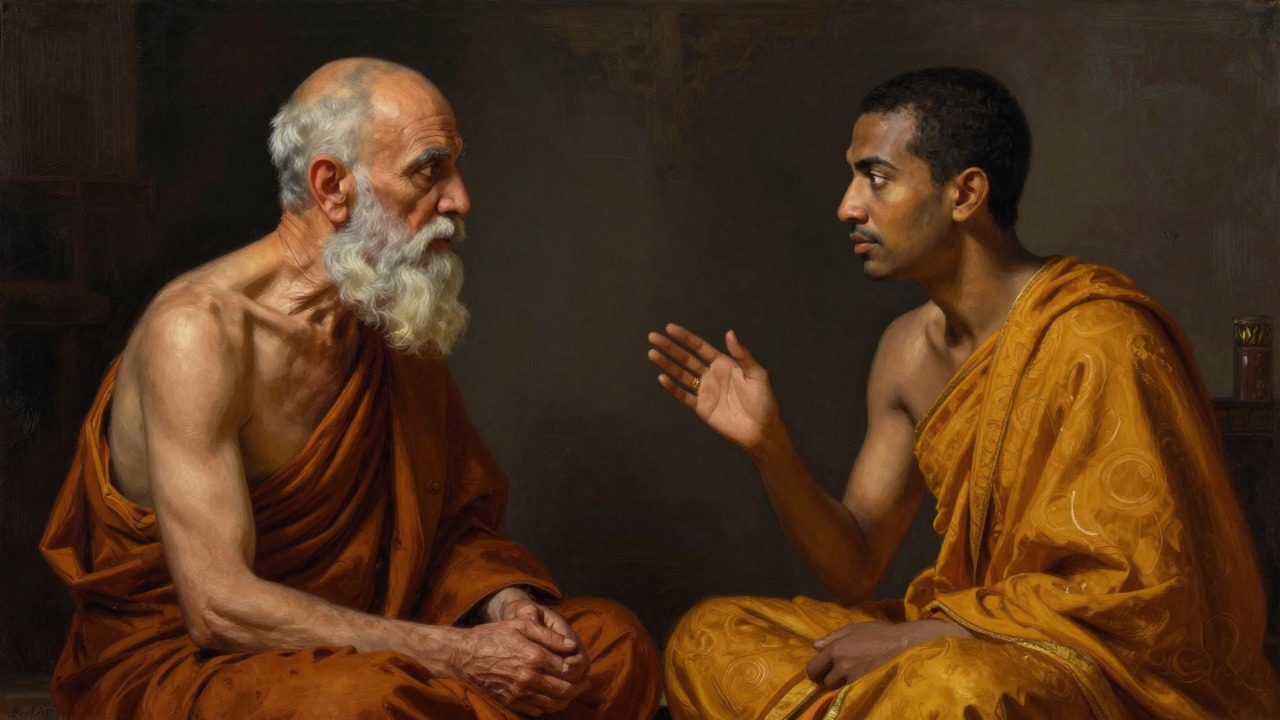
Siddhartha tells Gotama that no teaching can transmit the enlightenment a seeker must find alone, and the Buddha warns him against too much wisdom.
Meaning
This confrontation marks Siddhartha's decisive break with all external authorities.
Awakening to His Own Path
Awakening to His Own Path
Context
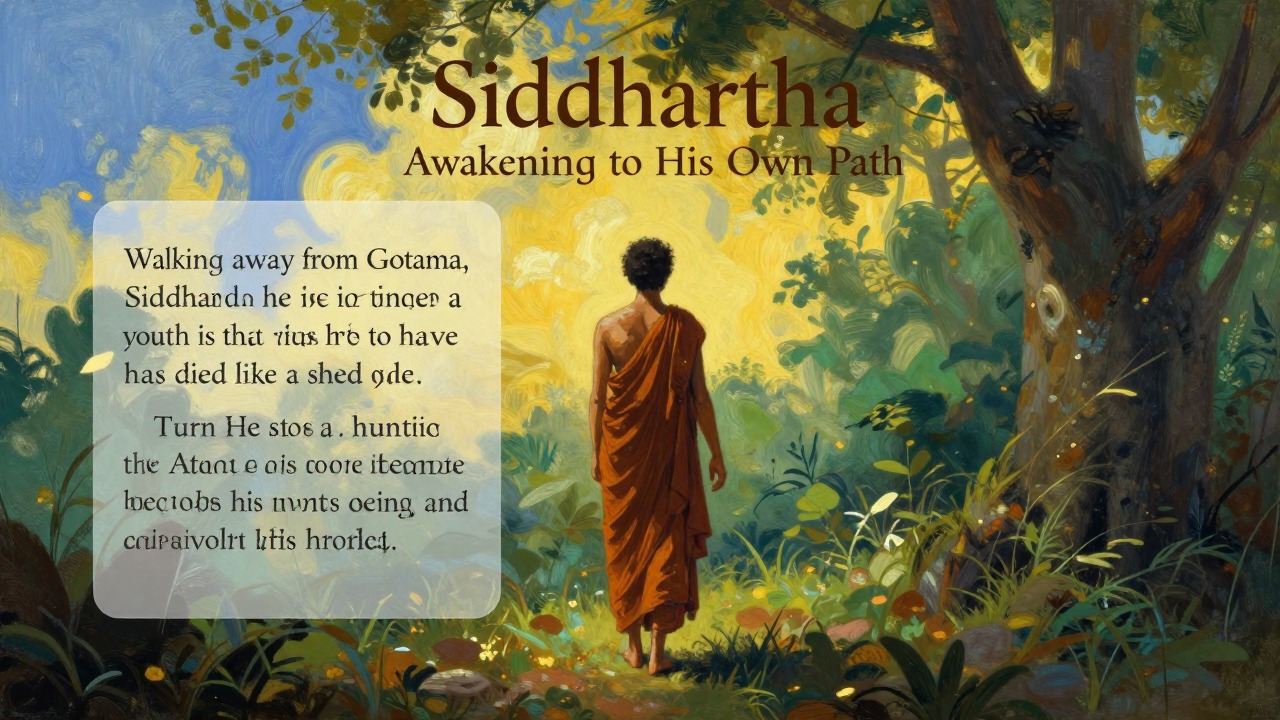
Walking away from Gotama, Siddhartha realizes he is no longer a youth and that his wish to have teachers has died like a shed skin.
Turn
He stops hunting the Atman and decides to become his own student, seeing the blue, yellow, and green world with new eyes.
Meaning
This awakening transforms his entire relation to the visible world and launches the second half of his life.
Immersion in Sansara

Immersion in Sansara
Context
Siddhartha learns business, love, and gambling, becoming rich and respected while remaining inwardly detached.
Decay
Gradually the childlike people's worries infect him: he envies their passion, grows greedy, and loses his inner voice.
Meaning
The city years are a necessary descent; only by living Sansara fully can he later transcend it.
Suicide Attempt and Om

Suicide Attempt and Om
Context
At the river, Siddhartha sees his life as spoiled and leans toward letting himself drown.
Rescue
The holy syllable Om rises unbidden from his exhausted soul and shatters his death wish, after which he falls into a healing sleep.
Meaning
The moment of utter despair becomes the turning point of his spiritual life, uniting him with the river and the eternal.
Ferryman's Peace
Ferryman's Peace
Context
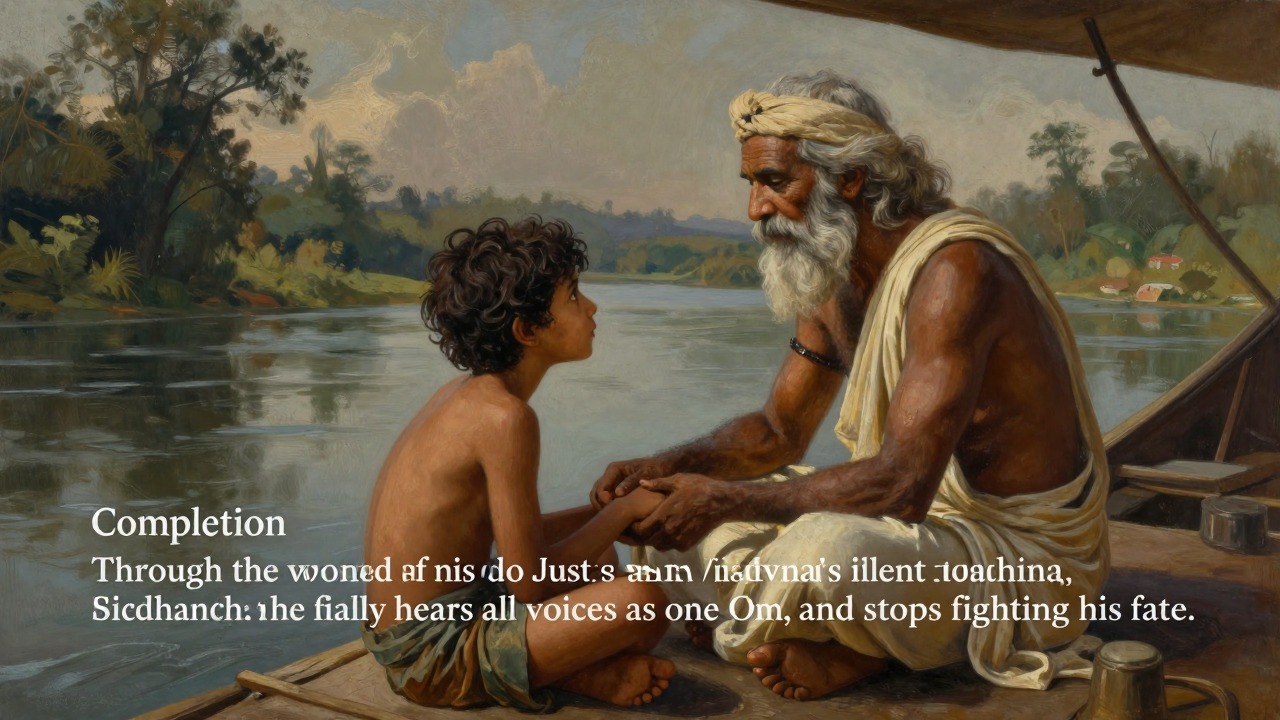
Siddhartha becomes Vasudeva's assistant, learning to listen to the river and to the many voices of people.
Completion
Through the wound of his son and Vasudeva's silent teaching, he finally hears all voices as one Om and stops fighting his fate.
Meaning
His journey ends not in doctrine but in a wordless compassion that shines from his face.
early in the story in the Brahman household
after leaving home and joining the ascetics
in the Jetavana grove after hearing Gotama's sermon
immediately after leaving the Jetavana grove
during the city years with Kamala and Kamaswami
after his dream of the dead bird and flight from the city
in the final years by the river with Vasudeva
