
Siddhartha's Love for His Son
SiddharthaSiddhartha's blind, suffering love for his son teaches him what his own father felt and opens him to universal love.
increasing Bearing strength in each event
 decreasing
Bearing strength in each eventdecreasingMy Son Has Been Given
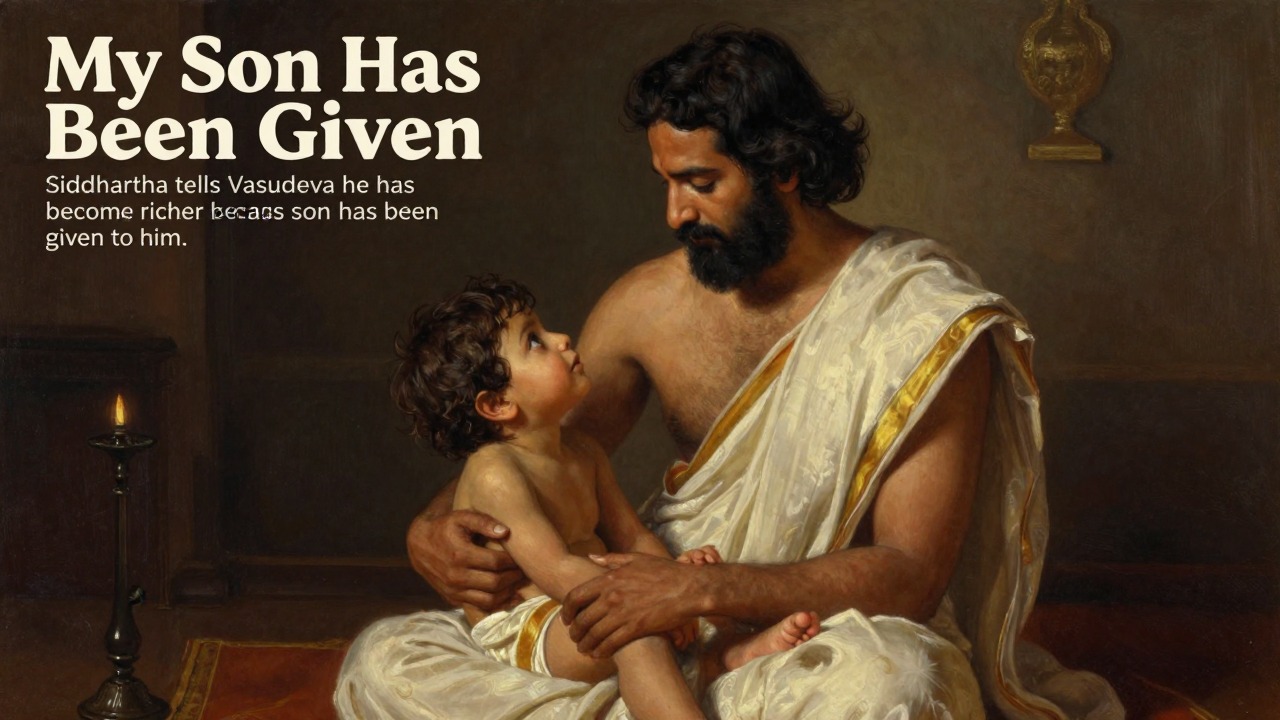
My Son Has Been Given
Context
Siddhartha tells Vasudeva he has become richer because his son has been given to him.
Joy
Despite Kamala's death, he feels a strange happiness in the arrival of the boy.
Meaning
Fatherhood enters his life as a gift and a burden.
Wooing a Sullen Heart
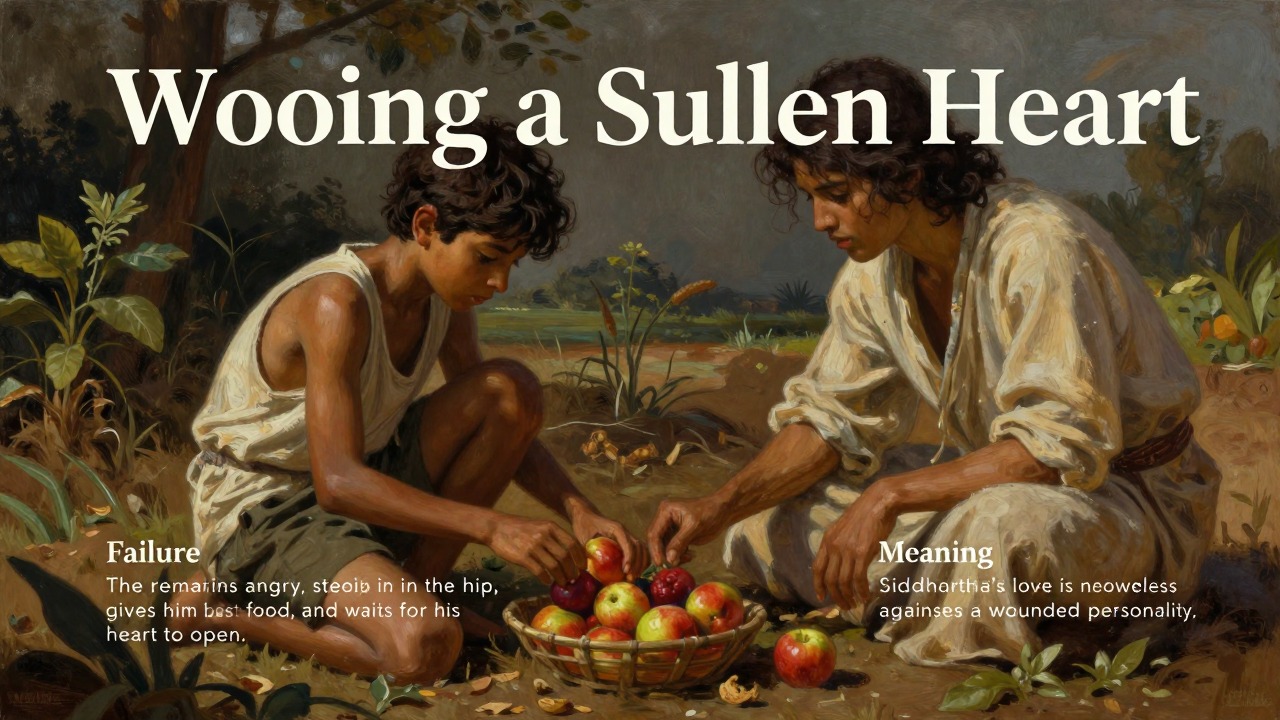
Wooing a Sullen Heart
Context
Siddhartha spares the boy, works in the field, gives him the best food, and waits for his heart to open.
Failure
The boy remains angry, steals fruit, and refuses every kindness.
Meaning
Siddhartha's tender love is powerless against a wounded personality.
The Torture of Tenderness

The Torture of Tenderness
Context
The son screams his hatred, and Siddhartha still feels love, now mixed with grief and helplessness.
Insight
Siddhartha realizes he has become a childlike person, suffering for love like everyone else.
Meaning
This is the love he once envied and could not feel.
Pursuit to the Garden Gate
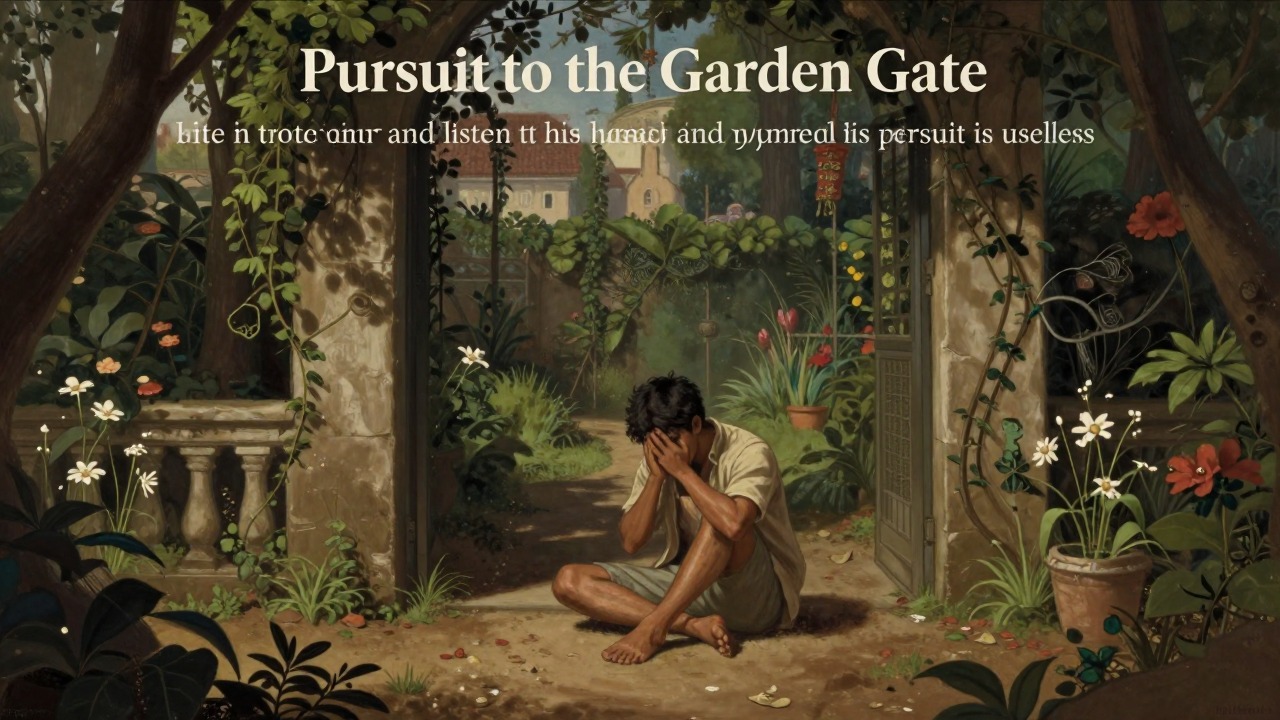
Pursuit to the Garden Gate
Context
Siddhartha runs after his son up to the city, then stops at Kamala's old garden and admits his pursuit is useless.
Grief
He sits in the dust and listens to his heart beat tiredly, feeling the wound burn.
Meaning
His love must renounce possession to survive.
Letting the Wound Blossom
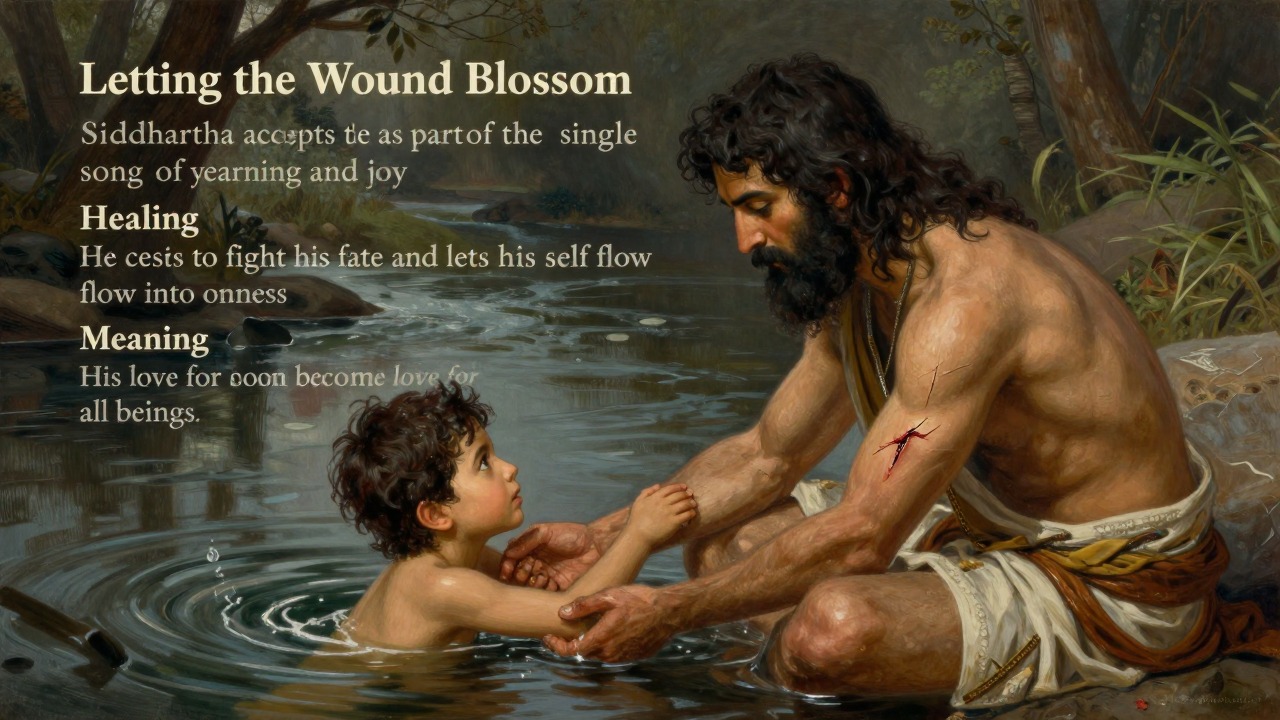
Letting the Wound Blossom
Context
Siddhartha accepts the wound as part of the river's single song of yearning and joy.
Healing
He ceases to fight his fate and lets his self flow into the oneness.
Meaning
His love for the son becomes love for all beings.
after Kamala's death in the hut
over months in the ferryman's hut
after the boy's hostile outburst
after the boy's flight
during his final listening to the river
