
The Oneness of All Life
SiddharthaSiddhartha moves from abstract belief in Atman to felt unity with the river, the stone, and every being.
increasing Bearing strength in each event
 decreasing
Bearing strength in each eventdecreasingAtman in Every Being
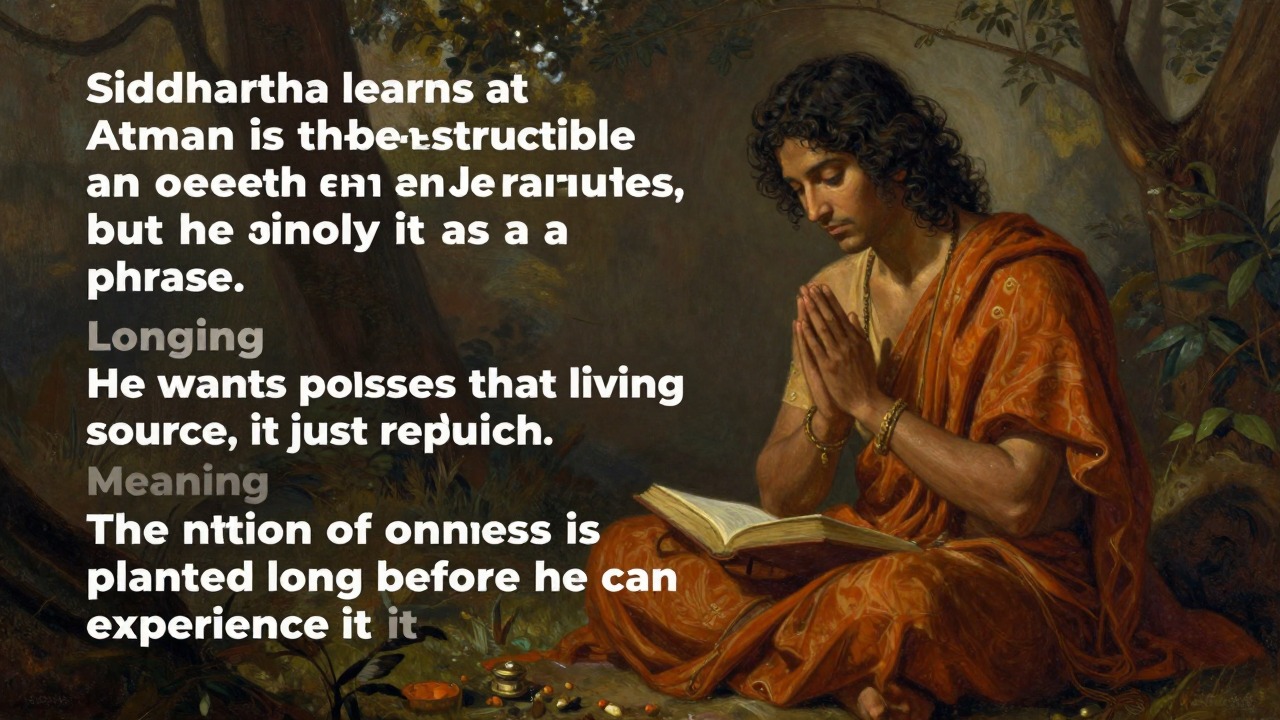
Atman in Every Being
Context
Siddhartha learns that Atman is the indestructible one within all creatures, but he only knows it as a phrase.
Longing
He wants to possess that living source, not just repeat its name.
Meaning
The notion of oneness is planted long before he can experience it.
World as Not Maya
World as Not Maya
Context
Siddhartha sees blue, yellow, river, and forest as themselves, no longer a veil of deceit or Maya.
Insight
The essence is not behind things but in them, in every color and shape.
Meaning
The visible world becomes the body of the divine.
The River's Thousand Voices
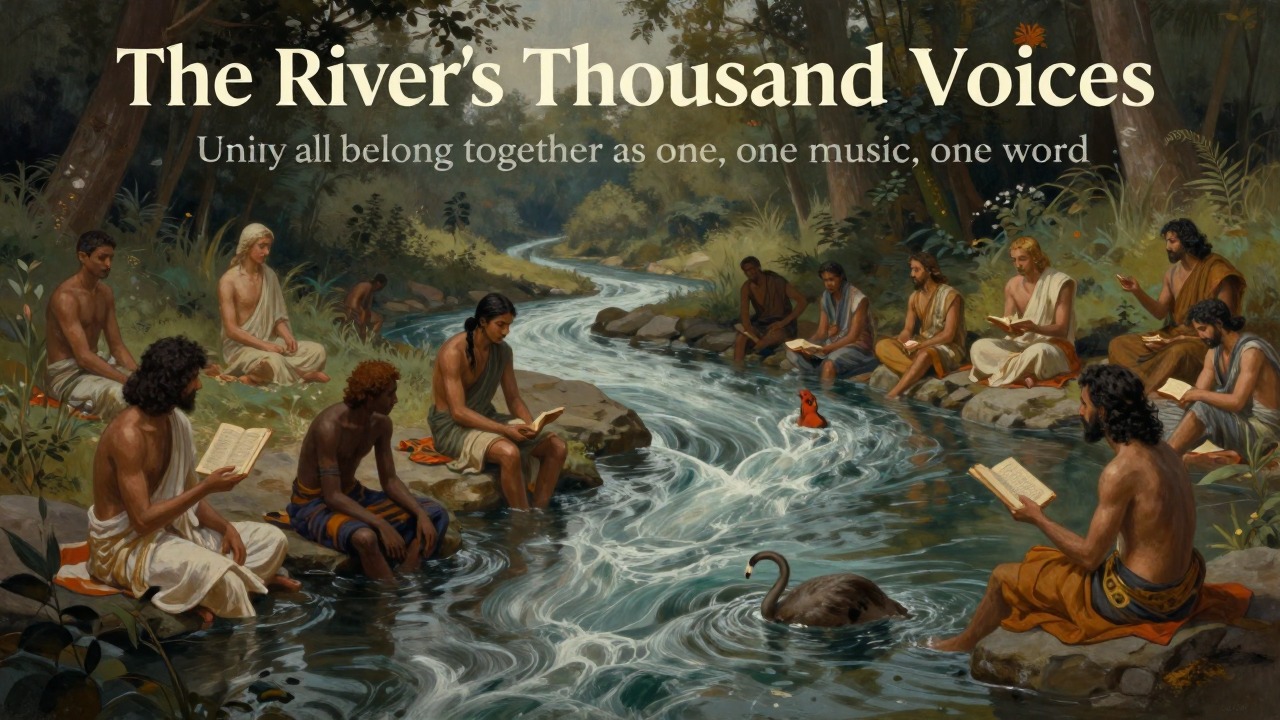
The River's Thousand Voices
Context
Siddhartha hears in the river the voices of fathers, sons, lovers, kings, and animals, all intertwined.
Unity
They all belong together as one flow, one music, one word.
Meaning
The river is the sensory proof of the oneness of all life.
The Stone as Buddha
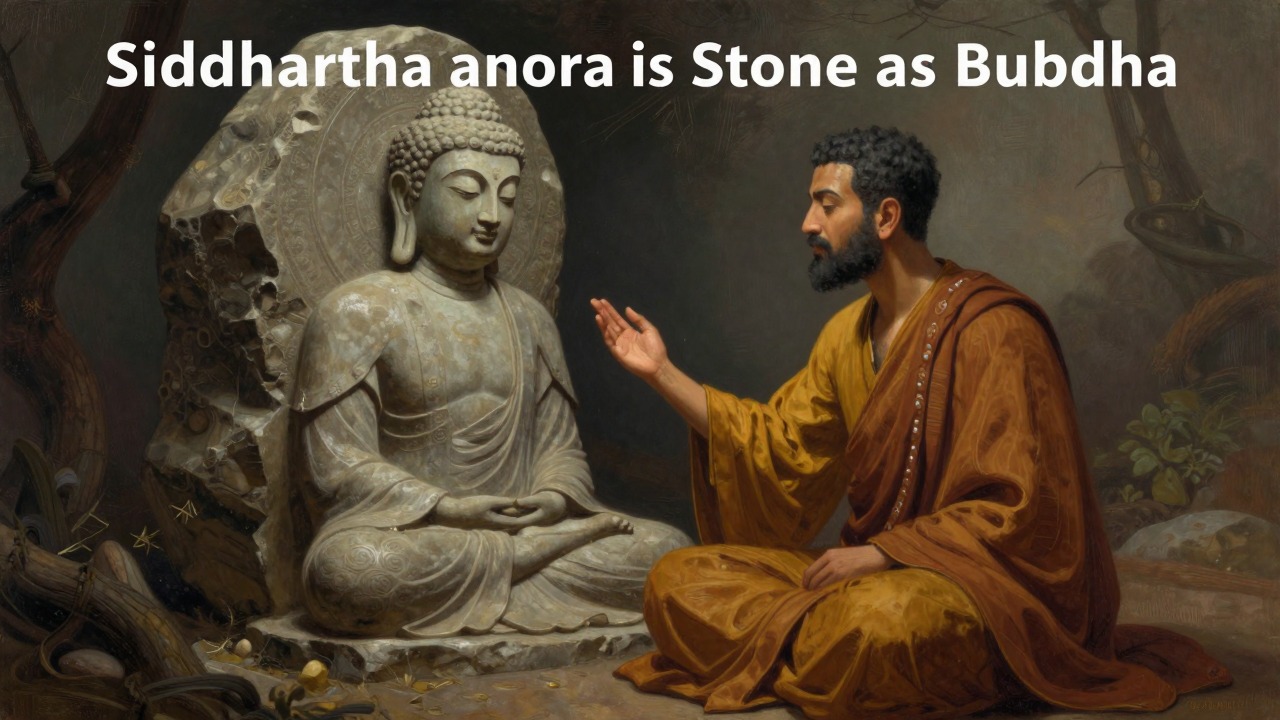
The Stone as Buddha
Context
Siddhartha says the stone is already animal, god, and Buddha, and worships it as Brahman.
Rebellion
Govinda objects that such language denies the reality of things.
Meaning
Siddhartha's love for the stone embodies the unity of everything in the present.
Vision of All Faces
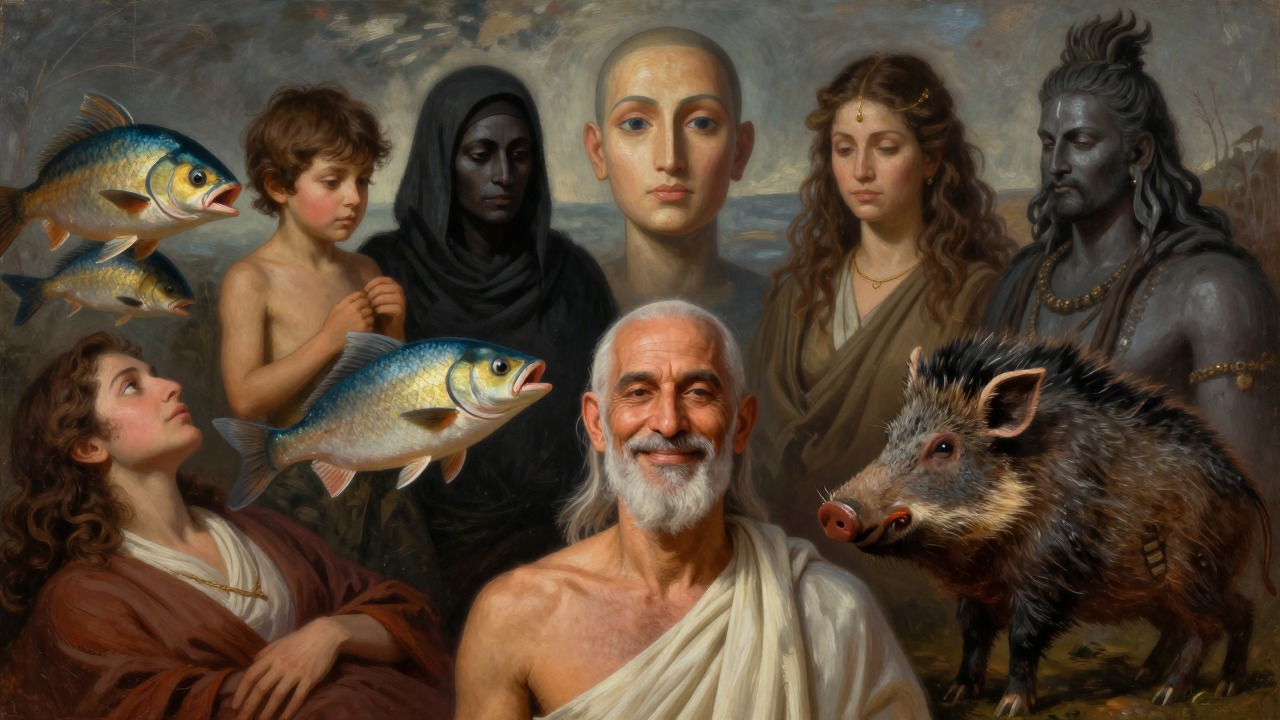
Vision of All Faces
Context
Govinda sees the face of a fish, a child, a murderer, a dying woman, a boar, a god, all flowing into Siddhartha's smile.
Transformation
Each form dies and is reborn, yet none dies; all are connected.
Meaning
The vision translates oneness from concept into a visible miracle.
in his Brahman youth
after his awakening on the road
during the night of final listening
in the dialogue with Govinda
at Govinda's final kiss
