
Love as the Final Path
SiddharthaSiddhartha learns that love, not doctrine, is the deepest way of relating to the world and its creatures.
increasing Bearing strength in each event
 decreasing
Bearing strength in each eventdecreasingYou Do Not Love
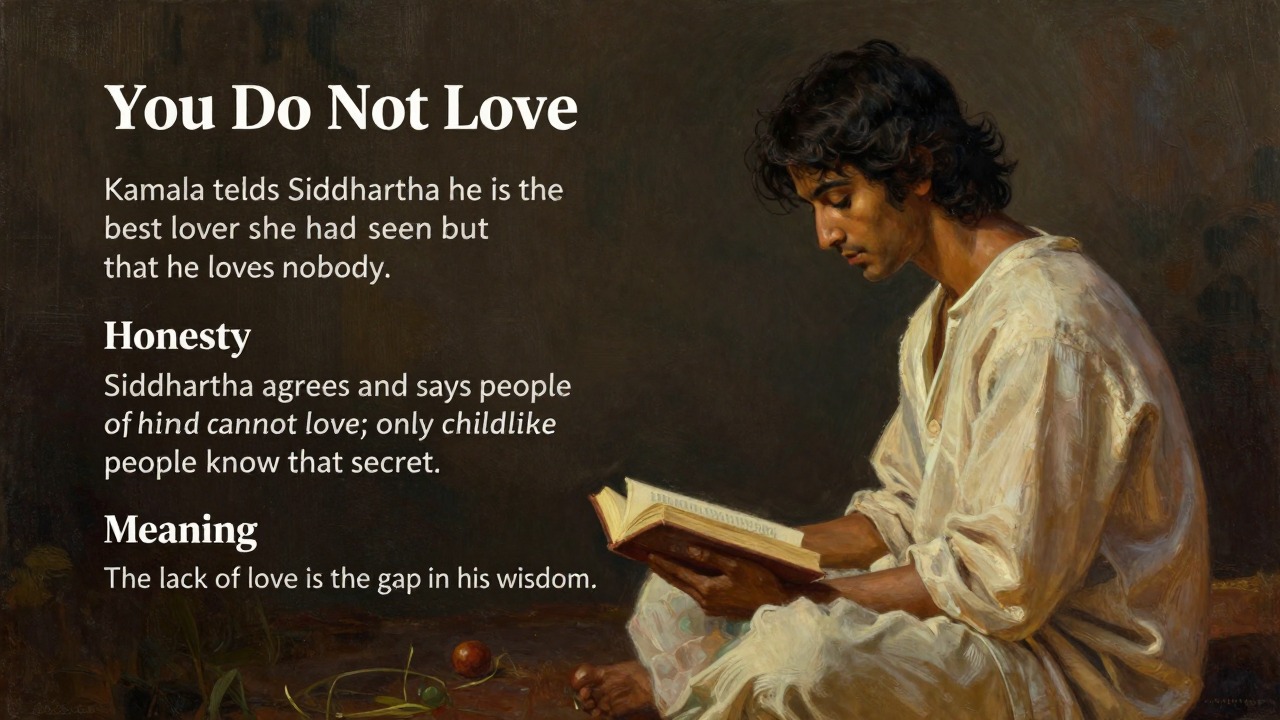
You Do Not Love
Context
Kamala tells Siddhartha he is the best lover she has seen but that he loves nobody.
Honesty
Siddhartha agrees and says people of his kind cannot love; only childlike people know that secret.
Meaning
The lack of love is the gap in his wisdom.
Envy of Childlike People
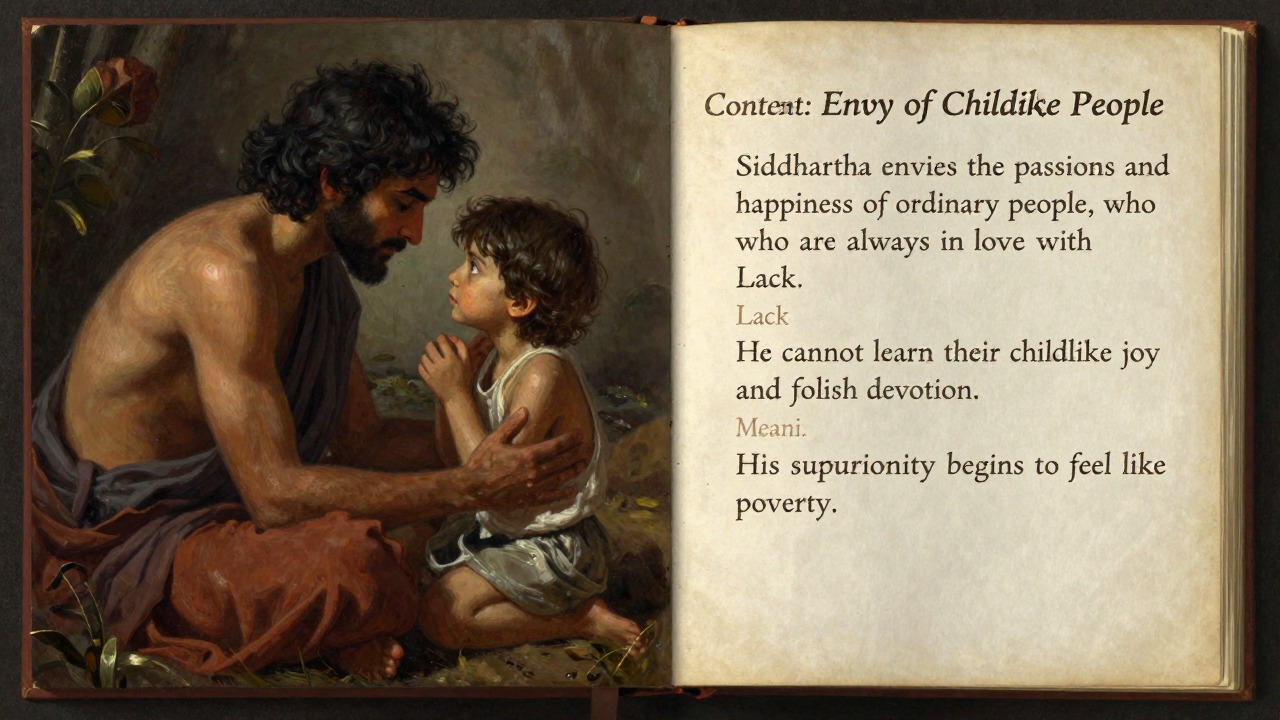
Envy of Childlike People
Context
Siddhartha envies the passions and happiness of ordinary people, who are always in love with something.
Lack
He cannot learn their childlike joy and foolish devotion.
Meaning
His superiority begins to feel like poverty.
Blind Love for the Son
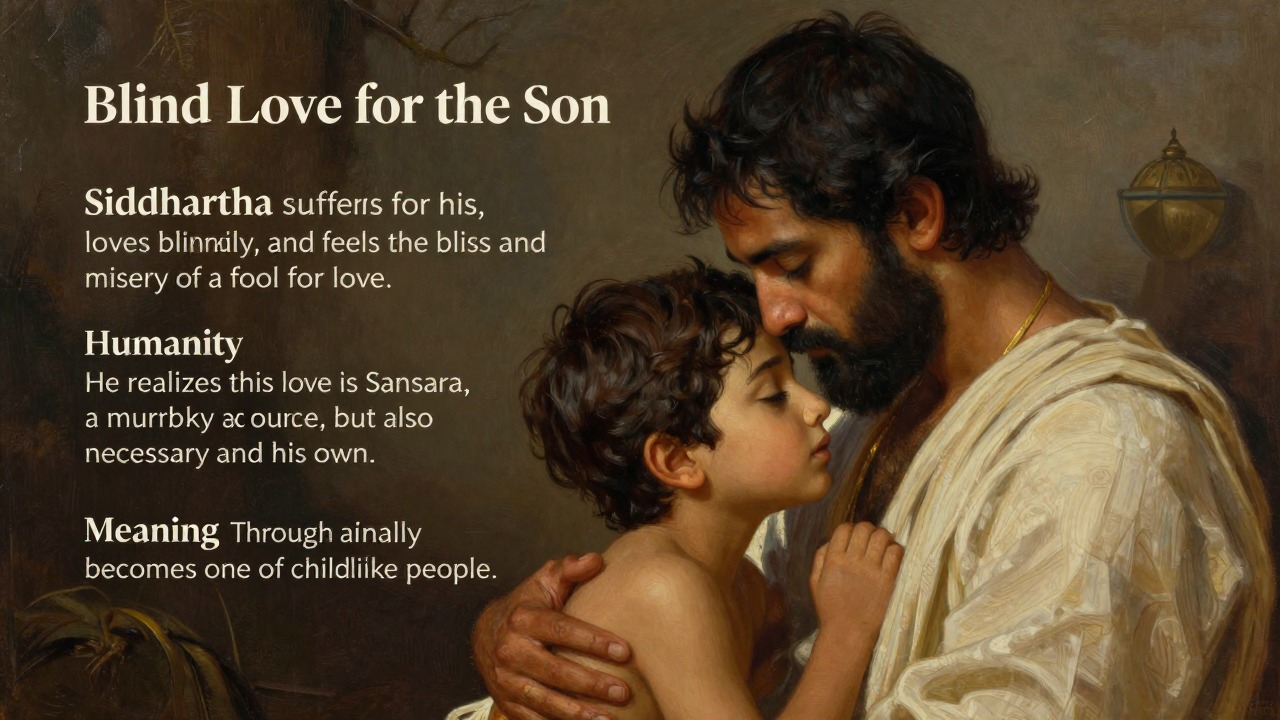
Blind Love for the Son
Context
Siddhartha suffers for his son, loves blindly, and feels the bliss and misery of a fool for love.
Humanity
He realizes this love is Sansara, a murky source, but also necessary and his own.
Meaning
Through the son, he finally becomes one of the childlike people.
Loving Things Not Words
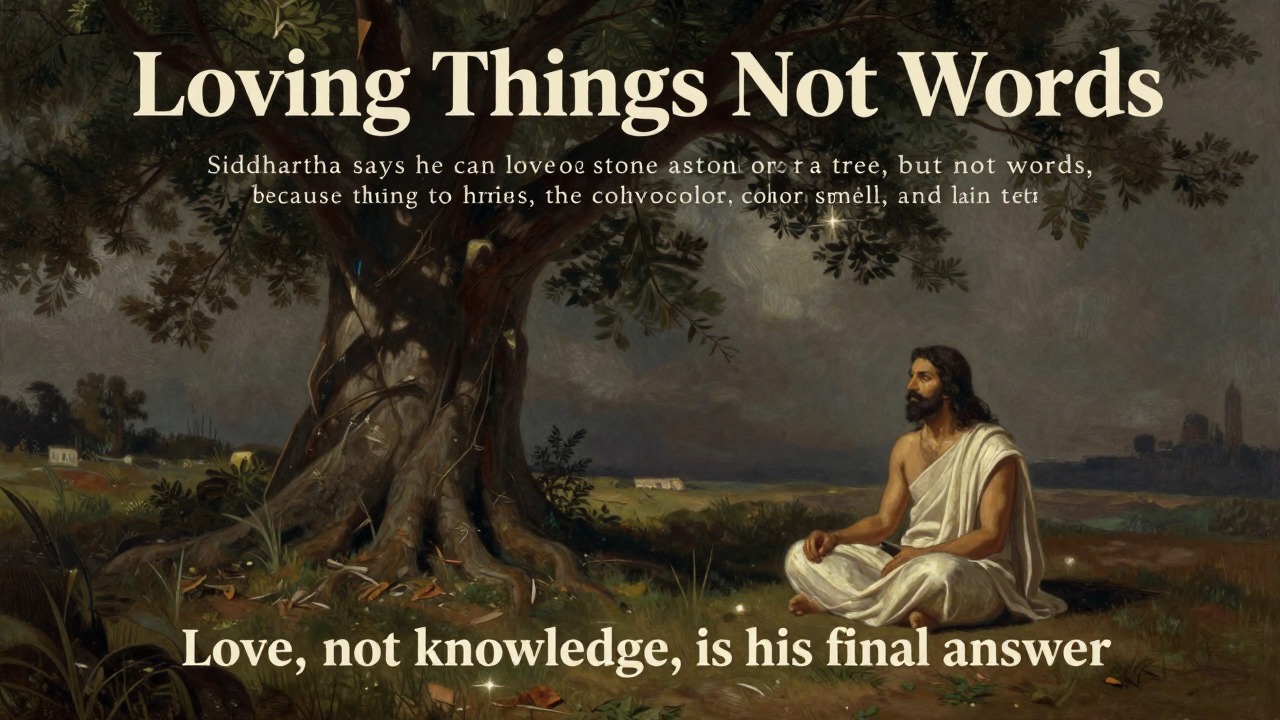
Loving Things Not Words
Context
Siddhartha says he can love a stone or a tree, but not words, because things have color, smell, and taste.
Truth
He wants only to love the world, not to despise or explain it.
Meaning
Love, not knowledge, is his final answer.
The Smile That Loves All Forms
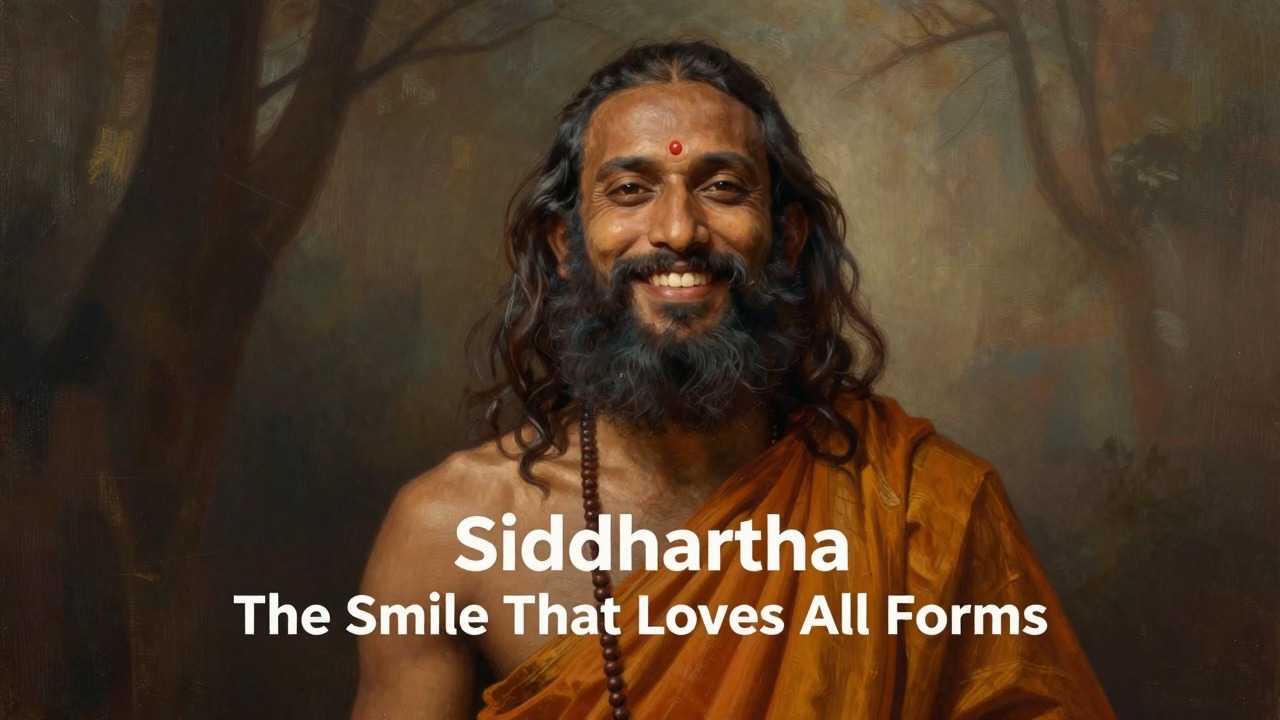
The Smile That Loves All Forms
Context
Govinda sees every being and transformation under Siddhartha's smiling face, a smile filled with love and respect.
Perfection
Siddhartha's love embraces sin and holiness, death and life, without judgment.
Meaning
Love becomes the visible form of enlightenment.
during a conversation with Kamala
during the later city years
during his son's time in the hut
during the final teaching to Govinda
in the final vision with Govinda
