
Every Truth Has an Opposite
SiddharthaSiddhartha's insight that one-sided truths hide a deeper unity overturns the dualism of Sansara and Nirvana.
increasing Bearing strength in each event
 decreasing
Bearing strength in each eventdecreasingGotama's Division
Gotama's Division
Context
Siddhartha remembers that Gotama had to divide the world into Sansara and Nirvana, deception and truth, suffering and salvation.
Necessity
A teacher needs those divisions to speak, but the world itself is never one-sided.
Meaning
The seed of Siddhartha's paradox lies in his old objection to Gotama.
One-Sided Truth
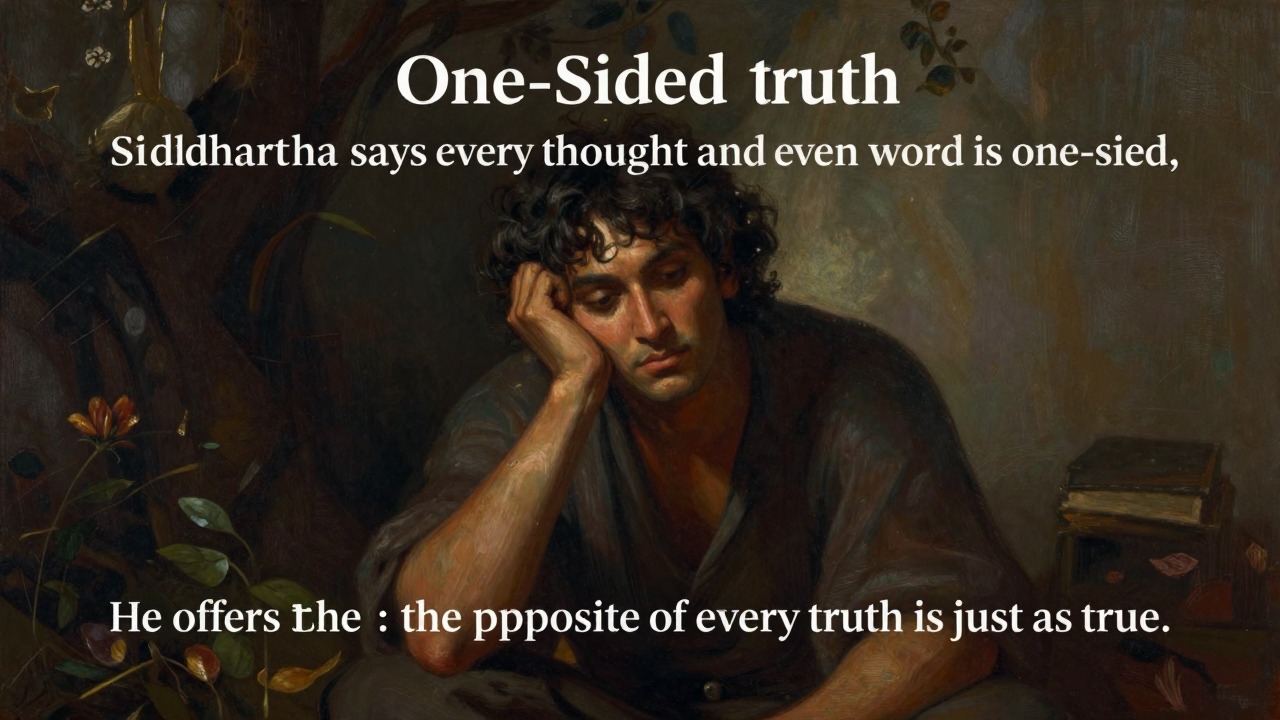
One-Sided Truth
Context
Siddhartha says every thought and every word is one-sided, a half, lacking roundness and oneness.
Example
He offers the phrase: the opposite of every truth is just as true.
Meaning
This is his best thought and his most scandalous claim.
Sinner Contains Buddha
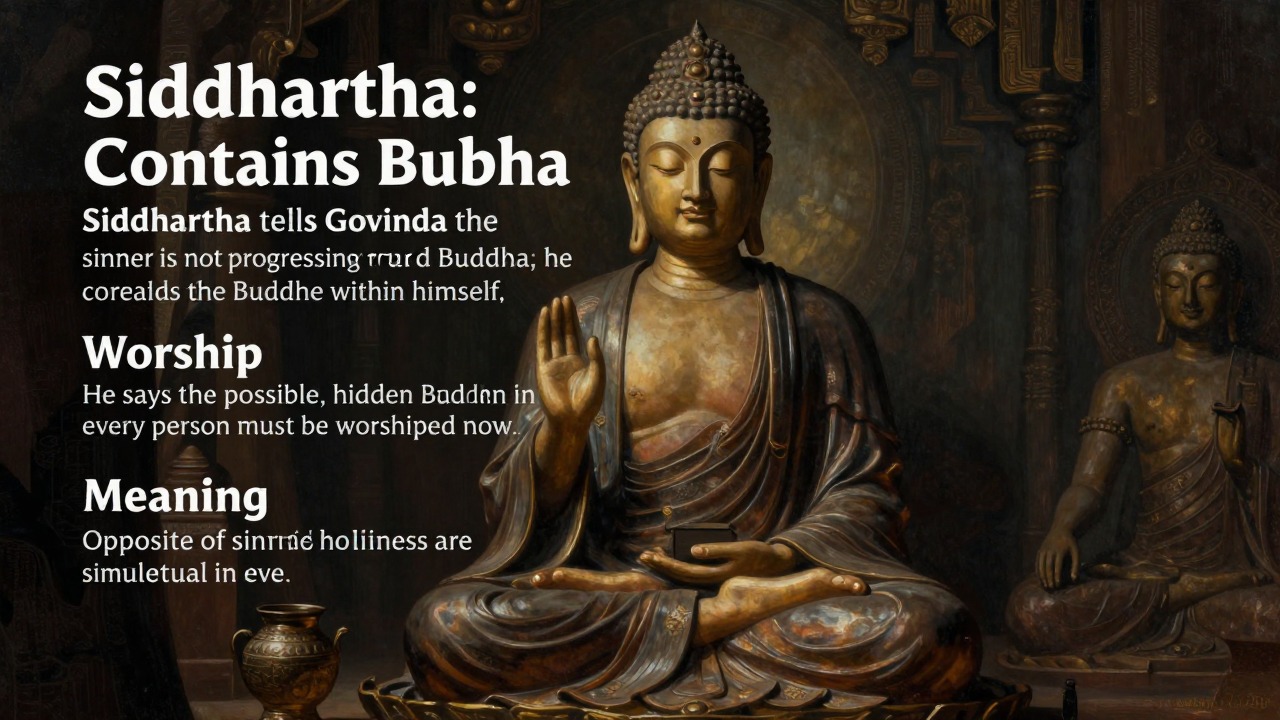
Sinner Contains Buddha
Context
Siddhartha tells Govinda the sinner is not progressing toward Buddha; he already contains the Buddha within himself.
Worship
He says the possible, hidden Buddha in every person must be worshiped now.
Meaning
The opposite of sin and holiness are simultaneous in every being.
World Perfect in Every Moment
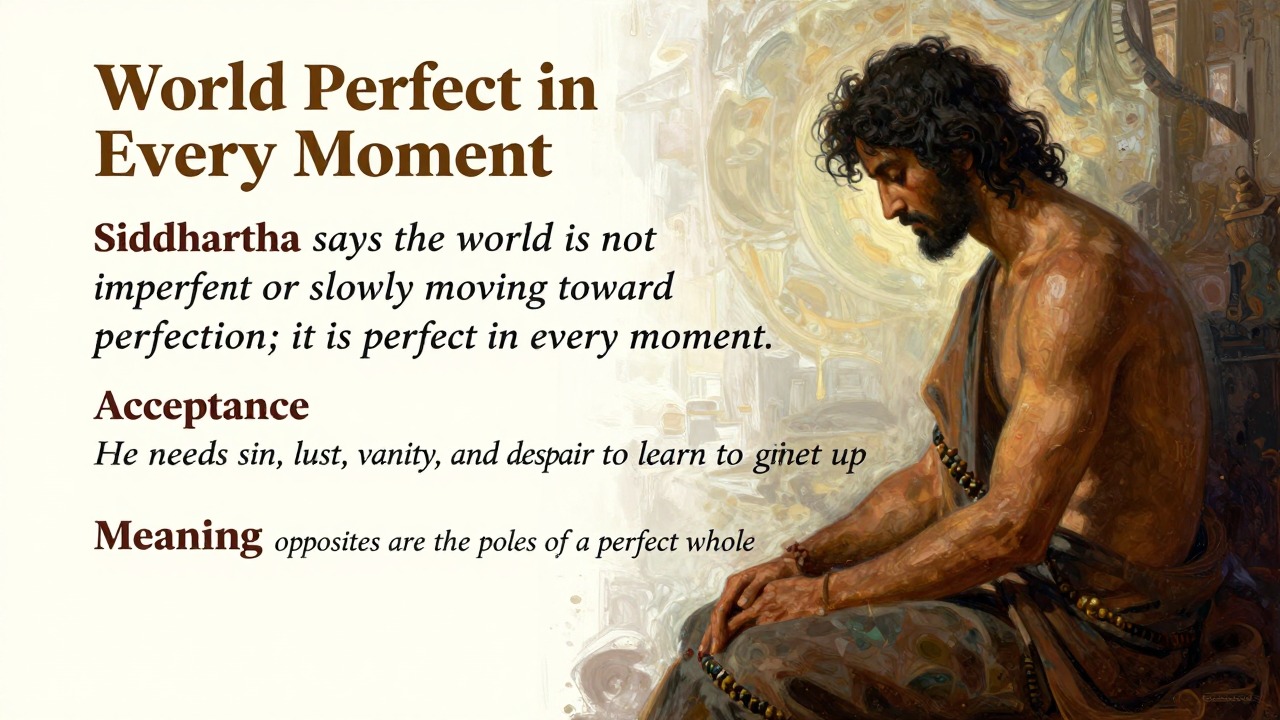
World Perfect in Every Moment
Context
Siddhartha says the world is not imperfect or slowly moving toward perfection; it is perfect in every moment.
Acceptance
He needs sin, lust, vanity, and despair to learn to give up resistance.
Meaning
The opposites are the poles of a perfect whole.
No Separation in the Smile
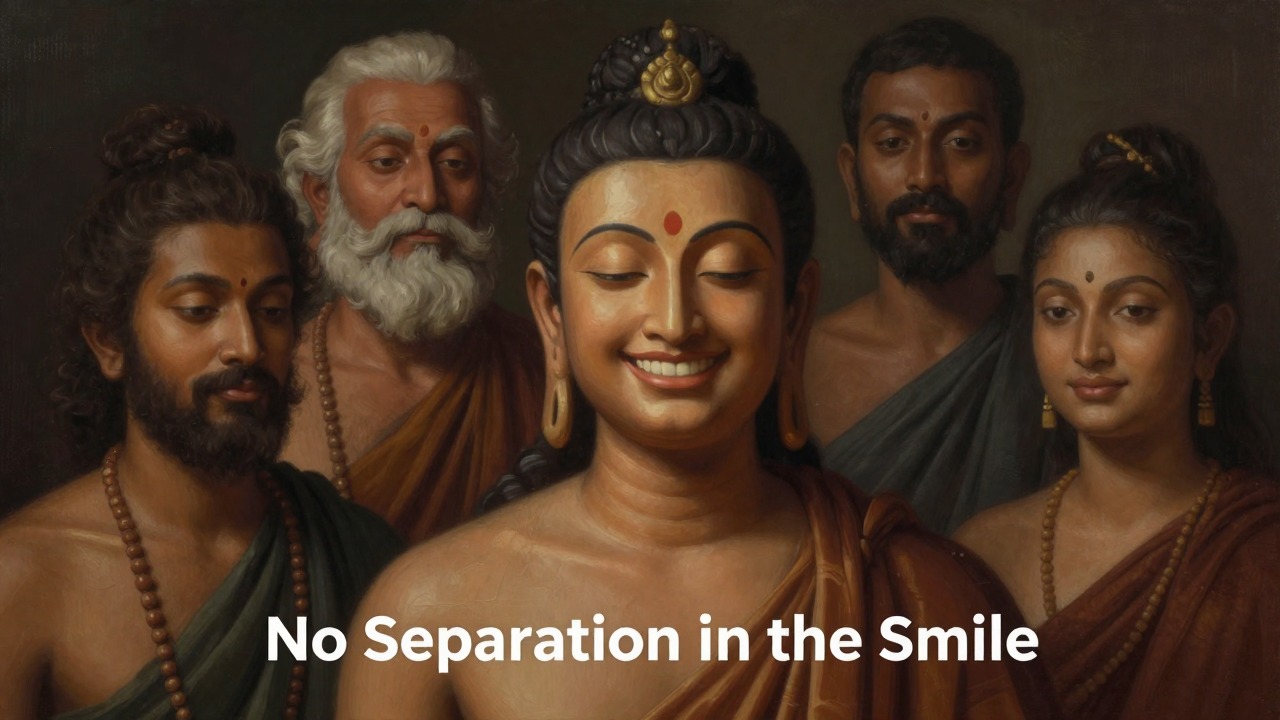
No Separation in the Smile
Context
Govinda's vision shows sin and holiness, life and death, all faces and forms under a single smile.
Unity
There is no gap between the world and eternity, suffering and bliss.
Meaning
The smiling face is the answer to every one-sided truth.
in the recollection of the Buddha's teaching
during the dialogue with Govinda
continuing the same dialogue
while reflecting on the river's teaching
in the final vision
