Christian Residence in Edo
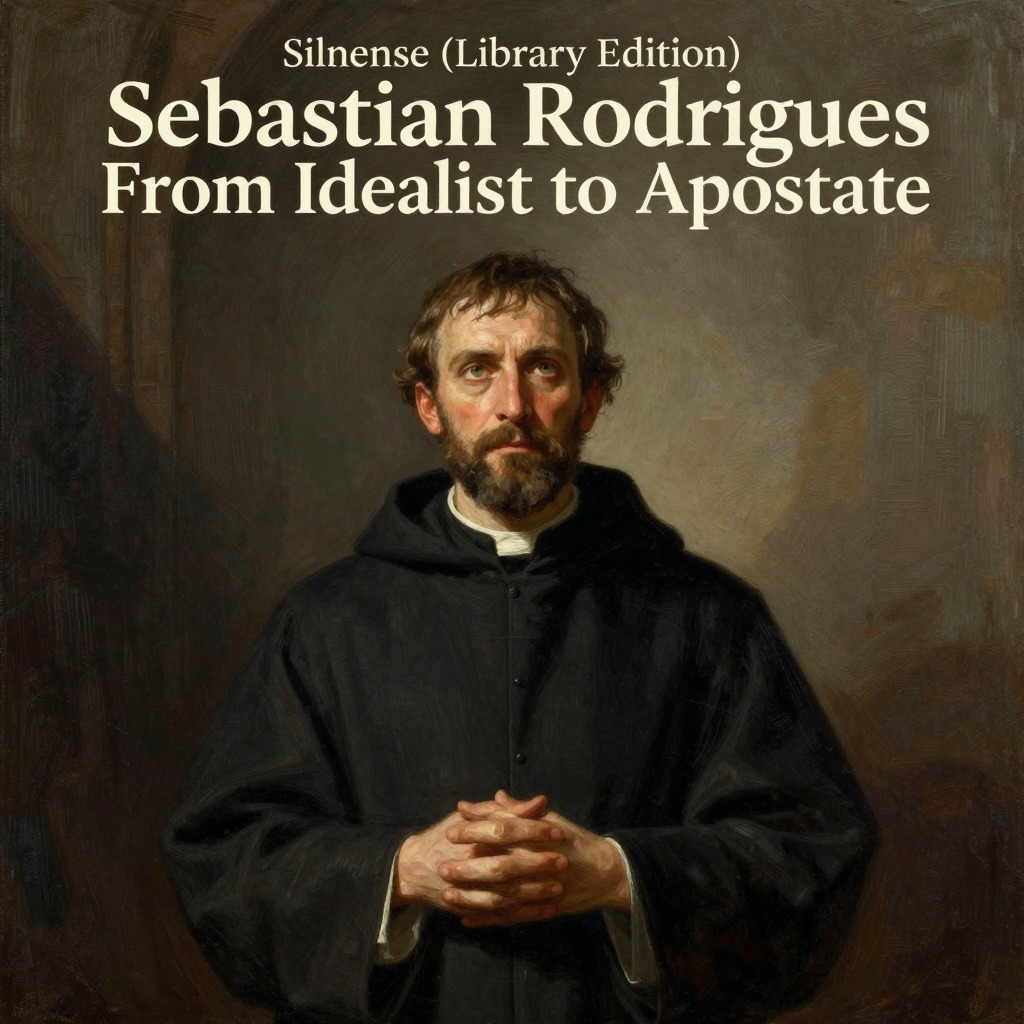
Silence (Library Edition)The Christian Residence in Edo was the institution where the apostate priest Sebastian Rodrigues, renamed Okada San'emon, spent the final three decades of his life under permanent surveillance, writing a formal disavowal of Christianity and serving as a living symbol of the Tokugawa regime's victory over the foreign faith.
Location and Establishment
The Christian Residence was located in Edo, the seat of the Tokugawa Shogunate, in a district called Kobinatacho — the very place where Inoue, the Lord of Chikugo, had once lived. Inoue himself informed Rodrigues that a house there had been prepared for him, and that he was to take the name of a deceased Japanese man, Okada San'emon, along with the man's wife. This transfer was not a release but a permanent confinement: the Residence was an enclosed building, surrounded by guards and subject to constant official oversight. The regime's aim was not merely to isolate the apostate but to display him as a living refutation of the faith he had once preached.
Life Under Surveillance
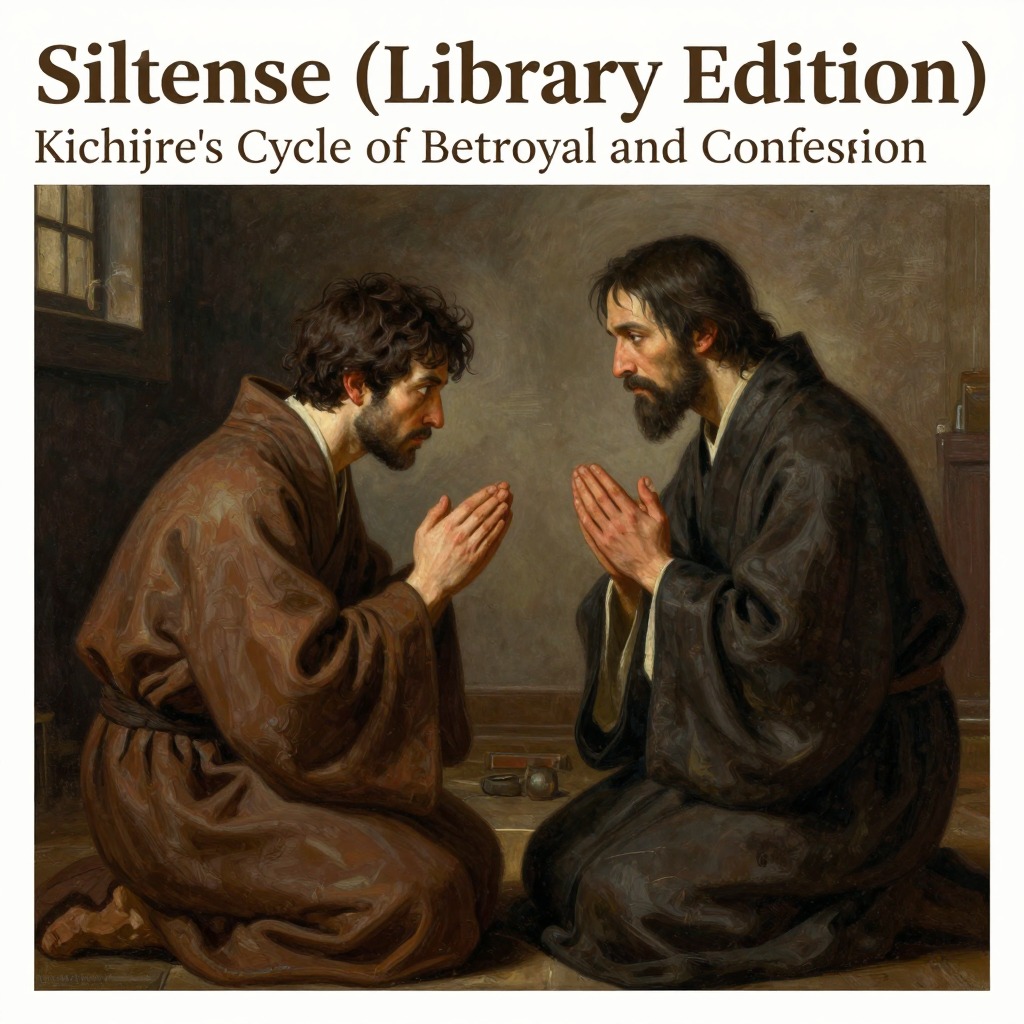
Rodrigues lived in the Christian Residence for thirty years, from around the Year of the Ram until his death in the Year of the Cock at age sixty-four. He was granted a ration of ten persons, a relatively generous allowance that reflected his status as a high-profile captive rather than any freedom. He was never left alone: a rotating roster of guards — Kayo Den'emon, Kawara Jingobe, and others — were released from other duties specifically to attend him. Twice, from January to February and again from June to July of the Second Year of Enpo, he was commanded by Lord Totominokami to write a disavowal of his religion, a task he carried out in the Study of the Mountain Villa. The book he produced, a formal renunciation, was the regime's ultimate propaganda tool — a document that could be cited to prove that even the most devoted missionary had been forced to admit the error of his ways.
The Regime's Control and the Fumie System
The Christian Residence was embedded in a broader system of surveillance and ritual humiliation that the Tokugawa Shogunate had perfected over decades. The Edict of Expulsion (1614) had declared that the Kirishitan band sought to 'change the government of the country, and obtain possession of the land,' and the regime never relaxed its vigilance. A reward system offered three hundred pieces of silver for informing on a priest, two hundred for a brother, and one hundred for a lay Christian — sums that tempted even the most destitute peasants. The regime also prohibited fences or hedges between houses so that neighbours could observe one another's behaviour. The most emblematic ritual was the fumie test, in which every household was required to trample on an image of Christ or the Virgin; the practice was performed annually on January 4th, with officials checking each house's compliance. The Christian Residence itself was subject to the same logic: its inhabitants were not merely imprisoned but made to perform their apostasy publicly, through the writing of disavowals and the acceptance of Japanese names and families.
The Final Years and Death
Rodrigues' life in the Residence was marked by a strange, exhausted resignation. He no longer resisted; he simply existed, watched, and wrote. The regime's confidence in its victory was so complete that Inoue could say to him, 'Father, you were not defeated by me. You were defeated by this swamp of Japan.' Rodrigues himself came to believe that his struggle had been with Christianity in his own heart, not with the Japanese authorities. He died of illness at a little later than half past four in the afternoon on the 25th of July in the Ninth Year of Enpo. His corpse was cremated at Muryoin Temple in Koishikawa, and his posthumous Buddhist name was Myusen Joshin Shinshi. The money he left — twenty-eight ryo and three bu — was sealed by the attendants and the Lord's Managers. The official statement recorded that he had been 'born in Portugal, Europe,' and that he had lived in the Enclosed Building for thirty years. Nothing in the record suggests that he ever revoked his apostasy or that he died with faith in his heart; the silence of the official documents mirrors the silence of God that had haunted him throughout his captivity.
Significance
The Christian Residence in Edo was not merely a prison; it was a carefully calibrated instrument of the Tokugawa regime's biopolitical control. By keeping Rodrigues alive, renamed, and visibly collaborating, the regime demonstrated that Christianity could be absorbed and neutralized by the 'swamp of Japan.' The Residence embodied the regime's strategy of exception: Rodrigues was stripped of his priestly identity and his European name, yet he was not killed — he was kept in a state of suspended life, a living example of the faith's defeat. His death, when it came, was quiet and unremarkable, a bureaucratic event recorded in the dry language of the official diary. The Christian Residence thus stands as the final, ironic fulfillment of Rodrigues' mission: he had come to Japan to plant the sapling of Christianity, but he ended his life as a Japanese man, writing its disavowal, in a house that belonged to his persecutor.