Salem
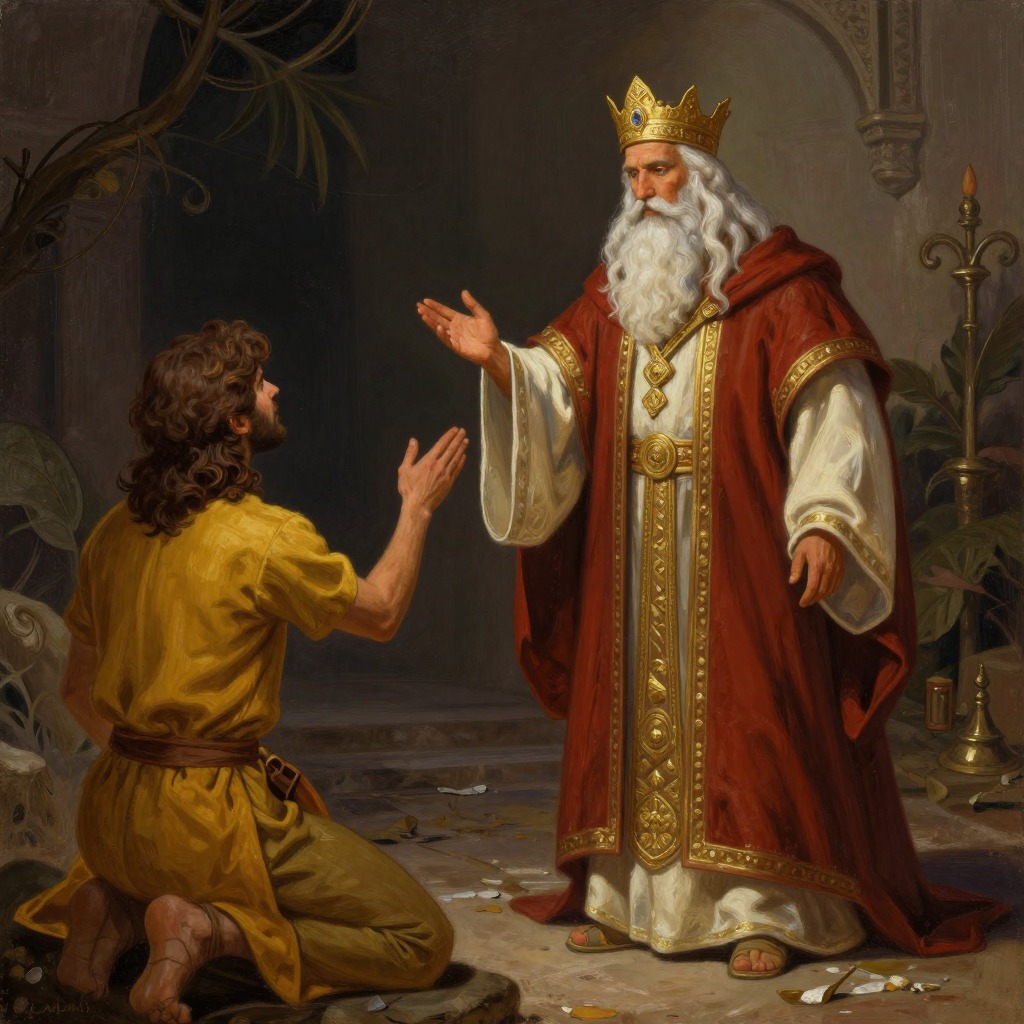
The AlchemistSalem is the enigmatic city from which Melchizedek, the king who becomes Santiago's first and most crucial mentor, claims to hail. When the old man first introduces himself to the shepherd boy in the plaza of Tarifa, he states simply, "I was born in Salem" . Pressed further, he declares with a laugh, "Well, I'm the king of Salem!" . The name carries no geographical specificity for Santiago, who has never heard of it, and the old man offers no clarifying details, saying only that it is "like it always has been" . This deliberate vagueness establishes Salem not as a real place on any map but as a symbolic realm, a point of origin for a wisdom that exists outside of ordinary time and space.
The Nature of Salem as a Mythical Kingdom
Salem is presented as a kingdom without a physical territory, its reality defined entirely by the authority and knowledge of its king. Melchizedek's identity is confirmed by the golden breastplate he wears, covered with precious stones, which he reveals to Santiago after their initial conversation . The boy recalls the brilliance he had noticed the previous day, and the sight convinces him that the old man "really was a king" . The kingdom of Salem, then, is less a place than a state of being, a source of the universal truths that Melchizedek imparts. It is from this intangible kingdom that the king dispenses his wisdom, such as the foundational principle that "when you want something, all the universe conspires in helping you to achieve it" . The name itself, echoing the biblical Salem (often identified with Jerusalem, the city of peace), reinforces its archetypal and spiritual character.
The King's Role and His Connection to Salem
Melchizedek's role as the king of Salem is to act as a guide for those who have discovered their Personal Legend. He tells Santiago that he appears "not always in this way, but I always appear in one form or another" to help those on the verge of giving up their quest . His authority, derived from his kingdom, allows him to demand a tithe—one-tenth of Santiago's flock—in exchange for revealing the path to the treasure . After the transaction is complete, Melchizedek returns to his own realm. He is last seen sitting on the wall of an old fort in Tarifa, watching a ship leave the port, and thinking that he will never see the boy again, just as he had never seen Abraham again after charging him his one-tenth fee . He hopes desperately that the boy will succeed, but his work is done . He then looks to the skies, feeling abashed, and says, "I know it's the vanity of vanities, as you said, my Lord. But an old king sometimes has to take some pride in himself" . This moment reveals that Salem is a kingdom subordinate to a higher divine power, and that its king, despite his wisdom, is not without his own human-like desires.
The Significance of Salem in Santiago's Journey
Salem functions as the conceptual starting point for Santiago's entire quest. It is the source of the metaphysical framework—the Personal Legend, the Soul of the World, the language of omens—that guides him through every subsequent trial. The king's teachings, which originate from this intangible kingdom, are the lens through which Santiago interprets his experiences in Tangier, at the crystal shop, in the desert, and at the oasis. The name "Salem" itself becomes a touchstone for the boy's faith. Even when he is robbed and destitute, the memory of the king and the stones Urim and Thummim, given to him by the king of Salem, provide him with the strength to continue . The kingdom is never visited, but its influence pervades the entire narrative, making it a powerful symbol of the spiritual authority that underwrites the hero's journey. The alchemist later echoes the king's central teaching, telling Santiago, "When a person really desires something, all the universe conspires to help that person to realize his dream" , demonstrating how the wisdom of Salem is transmitted and reinforced throughout the story.