The Coptic Monastery
The AlchemistThe Coptic Monastery stands as a quiet, stone-walled sanctuary in the Egyptian desert, a place where the spiritual and the material converge. It is here, in the final stage of Santiago's quest, that the alchemist performs the Master Work, transforming lead into gold before the boy's eyes, and provides him with the gold that will allow him to return to the abandoned church in Spain to claim his treasure. The monastery is the last waypoint before the Pyramids, a threshold where the abstract teachings of alchemy become a concrete, visible reality.
Arrival and the Demonstration of Alchemy
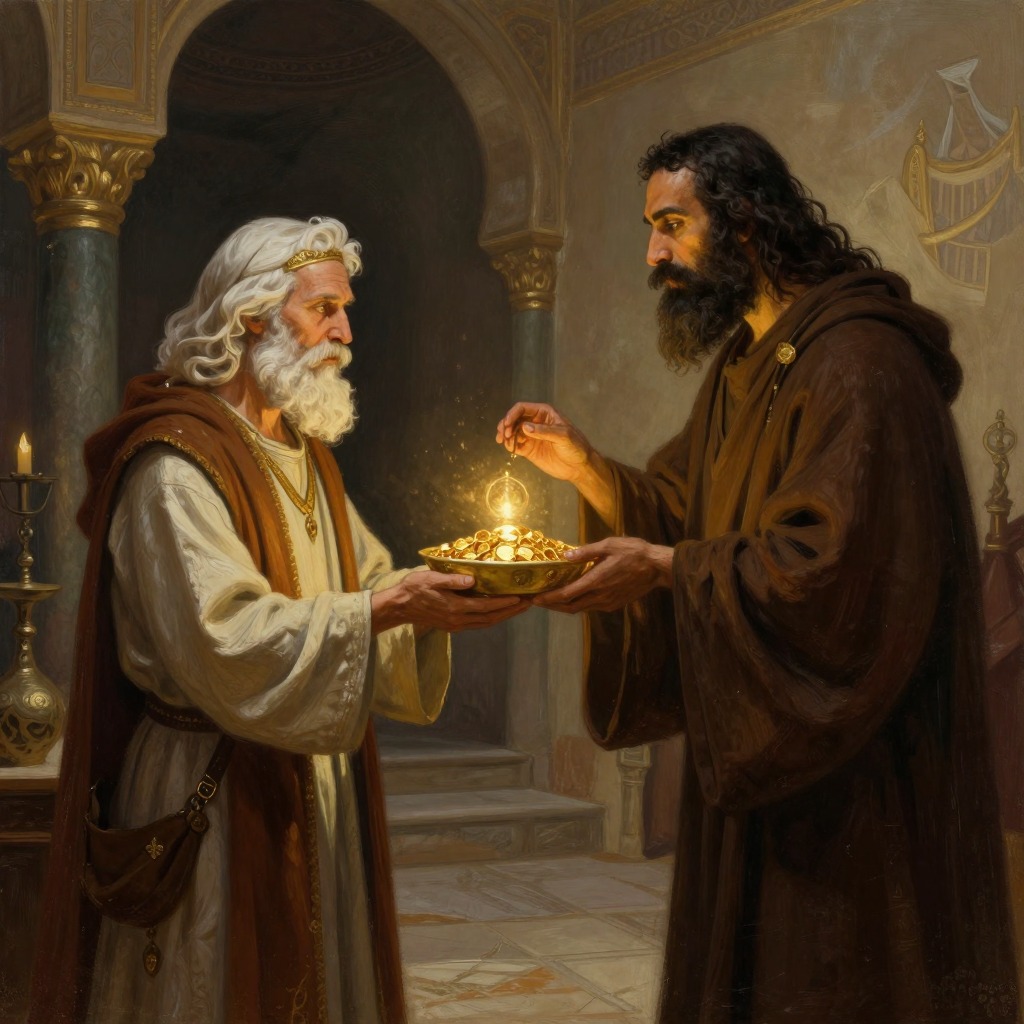
After three hours of riding from the military camp, the alchemist dismounts at the Coptic Monastery and tells the escort party they may return. He knocks on the gate, and a monk dressed in black answers; they speak briefly in the Coptic tongue, and the alchemist asks to use the kitchen. Inside, he lights a fire, places lead in an iron pan, and when it becomes liquid, he scrapes a hair-thin sliver from the yellow glass egg—the Philosopher's Stone—wraps it in wax, and adds it to the molten metal. The mixture turns a reddish color, almost like blood. The alchemist removes the pan from the fire and sets it aside to cool. While they wait, he talks with the monk about the tribal wars, which the monk says have stopped the caravans at Giza. When the pan has cooled, the monk and Santiago look at it, dazzled: the lead has dried into the shape of the pan, but it is no longer lead—it is gold. Santiago asks if he will learn to do that someday, and the alchemist replies, "This was my destiny, not yours. But I wanted to show you that it was possible."
The Division of the Gold and the Alchemist's Farewell
At the gates of the monastery, the alchemist separates the gold disk into four parts. He gives one part to the monk for his generosity to pilgrims, warning him not to say the payment goes beyond his generosity, because "Life might be listening, and give you less the next time." He gives a second part to Santiago to make up for what he gave to the general. He keeps a third part for himself, because he must return to the desert where there are tribal wars. He takes the fourth part and hands it to the monk, saying it is for the boy if he ever needs it. Santiago protests that he is going in search of his treasure and is very close, but the alchemist insists, explaining that Santiago has already lost his savings twice—once to the thief in Tangier and once to the general—and that an old Arab proverb says, "Everything that happens once can never happen again. But everything that happens twice will surely happen a third time." They mount their horses, and the alchemist tells Santiago a final story about dreams before they part ways.
Narrative Significance: The Threshold of Realization
The Coptic Monastery functions as the final threshold before the climax of Santiago's journey. It is the place where the alchemist, who has guided Santiago through the desert and taught him to listen to his heart, demonstrates the literal transformation that alchemy promises. The monastery is also the site of a practical provision: the gold given to Santiago will later enable him to return to Spain after he is beaten and robbed at the Pyramids. The monk laughs when Santiago returns in tatters, and the gold from the monastery allows him to buy a shovel and travel back to the abandoned church. The monastery thus represents the intersection of spiritual mastery and material necessity, a place where the wisdom of the desert is crystallized into a tangible gift that sustains the final stage of the quest.