Erlanger
The CastleErlanger is one of Klamm's principal secretaries in Franz Kafka's The Castle, a figure who appears only briefly near the end of the novel yet delivers a command that crystallizes K.'s helplessness before the castle's authority. He is a slight, little gentleman with a bit of a limp, known for his remarkable memory and his ability to recognize people—even those he has never met—simply by frowning. His sudden appearance and terse orders demonstrate how the castle's bureaucracy operates through impersonal, almost whimsical directives that the protagonist cannot influence or even fully comprehend.
Identity and Role
Erlanger is introduced by Barnabas, the castle messenger, who encounters him late at night in the castle's corridors. Barnabas describes him as "one of Klamm's principal secretaries," a man of considerable rank within the castle hierarchy. He is physically unremarkable—"a slight little gentleman with a bit of a limp"—but his reputation precedes him: he is "famous for his memory and his knowledge of human nature," able to recognize anyone, even those he has only heard or read about, with a mere frown. This ability is demonstrated when he immediately identifies Barnabas, despite never having seen him before. Erlanger's position places him close to Klamm, yet he is still subordinate, and his actions are always in service to Klamm's comfort and the smooth functioning of the castle's affairs.
The Summons and the Command
Erlanger's pivotal moment occurs when he instructs Barnabas to summon K. to the Castle Inn, where he is staying in Room 15. He emphasizes urgency: "Tell the land surveyor to call and see me there. I'll be in Room 15. But he'll have to come at once. I have only a few hearings to conduct there, and I'll be going back at five in the morning. Tell him I am very anxious to speak to him." This summons, delivered through an intermediary, is typical of the castle's indirect communication with K., who never meets Klamm directly but is always approached through messengers and secretaries.
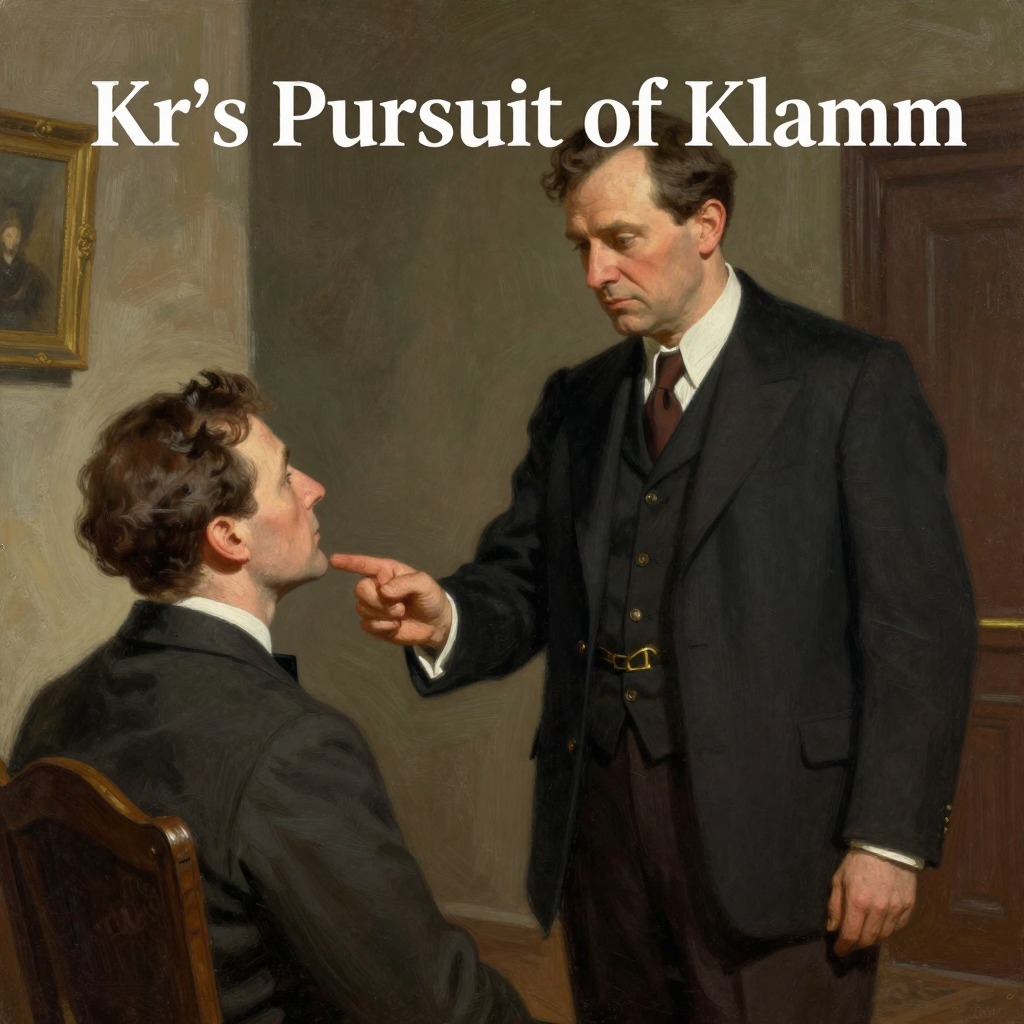
When K. finally appears before Erlanger, the secretary is already fully clothed, preparing to leave, and he wastes no time on pleasantries. He dismisses K.'s attempt to apologize with a weary closing of his eyes, indicating that such formalities are irrelevant. His command is stark and absolute: Frieda, the former barmaid, must return to the bar at once. Erlanger explains that the change of barmaid, though seemingly insignificant, could disturb Klamm, whose important work leaves him little strength to defend against outside irritations. He states, "We are in duty bound to watch over Klamm's comfort by removing troublesome factors if they appear to us potentially upsetting, even if they do not, as is very probable, upset him at all." This rationale reveals the castle's obsessive concern with Klamm's well-being, which overrides any personal feelings or relationships.
The Order's Significance
Erlanger's order is delivered with an air of finality that leaves no room for negotiation. He tells K., "Personal feelings must be left out of this, that's obvious, so I am not going to enter into any further discussion of it." He adds a veiled incentive: "should you be of service in this small matter, it could possibly be useful to you in your further progress." This promise of potential advancement is typical of the castle's method of control—offering vague, conditional rewards that never materialize. K. perceives the order as ridicule, recognizing that it demonstrates "how useless all his own efforts were." The command is given "above his head," and his status is "far too low for him to intervene or actually silence them and get his own voice heard."
Aftermath and Thematic Resonance
After delivering his order, Erlanger departs quickly, walking "fast but with a slight limp," followed by his servant. His brief appearance leaves K. with a profound sense of futility, reinforcing the novel's central theme of the individual's powerlessness against an incomprehensible bureaucracy. Erlanger's role is not to engage with K. as a person but to transmit the castle's will, treating K. as a mere instrument to be used and discarded. His command also highlights the arbitrary nature of authority: Frieda's return is demanded not because of any wrongdoing but because of a potential, unverifiable disturbance to Klamm. Erlanger's character, though minor, embodies the impersonal, unapproachable nature of the castle's officials, who operate according to inscrutable rules and show no regard for human relationships or individual desires.