The peephole
The CastleThe peephole is a small observation hole in the door of Klamm's room at the Castle Inn, through which K. first sees the castle official Klamm. It functions as a symbol of the villagers' limited, mediated access to the castle's power, and its use marks a turning point in K.'s relationship with Frieda, leading to their affair and his subsequent entanglement with the castle's bureaucracy.
Discovery and First Use
K. first learns of the peephole from Frieda, the barmaid at the Castle Inn, during his initial visit there. When K. asks if she knows Klamm, Frieda points to a door on her left and says, "There's a little peephole there; you can look through that." She leads K. to the door, and through the small hole, which had obviously been made for purposes of observation, he sees almost the whole of the next room. Klamm is sitting at a desk in the middle of the room, in a comfortable round armchair, brightly illuminated by an electric light-bulb hanging in front of him. K. observes Klamm's stout, ponderous figure, his smooth face with drooping cheeks, his long black moustache, and his pince-nez set at a crooked angle. Klamm is resting his left elbow on the desk, his right hand holding a Virginia cigarette, and a beer glass stands on the desktop. K. asks Frieda to confirm that there are no papers on the desk, and she assures him there are none, having been in the room herself only a little while ago. K. is allowed to look through the peephole as long as he likes, and this moment of observation becomes a pivotal experience for him.
The Peephole and Frieda's Revelation
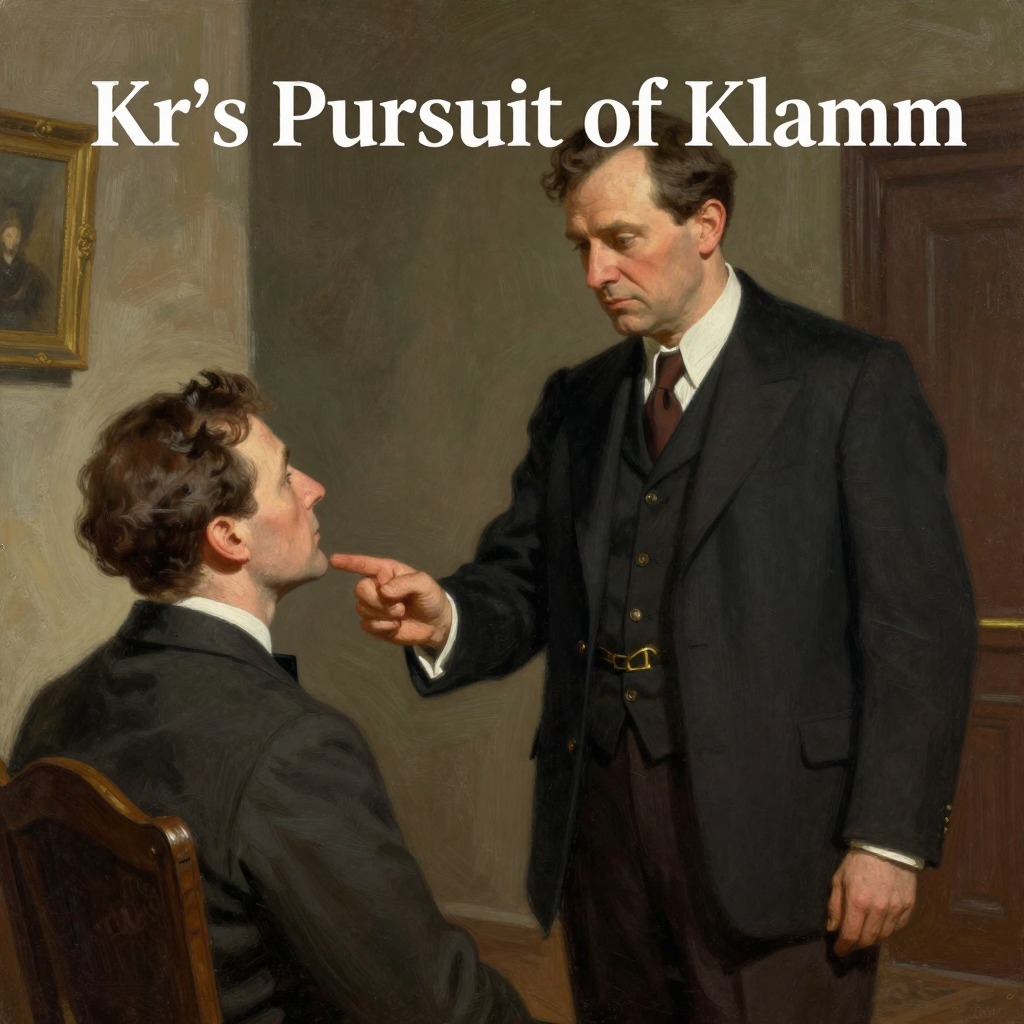
While K. is at the peephole, Frieda reveals that she is Klamm's lover, a confession that changes K.'s perception of her and his own ambitions. She leans close to K., and he notices her low-cut blouse, which does not quite suit her meagre body. When K. asks if she has ever been in the castle, she replies, "No, but isn't it enough that I'm here in the bar?" This exchange, conducted in the shadow of the peephole, establishes Frieda's pride in her connection to Klamm and K.'s growing interest in using her to reach the castle official. The peephole thus becomes a threshold between K. and the object of his quest, but also a site of intimacy and manipulation.
The Peephole's Role in K.'s Relationship with Frieda
The peephole is directly linked to the beginning of K.'s affair with Frieda. After their conversation, Frieda stops up the peephole with a small piece of wood from her leather bag, a gesture that signals the end of K.'s observation and the start of a more personal interaction. Later that night, K. hides under the bar counter when the landlord enters, and Frieda, finding him there, kisses him and then joins him under the bar. Their embrace, which takes place in the puddles of beer and rubbish on the floor, is a direct consequence of the intimacy established through the peephole. The landlady later reproaches K. for having used the peephole, saying, "I was sorry to hear that Frieda let you look through the peephole; you'd already seduced her when she did that." This suggests that the act of looking through the peephole was itself a form of transgression that drew K. and Frieda together.
The Peephole as a Symbol of Mediated Access
The peephole represents the limited and indirect way in which the villagers can perceive the castle and its officials. Klamm is never seen directly by most people; he is glimpsed through such apertures, or through rumours and hearsay. The peephole allows K. to see Klamm, but only in a controlled, one-way manner, reinforcing the castle's inaccessibility. The landlady, in her second conversation with K., explains that Klamm never speaks to villagers, and that even Frieda's access to him was exceptional. The peephole thus embodies the villagers' position: they can observe the castle's power but cannot interact with it on equal terms. K.'s use of the peephole is an attempt to bridge this gap, but it ultimately leads him into a deeper entanglement with the castle's bureaucracy, as his affair with Frieda draws him into the complex web of relationships and rules that govern the village.
The Peephole's Later Significance
Later, when K. returns to the Castle Inn to wait for Klamm, he tries to find the peephole again, but the door is locked and the catch over the peephole is so well fitted that he cannot find it by touch. He strikes a match, and is startled by a young girl, Pepi, who is sitting by the stove. This moment marks K.'s loss of access to Klamm, as Frieda has left the inn and the peephole is no longer available to him. The peephole, once a window into Klamm's world, becomes a closed door, symbolizing K.'s failure to penetrate the castle's mysteries. The peephole thus serves as a recurring motif of the novel's central theme: the elusive, mediated nature of authority and the impossibility of direct communication with the castle.