
The Conflict between Church and State
The Divine ComedyThe ongoing struggle between papal authority and imperial power, as critiqued throughout the Comedy.
increasing Bearing strength in each event
 decreasing
Bearing strength in each eventdecreasingThe Donation of Constantine
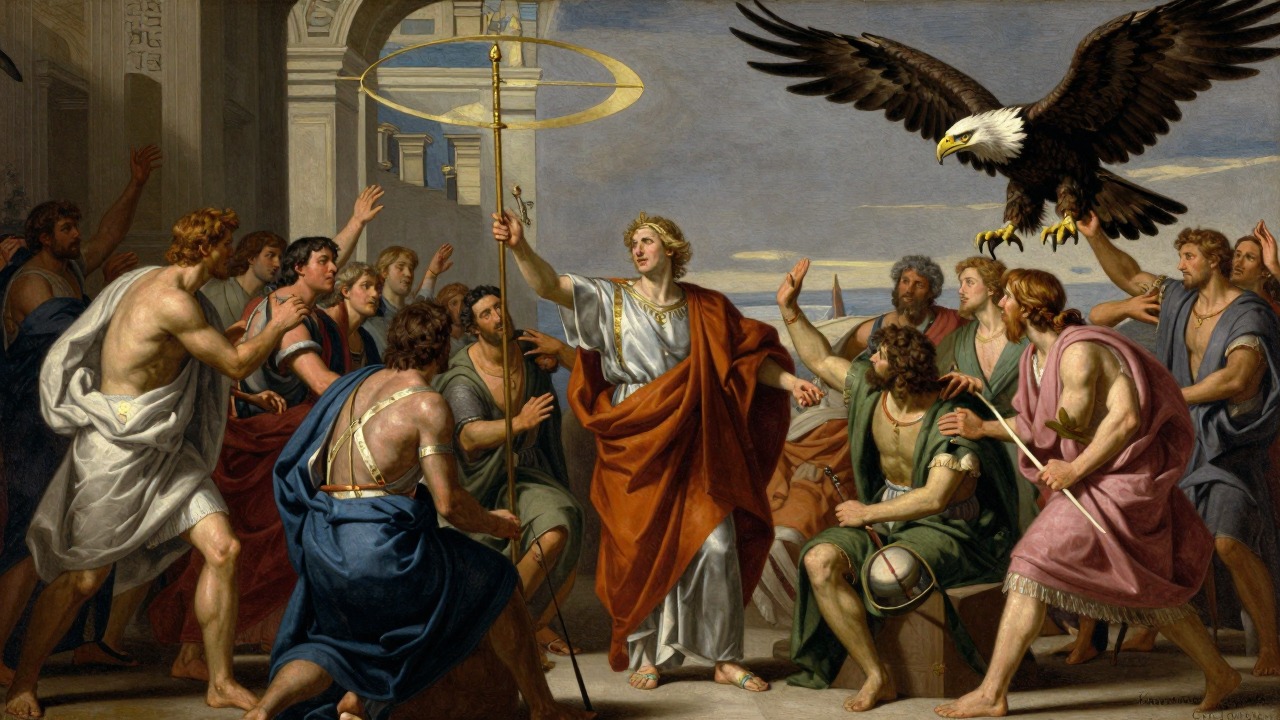
The Corrupting Gift
Dante's Invective
In the circle of simoniacs, Dante condemns the Donation of Constantine, which gave temporal power to the Church. He calls it the mother of much evil.
The Eagle's View
In Jupiter, the eagle notes that Constantine's good intention (to aid the Church) had bad fruit, leading to corruption.
The Two Suns
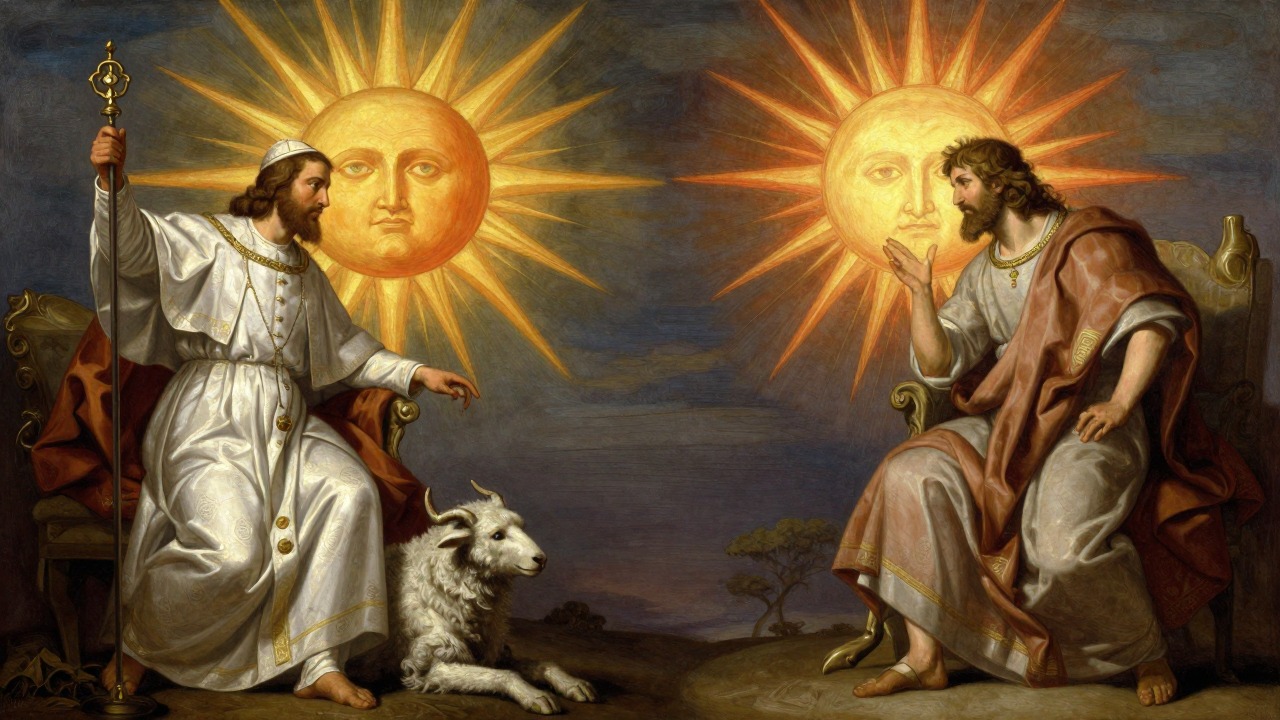
The Ideal Order
The Two Authorities
Marco Lombardo explains that Rome once had two suns: the Pope and the Emperor, each governing separate spheres. But one has quenched the other.
The Result
The Church has usurped temporal power, leading to the world's corruption. The shepherd can ruminate but does not cleave the hoof (i.e., lacks discernment).
The Corruption of the Papacy
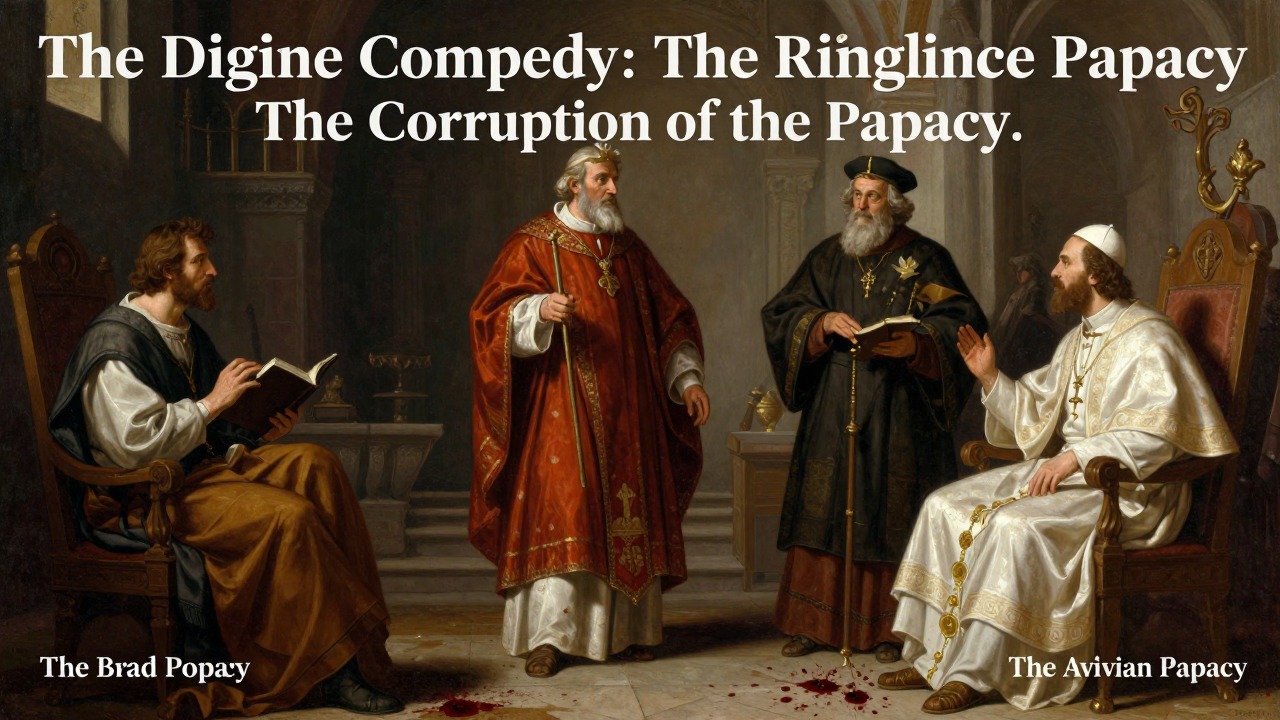
The Bad Popes
Nicholas III and Boniface VIII
In Hell, Dante sees Pope Nicholas III and prophesies the arrival of Boniface VIII and Clement V, all simoniacs. In Paradise, St. Peter denounces the current pope who has made his see a sewer of blood.
The Avignon Papacy
Dante criticizes the papacy's move to Avignon and its entanglement with French politics. He calls for reform.
The Ideal Emperor
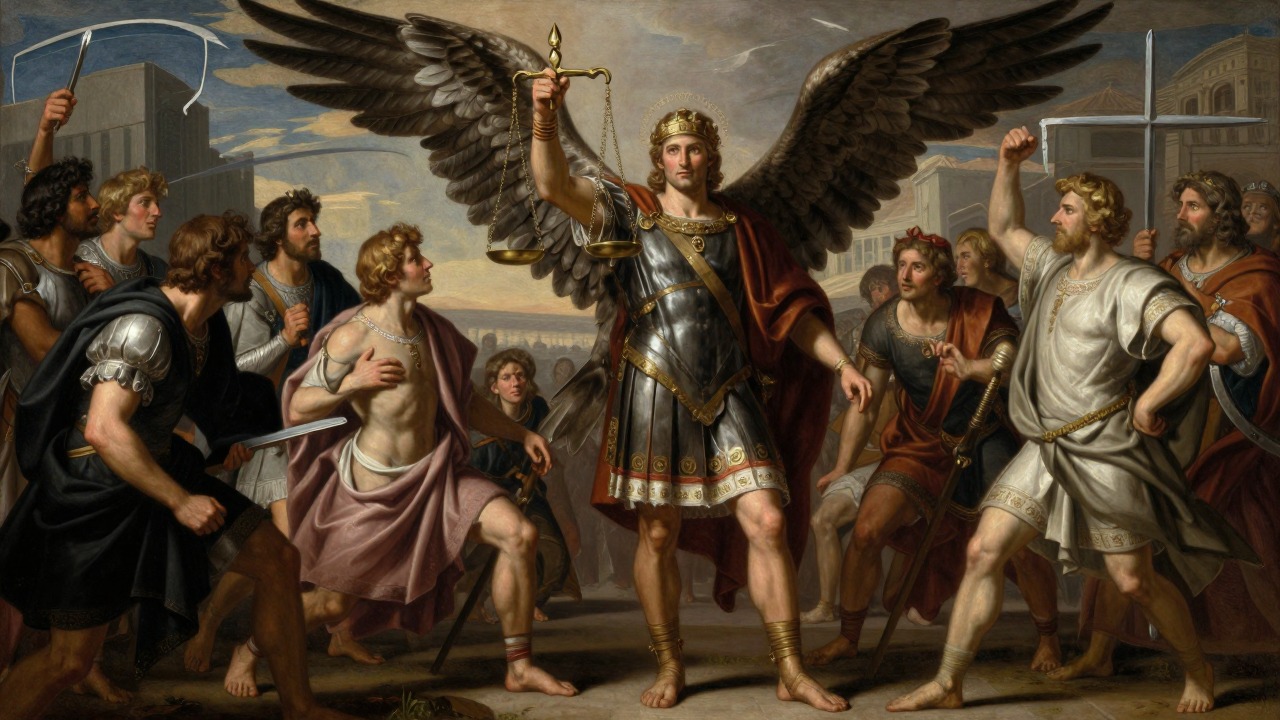
The Just Ruler
Justinian's Eagle
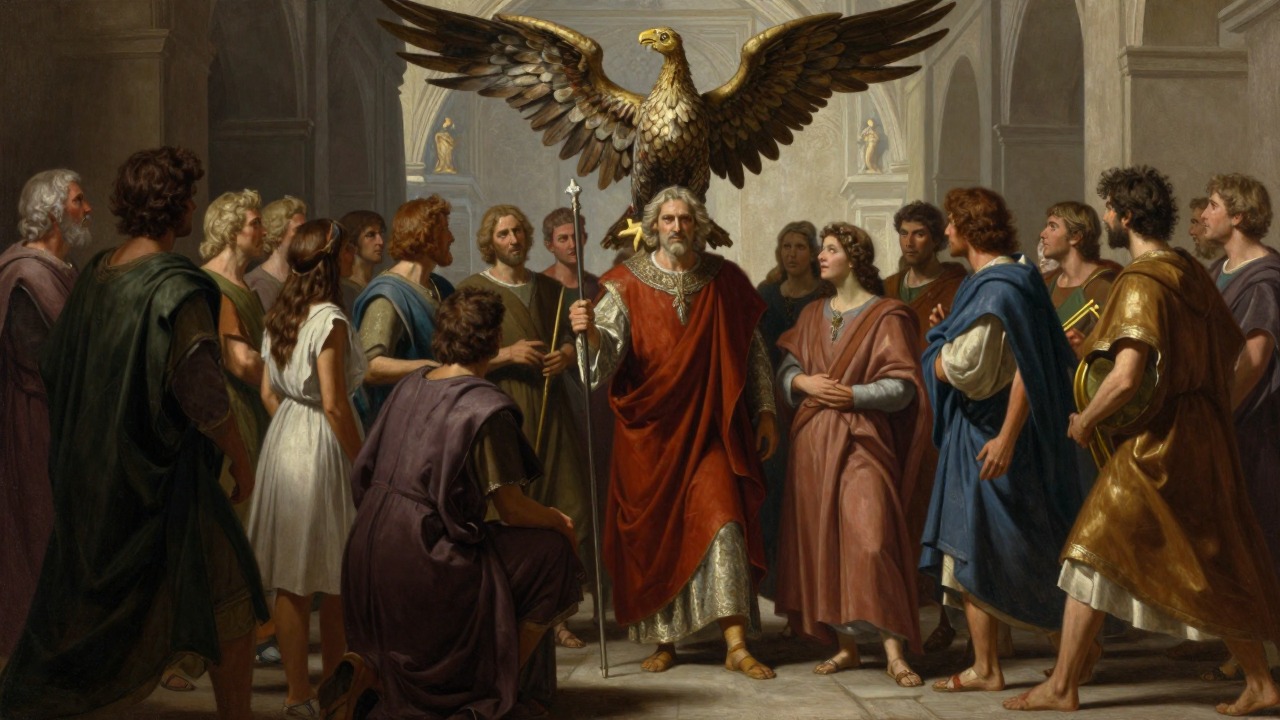
Justinian presents the Roman Empire as divinely ordained. The ideal emperor upholds justice and protects the Church without dominating it.
Henry VII
Beatrice prophesies the coming of Henry VII, who will restore order to Italy. But his efforts are thwarted by the corrupt papacy.
The Ghibelline and Guelph Conflict
The Factions
Farinata and the Florentines
Farinata represents the Ghibelline cause, while Dante's family is Guelph. The political strife is a major theme, leading to Dante's exile.
The Condemnation
Dante condemns both factions for their selfishness. The true standard is the Roman Eagle, not partisan flags.
In the Inferno, Canto XIX, and Paradiso, Canto XX
In Purgatory, Canto XVI, Marco Lombardo's discourse
Throughout the Comedy, especially in Inferno and Paradiso
In Paradiso, Canto VI and XXX
Throughout the Comedy, especially in Inferno and Purgatorio
