Exile
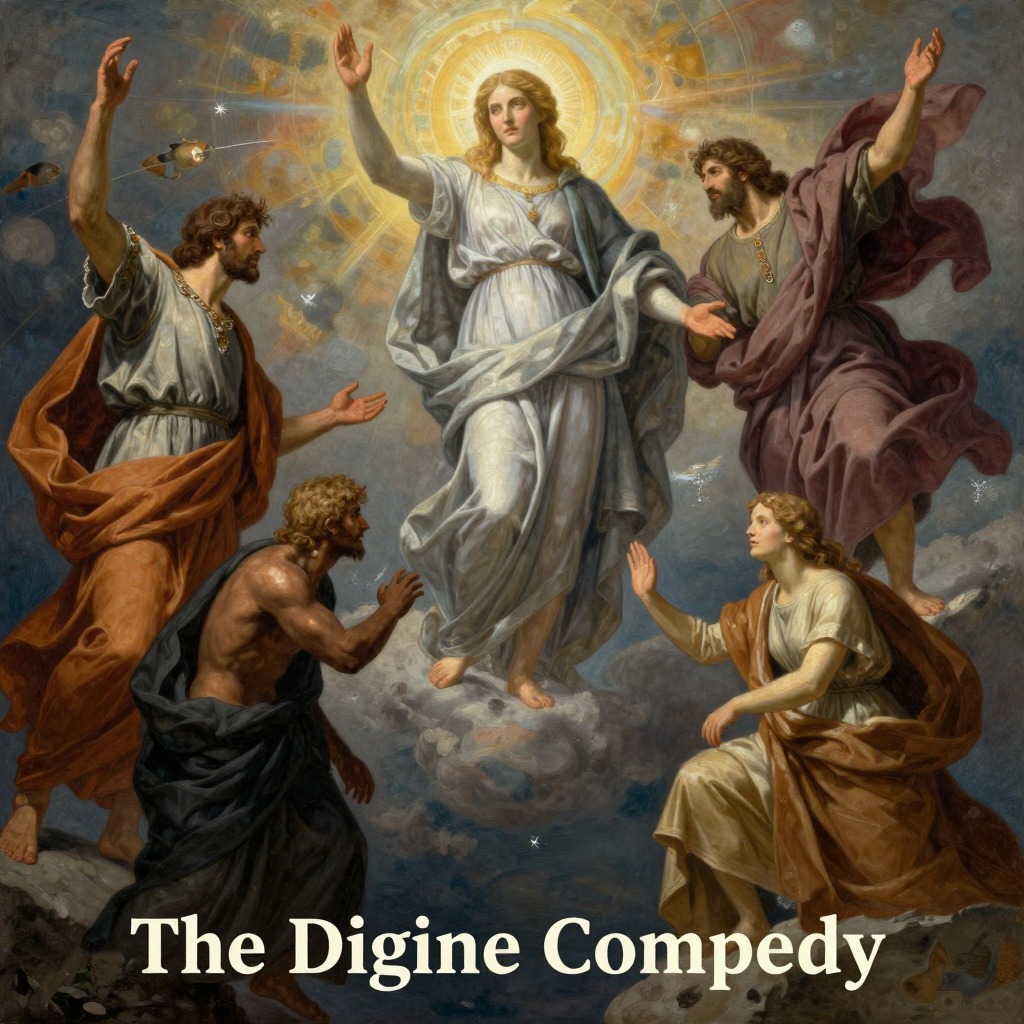
The Divine ComedyExile is the wound that runs through the whole of the Divine Comedy, both as the biographical catastrophe that produced the poem and as the spiritual condition that the poem seeks to overcome. Dante Alighieri, a Florentine deeply involved in the city's political conflicts between the Guelphs and Ghibellines, and later between the Bianchi and Neri factions, was sentenced to perpetual banishment from Florence in 1302. This expulsion from his native city—the place of his birth, his family, his language, and his poetic formation—is the lived reality that shadows every line of the Comedy. The poem is not only a vision of the afterlife but an act of imaginative return, a way of re-entering the world from which the poet had been violently excluded. Exile in the Comedy is therefore both a literal punishment and a metaphor for the soul's estrangement from God, and the journey through Hell, Purgatory, and Paradise is structured as a progressive overcoming of that estrangement.
The Prophecy of Exile and Its Bitter Taste
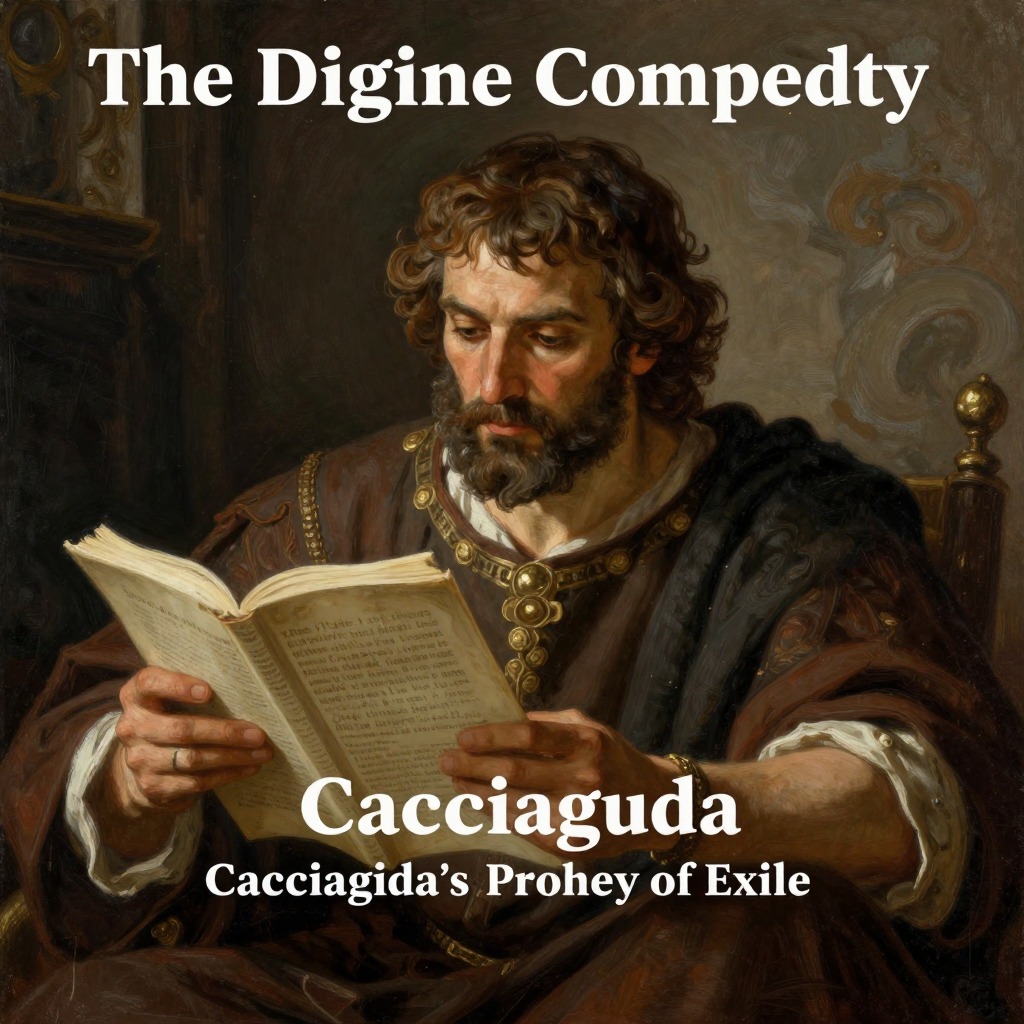
The most explicit treatment of exile in the poem comes in Paradiso, Canto XVII, where Dante's ancestor Cacciaguida foretells the poet's banishment in terms that are both precise and devastating. Speaking from the sphere of Mars, Cacciaguida tells Dante that he "must perforce depart" from Florence, just as Hippolytus was driven from Athens by a false and cruel stepmother. The prophecy is not vague: "Already this is willed, and this is sought for; and soon it shall be done by him who thinks it, where every day the Christ is bought and sold." The blame, Cacciaguida says, will follow the offended party in outcry, but the vengeance will witness to the truth. Then comes the most famous image of exile in the poem: "Thou shalt abandon everything beloved most tenderly, and this the arrow is which first the bow of banishment shoots forth." The metaphor of the arrow captures the suddenness and violence of the expulsion. What follows is an even more memorable image: "Thou shalt have proof how savoureth of salt the bread of others, and how hard a road the going down and up another's stairs." The salt of another's bread—the bitterness of eating food that is not one's own, that is given as charity or bought with humiliation—and the exhausting climb of another's stairs—the dependency and precariousness of life as a guest in foreign houses—become the defining sensory experiences of the exiled poet. This passage is the emotional and thematic core of the Comedy's engagement with exile, and it is placed not in the Inferno, where one might expect punishment, but in Paradise, where the eternal perspective makes the temporal suffering both clearer and more bearable.
The Weight of Bad Company and the Solitary Path
Cacciaguida's prophecy does not stop at the personal pain of exile. It also warns Dante about the company he will keep. "And that which most shall weigh upon thy shoulders will be the bad and foolish company with which into this valley thou shalt fall; for all ingrate, all mad and impious will they become against thee." The "bad and foolish company" refers to the other Florentine exiles with whom Dante initially allied, only to find them treacherous, self-serving, and ultimately hostile. The prophecy continues: "but soon after they, and not thou, shall have the forehead scarlet. Of their bestiality their own proceedings shall furnish proof; so 'twill be well for thee a party to have made thee by thyself." This is a crucial moment: Dante is told that his salvation lies in isolation, in becoming a party of one. The exile that was supposed to be a collective punishment becomes the condition for individual integrity. The poet who was driven out of his city is also driven out of the faction, and this double expulsion—from Florence and from the exiles—leaves him alone, but also free. It is this solitude that makes the Comedy possible: the poem is written by a man who belongs nowhere and therefore can see everything.
The First Refuge and the Generous Lombard
Yet exile is not only loss; it is also the occasion for unexpected hospitality. Cacciaguida tells Dante that his "earliest refuge and earliest inn shall be the mighty Lombard's courtesy, who on the Ladder bears the holy bird." This is Bartolomeo della Scala, lord of Verona, whose family crest bore the imperial eagle on a ladder. The prophecy emphasizes that this host will show such benign regard that "'twixt you twain, in doing and in asking, that shall be first which is with others last." In other words, the lord of Verona will anticipate Dante's needs before he even asks, a generosity that stands in stark contrast to the ingratitude of the Florentines. With Bartolomeo, Dante will also see a young boy—"who at his birth has by this star of strength been so impressed, that notable shall his achievements be"—a reference to Can Grande della Scala, who was only nine years old at the time but would later become Dante's most powerful patron. The prophecy adds that "ere the Gascon cheat the noble Henry, some sparkles of his virtue shall appear in caring not for silver nor for toil." This is a promise that the exile will not be without honor or support, and that the very condition of being homeless will bring him into contact with the most magnanimous spirits of the age.
Exile as the Condition of the Poem
The Comedy itself is framed by the experience of exile. The opening lines—"Midway upon the journey of our life I found myself within a forest dark, for the straightforward pathway had been lost"—can be read as the poet's own disorientation after being cast out of Florence. The "dark forest" is not only a spiritual state but a political and geographical one: the poet is lost in a world that is no longer his own. Virgil's offer to guide him through Hell and Purgatory to the threshold of Paradise is, in a sense, an offer to turn the experience of exile into a journey of redemption. The poem becomes the means by which Dante re-enters the city of God, having been barred from the city of men. The final vision of God, in which the poet sees the love that moves the sun and the other stars, is the ultimate homecoming: an exile from Florence finds his true citizenship in the Empyrean. The Comedy is thus not a poem written despite exile; it is a poem written because of exile. The bitterness of another's bread and the hardness of another's stairs are the very materials out of which the poet builds his vision of justice, mercy, and eternal order.
The Narrative Role of Exile in the Poem's Structure
Exile functions as a narrative engine throughout the Comedy. In the Inferno, the damned are those who have been exiled from God's presence, and their punishments are the permanent form of that exclusion. In Purgatory, the souls are in a state of temporary exile from Paradise, but they are sustained by hope. In Paradise, the blessed are those who have found their true home. Dante's own journey mirrors this progression: he begins as an exile from grace, passes through the purgatorial process of purification, and ends as a citizen of heaven. The poem's structure—from the dark wood to the vision of God—is the arc of exile overcome. Moreover, the poem repeatedly returns to the theme of political exile, not only in Cacciaguida's prophecy but in the many encounters with souls who were exiled in life or who speak of exile. Brunetto Latini, for example, tells Dante that the Florentines "will make themselves, for thy good deeds, thy foe" and warns him to "cleanse thee" of their customs. Farinata degli Uberti, though a heretic, speaks with pride of having twice scattered the Guelphs, and Dante retorts that his own party, though banished, returned both times. The political conflicts that led to Dante's exile are woven into the very fabric of the poem, and the poet's judgment of the living and the dead is inseparable from his experience of having been judged and condemned by them.
The Thematic Significance: Exile as the Human Condition
Beyond the biographical and political, exile in the Comedy becomes a universal symbol of the human condition. Every soul in the poem is, in some sense, an exile: the damned are exiled from God eternally, the penitent are exiled from Paradise temporarily, and the blessed are exiles from the earth they once knew. Dante himself is the living embodiment of this condition: he is a man who belongs neither to the world of the living nor to the world of the dead, a traveler who passes through all three realms but can rest in none until the final vision. The poem's famous line "In His will is our peace" (Paradiso III, 85) is the answer to the problem of exile: peace comes not from returning to one's native city but from accepting one's place in the divine order. The exile who has lost everything—home, family, status, even his own name in the mouths of his enemies—finds that he has gained the universe. The Comedy is the record of that gain, and it is written in the language of the city that rejected him, so that Florence, which tried to erase him, is made immortal by his song.