
The Theme of Truth and Lies
The FallFollows the novel's meditation on the nature of truth, lies, and confession, as embodied by Clamence's narrative.
increasing Bearing strength in each event
 decreasing
Bearing strength in each eventdecreasingThe Life of Lies
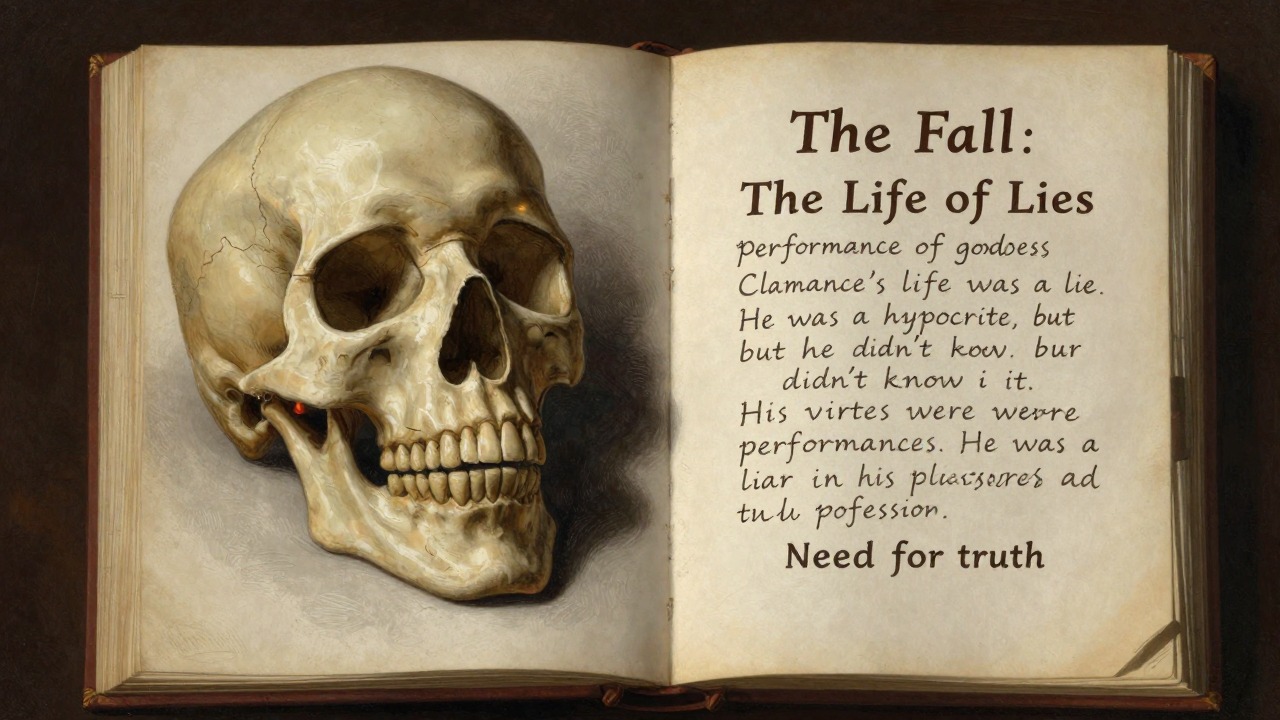
The mask of virtue
A performance of goodness
Clamence's life was a lie. He was a hypocrite, but he didn't know it. His virtues were performances. He was a liar in his pleasures and in his profession.
The need for truth
Yet he felt the need to confess. He was tormented by the thought of death and the lie that would become definitive. He wanted to reveal his duplicity.
The Confession as a Tool
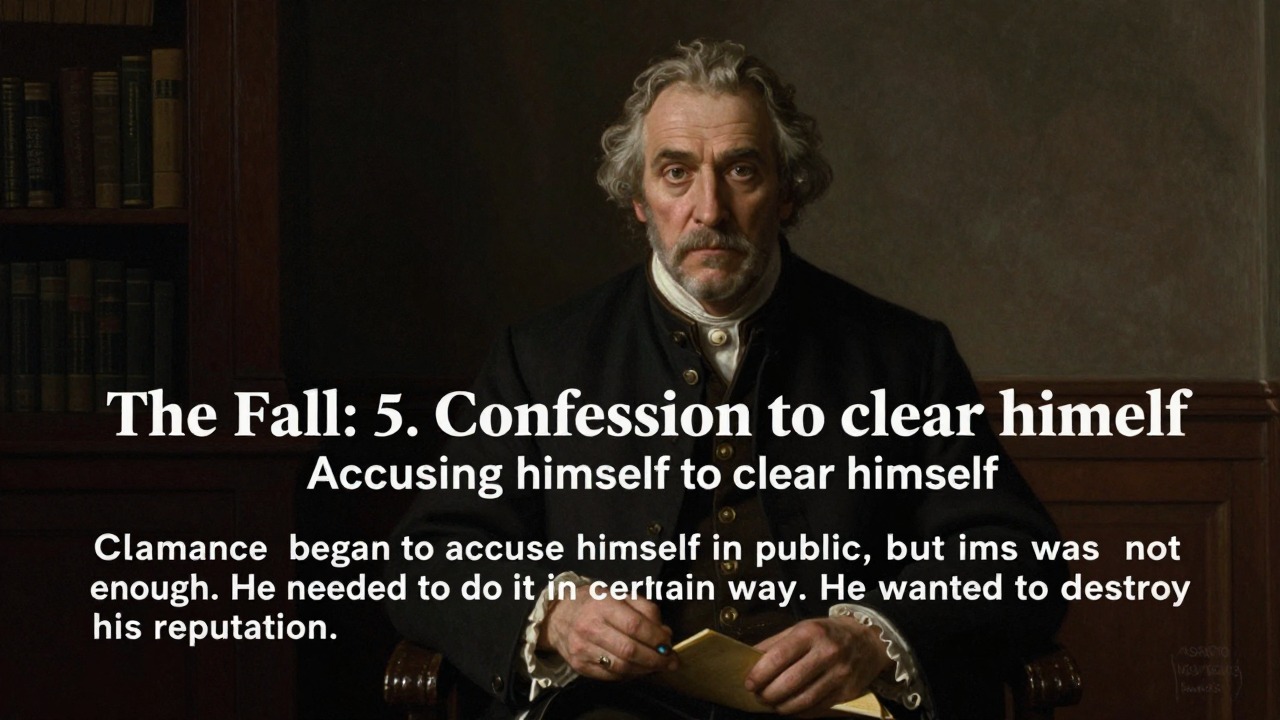
The desire to reveal
Accusing himself to clear himself
Clamence began to accuse himself in public, but it was not enough. He needed to do it in a certain way. He wanted to destroy his reputation.
The failure of crude confession
His provocations only disconcerted opinion. He didn't find the right method. The truth was not in simple self-accusation. The theme of truth and lies deepens: how to use lies to tell the truth.
The Art of the Judge-Penitent
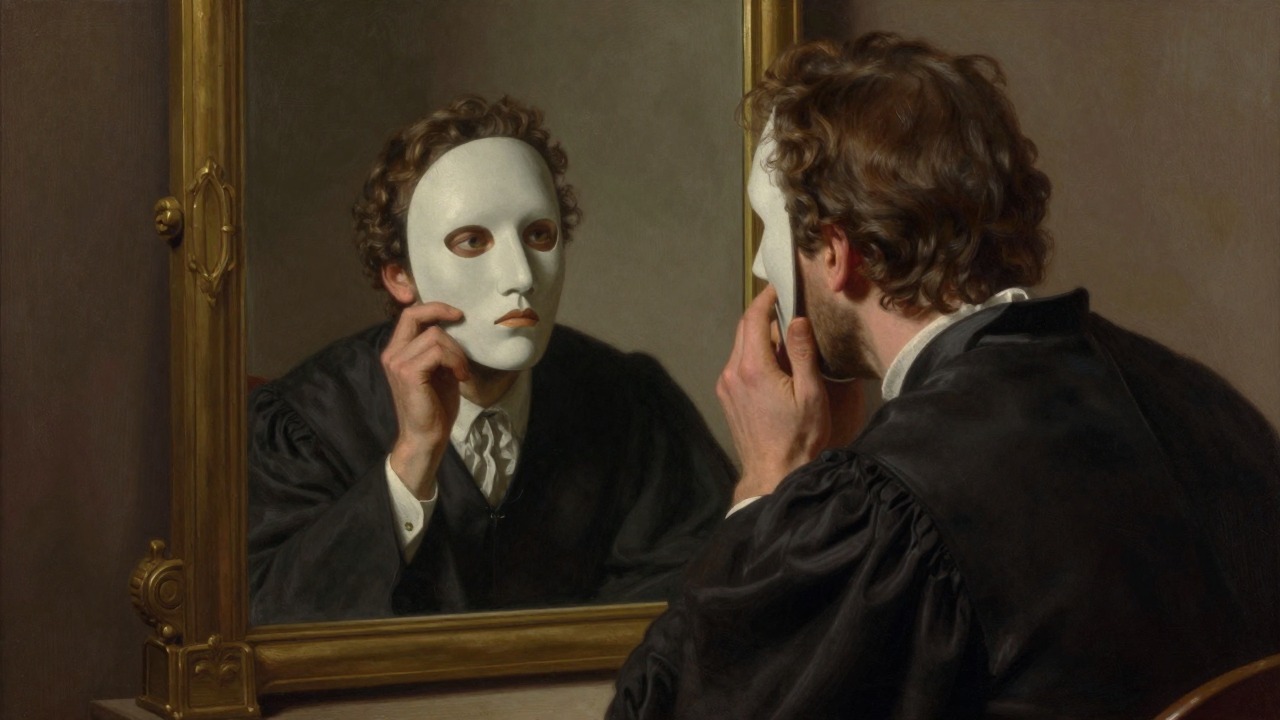
The subtle confession
A portrait that is a mirror
Clamence constructs a portrait that is both a mask and a mirror. He accuses himself in a way that leads others to confess. He uses lies to reach the truth.
The twilight of falsehood
He says falsehood is a beautiful twilight that enhances every object. He doesn't care if his stories are true or false, as long as they are significant. The theme of truth and lies is resolved in a pragmatic, cynical way.
Clamence's Parisian years
During his period of provocation
In Amsterdam, in his practice
