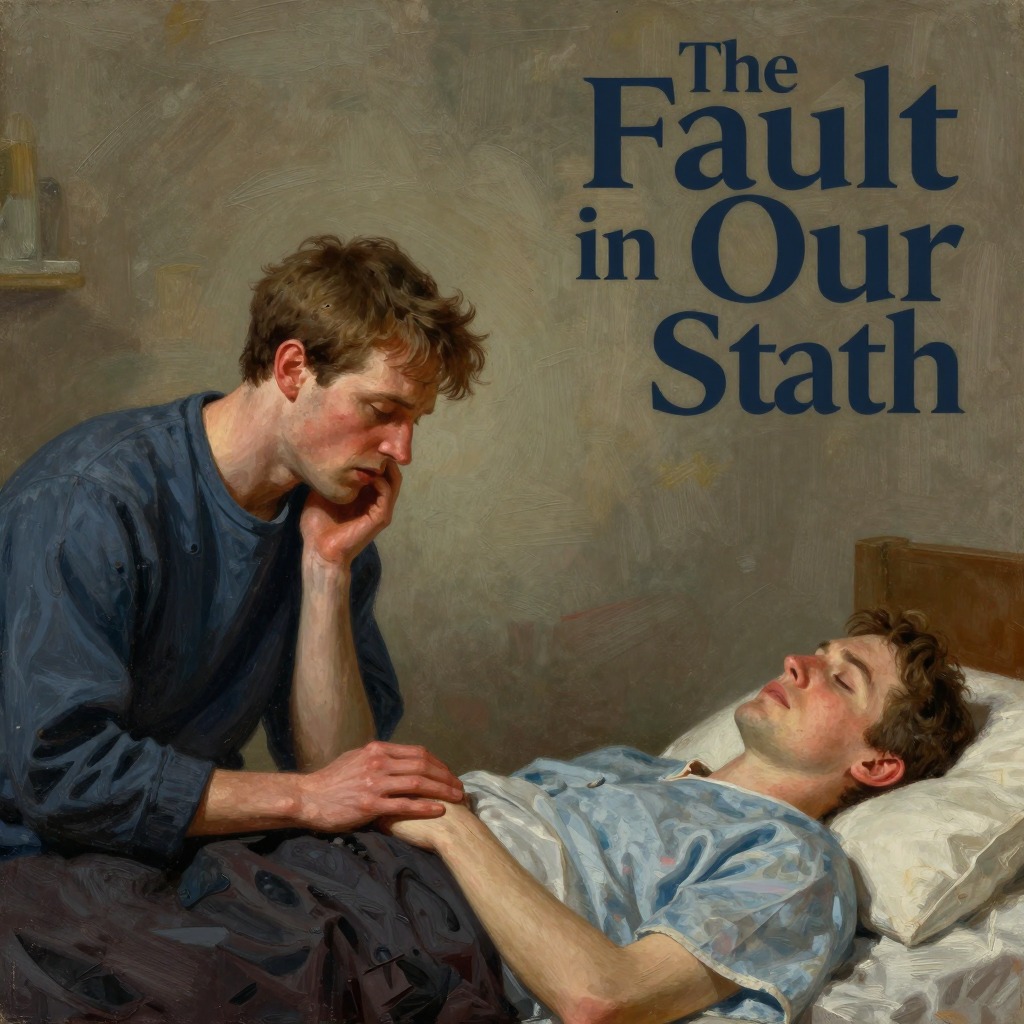
The Literal Heart of Jesus
The Fault in Our StarsThe Literal Heart of Jesus is the basement meeting room of a stone-walled Episcopal church in Indianapolis where the Support Group for young cancer patients and survivors gathers every Wednesday. It is a physically and symbolically charged space: the group sits in a circle at the center of a cross-shaped floor, which the Support Group Leader Patrick repeatedly describes as being "literally in the heart of Jesus." This room is the site of Hazel's first meeting with Augustus Waters, the staging ground for Augustus's prefuneral, and the location of his funeral visitation. It functions as a recurring space of confrontation with mortality, community, and the tension between religious consolation and the raw experience of terminal illness.
Physical Description and Symbolic Architecture
The Support Group meets in the basement of a stone-walled Episcopal church shaped like a cross. The chairs are arranged in a circle "right in the middle of the cross, where the two boards would have met, where the heart of Jesus would have been." The room is accessed by stairs or an elevator; taking the elevator is considered a "Last Days kind of activity." A decrepit selection of cookies and lemonade is available on a table. The space is described as "depressing as hell" by Hazel, who notes the rotating cast of members in "various states of tumor-driven unwellness." The room's religious architecture is relentlessly invoked by Patrick, who talks about "the heart of Jesus every freaking meeting, all about how we, as young cancer survivors, were sitting right in Christ's very sacred heart and whatever." Augustus Waters later jokes about the literalness of this claim, saying, "We are literally in the heart of Jesus. I thought we were in a church basement, but we are literally in the heart of Jesus." Hazel responds, "Someone should tell Jesus. I mean, it's gotta be dangerous, storing children with cancer in your heart."
The Space of First Encounters
The Literal Heart of Jesus is where Hazel first sees Augustus Waters. He is sitting in a molded plastic elementary school chair, staring at her. The room's routine—the serenity prayer, introductions around the circle, Patrick's retelling of his ball-lessness, the sharing of fears—provides the structured backdrop against which their connection forms. During the introductions, Augustus says he fears oblivion, and Hazel responds with a speech about the inevitability of human extinction, which prompts Augustus to say, "Goddamn. Aren't you something else." The room is also where the group holds hands for Patrick's closing prayer, which includes a long list of the dead read from a sheet of paper. Hazel imagines the day when her name will be added to that list, "all the way at the end when everyone had stopped listening." The group ends each meeting by chanting the mantra "LIVING OUR BEST LIFE TODAY."
The Prefuneral and the Funeral
Months later, after Augustus's cancer has recurred and he is in a wheelchair, he arranges a prefuneral in the Literal Heart of Jesus. He has the door held open by a rock and waits for Hazel in the center of the circle. Isaac delivers a eulogy from a small wooden lectern, and Hazel reads her own eulogy, in which she speaks about infinite numbers and says, "You gave me a forever within the numbered days, and I'm grateful." The room is also the site of Augustus's actual funeral visitation. Hazel sits in the back, watching people approach the coffin. She walks up to him, kisses his cheek, and slips a pack of Camel Lights into the coffin, whispering, "You can light these. I won't mind." The funeral service itself takes place in the same room—"the Literal Hand of Jesus, I guess, the part of the cross he'd been nailed to"—where a minister speaks about Augustus's courageous battle and his healing in heaven, which Hazel finds infuriating. Peter Van Houten attends the funeral, sitting in the back row, and whispers to Hazel, "What a load of horse crap, eh, kid?"
Narrative and Thematic Significance
The Literal Heart of Jesus is the novel's central space for the ritualized processing of terminal illness. Its religious symbolism—the cross, the heart of Jesus, the prayers—is persistently undercut by the characters' ironic commentary and by the raw, unsentimental reality of the suffering that fills it. The room is where Hazel first articulates her philosophy of oblivion, where Augustus stages his own memorial, and where the community of the dying and the bereaved gathers. It is a space that both contains and fails to contain the pain it houses, a place where the language of faith and the language of cancer coexist in unresolved tension. The room's name, taken literally by the characters, becomes a running joke that also carries genuine emotional weight: it is a place where the sacred and the profane, the metaphorical and the literal, are constantly in collision.