Polaroid Photograph
The Kite RunnerThe Polaroid photograph of Hassan and his son Sohrab is one of the most emotionally charged objects in The Kite Runner, a fragile piece of paper that carries the weight of a buried past and the hope of a future. It is the only visual record Amir possesses of the family he betrayed, and it functions as both a summons and a talisman throughout his journey to redemption.
Appearance and Origin
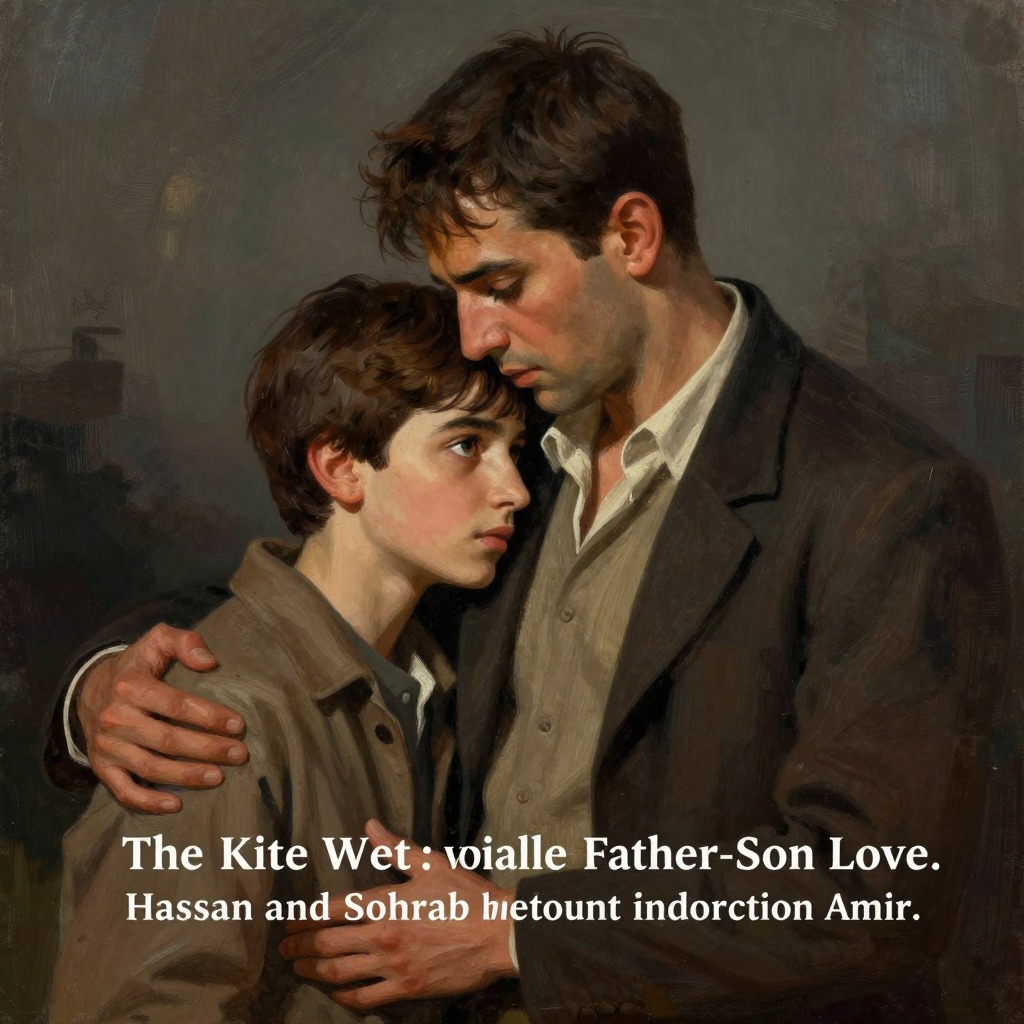
Rahim Khan gives the Polaroid to Amir during their meeting in Peshawar in June 2001. The photograph shows Hassan, now a grown man, standing with his son Sohrab in front of the wrought-iron gates of Baba's house in Kabul. Hassan is dressed in a white turban and a green-striped chapan, squinting and smiling at the camera, showing a pair of missing front teeth. The image captures a sense of self-assuredness and ease in Hassan's posture—feet slightly apart, arms comfortably crossed on his chest, head tilted toward the sun. Sohrab, barefoot, stands with one arm wrapped around his father's thigh, his shaved head resting against Hassan's hip, both of them grinning and squinting into the sunlight. The photograph is blurry, a product of a cheap instant camera, but it exudes a warmth that contrasts sharply with the grim reality of their lives under Taliban rule.
A Link to the Past and a Call to Action
For Amir, the Polaroid is not merely a keepsake; it is a direct line to the guilt he has carried since the winter of 1975. When Rahim Khan reveals that Hassan was his half-brother and that Hassan and his wife Farzana have been murdered by the Taliban, the photograph becomes a tangible representation of the family Amir never acknowledged. It is the face of the boy he failed to protect, now a man who has been killed. The image of Sohrab, the orphaned son, transforms Rahim Khan's abstract plea—"There is a way to be good again"—into a concrete mission. Amir studies the photograph, memorizing the details of his brother's face, and it hardens his resolve to go to Kabul. When he shows the Polaroid to Wahid, Farid's brother, he explains that the man in the photo was his half-brother, and that the boy is the reason he has returned to Afghanistan. The photograph thus serves as a visual proof of his connection to Hassan, a connection he had spent his life denying.
A Gift and a Source of Comfort
After rescuing Sohrab from Assef's compound and bringing him to Pakistan, Amir gives the Polaroid to the traumatized boy. They sit outside the Shah Faisal Mosque in Islamabad, and Sohrab brings the photograph to within an inch of his face, turning it so the light from the mosque falls on it. He holds it in both hands, tracing his thumb over its surface, but he does not cry. When he offers it back, Amir tells him to keep it. The photograph becomes Sohrab's most treasured possession, a last physical connection to the parents he has lost. Later, in San Francisco, Amir finds the Polaroid tucked under Sohrab's pillow, a silent testament to the boy's nightly grief. The image of Hassan and Sohrab, smiling together in a world that no longer exists, is the only comfort the silent boy allows himself.
Narrative Significance
The Polaroid photograph is a masterful narrative device that collapses time and space. It allows Amir to see his brother as an adult, a man he never knew, and it gives him a face to fight for. The photograph's journey—from Rahim Khan's hands to Amir's, then to Sohrab's, and finally to a pillow in a San Francisco bedroom—mirrors the transfer of responsibility and love from one generation to the next. It is a symbol of the truth that was hidden, the family that was denied, and the fragile hope that remains. The final image of the novel, Sohrab's lopsided smile after a kite fight, is a direct echo of the smile captured in that Polaroid, suggesting that the healing process, however slow, has begun.