Shahnamah Book
The Kite RunnerThe Shahnamah Book, the tenth-century Persian epic of ancient heroes, is the most cherished story in Hassan's illiterate childhood and the narrative thread that binds Amir, Hassan, and later Sohrab across generations. It is the book Amir reads aloud to Hassan under the pomegranate tree, the gift Ali and Hassan give Amir for his thirteenth birthday, and the text Amir later reads to Sohrab in a Pakistani hospital. More than a literary artifact, the Shahnamah Book functions as a repository of shared memory, a symbol of the brothers' bond, a site of Amir's guilt and deception, and a fragile bridge to the next generation.
Identity and Role in the Childhood Bond
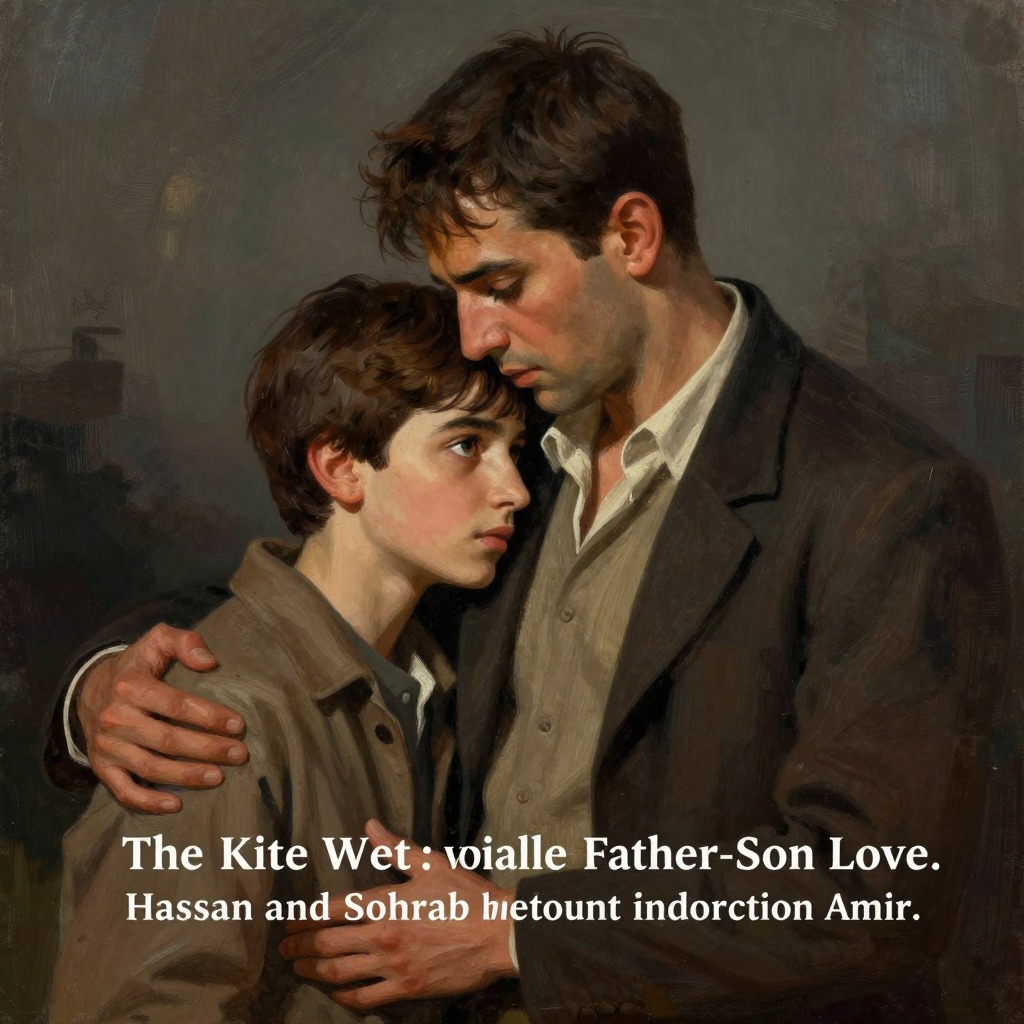
Hassan's favorite book by far was the Shahnamah, the tenth-century epic of ancient Persian heroes. He liked all of the chapters, the shahs of old, Feridoun, Zal, and Rudabeh, but his favorite story, and Amir's, was "Rostam and Sohrab," the tale of the great warrior Rostam who mortally wounds his valiant nemesis, Sohrab, in battle, only to discover that Sohrab is his long-lost son. Sometimes tears pooled in Hassan's eyes as Amir read him this passage, and Amir always wondered whom he wept for—the grief-stricken Rostam who tears his clothes and covers his head with ashes, or the dying Sohrab who only longed for his father's love. The Shahnamah was the text around which their after-school ritual revolved: sitting cross-legged under the pomegranate tree near the abandoned cemetery, sunlight and shadows of pomegranate leaves dancing on Hassan's face, Amir reading him stories he could not read for himself. Despite his illiteracy, or maybe because of it, Hassan was drawn to the mystery of words, seduced by a secret world forbidden to him.
Deception and Guilt
Amir's reading of the Shahnamah became a site of his earliest cruelty. One day in July 1973, Amir played a trick on Hassan: he pretended he was reading from the book, flipping pages regularly, but he had abandoned the text altogether, taken over the story, and made up his own. Hassan, oblivious to this, clapped and said it was the best story Amir had read him in a long time. Amir felt like a man who discovers a buried treasure in his own backyard. Later, when Amir wrote his first short story, Hassan asked a question that exposed a plot hole—"Couldn't he have just smelled an onion?"—and a cold, dark voice whispered in Amir's ear: "What does he know, that illiterate Hazara?" The Shahnamah thus became entangled with Amir's shame: he had used his literacy to deceive Hassan, and Hassan's intelligence had humiliated him in return.
The Gift and Its Rejection
On Amir's thirteenth birthday, Ali and Hassan gave him a brand new Shahnamah, a hardback with glossy colored illustrations beneath the passages. Ali said, "Hassan said your copy was old and ragged, and that some of the pages were missing. All the pictures are hand-drawn in this one with pen and ink." Amir found the book beautiful and suspected it was not inexpensive either. He wanted to tell Ali it was not the book, but he who was unworthy. Yet he ended up tossing the book on the heap of gifts in the corner of his room. His eyes kept going back to it, so he buried it at the bottom. The Shahnamah, a gift of pure loyalty, became another object of Amir's guilt, a reminder of the friendship he had betrayed.
The Bridge to Sohrab
Decades later, in a Pakistani hospital after Sohrab's suicide attempt, Amir bought a used copy of the Shahnamah from a Persian bookstore. He sat by Sohrab's bed and said, "I used to read this to your father when we were children. We'd go up the hill by our house and sit beneath the pomegranate... Your father's favorite was the story of Rostam and Sohrab and that's how you got your name." Amir read the opening lines: "Give ear unto the combat of Sohrab against Rostam, though it be a tale replete with tears." Sohrab, who had been silent and lightless, shook his head slowly when Amir offered to continue. The Shahnamah, once a source of shared joy between Amir and Hassan, now became a fragile, almost unbearable offering to a traumatized boy—a link to a father he had lost and a past he could not reclaim.