
The Narrator's Long-Delayed Storytelling
The Little PrinceTraces how the narrator, six years after the Little Prince's disappearance, finally breaks his silence and tells the story, transforming his private grief into a shared account.
increasing Bearing strength in each event
 decreasing
Bearing strength in each eventdecreasingReturn After Six Years
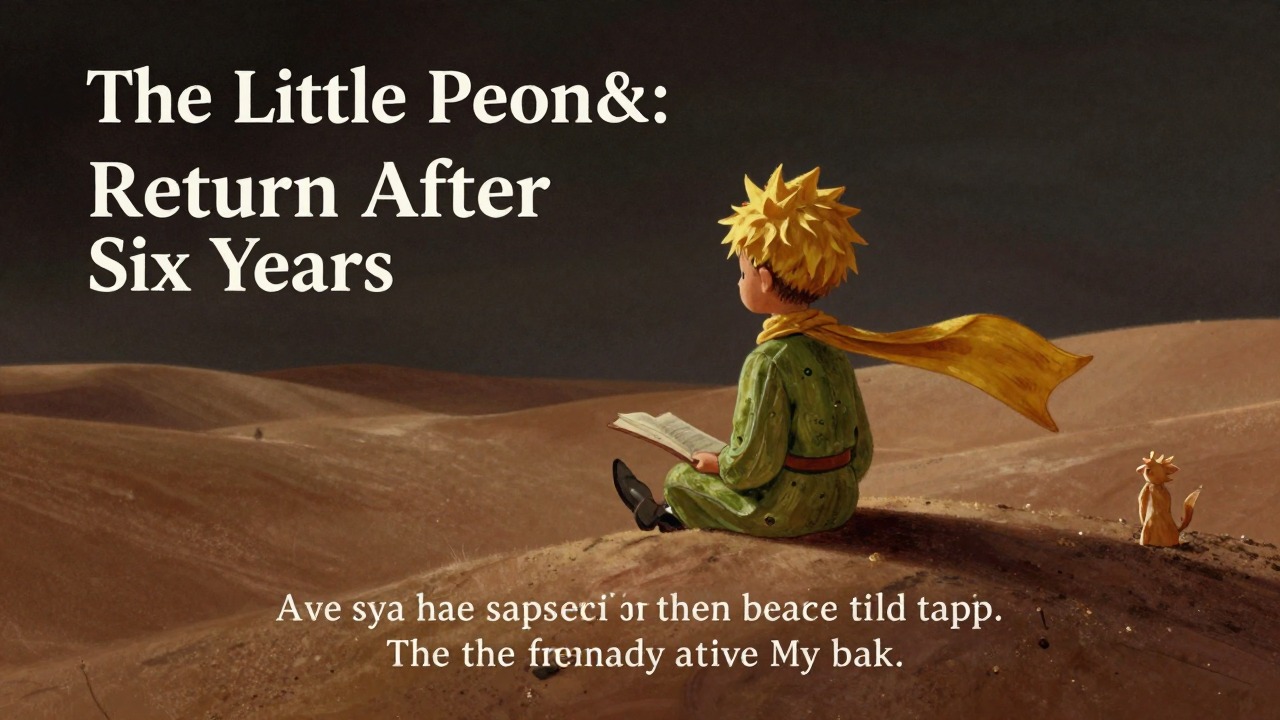
Return After Six Years
Context
The opening lines state that six years have passed since the events in the desert. During that time, the narrator has kept the story locked inside, never once telling it to the friends who greeted him when he came back. The statement that he has never yet told this story marks the beginning of a confession.
Development
The narrator remembers that his companions saw he was alive and were content; he responded with the excuse that he was tired. This tiredness covers a sorrow that has not fully healed. By saying "I am tired," he postpones the hard work of putting loss into words.
Significance
The delayed storytelling gives weight to the account that follows. It also frames the entire book as an act of healing, where the narrator finally turns private memory into shared testimony.
Tired Greeting
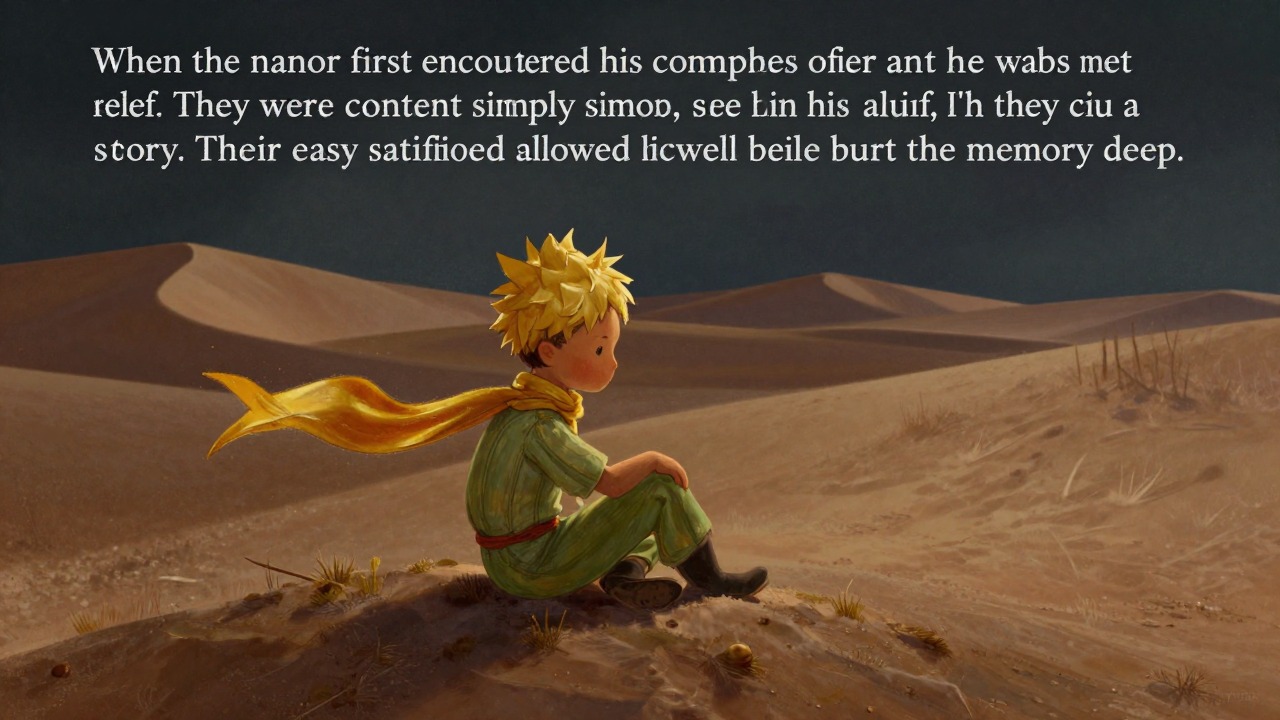
Tired Greeting
Context
When the narrator first encountered his companions after the desert ordeal, he was met with relief. They were content simply to see him alive, and they did not press him for a story. Their easy satisfaction allowed him to bury the memory deep.
Development
The narrator says he was sad but told them he was tired. This small, evasive sentence hides the true weight of what he witnessed: the Little Prince's appearance, the strange lessons, and the final disappearance. The word "tired" becomes a shield against the pain of recollection.
Significance
This moment establishes the narrator's emotional distance from his own experience. Only later, six years on, does he find the courage to replace tiredness with truth.
Comforted Sorrow
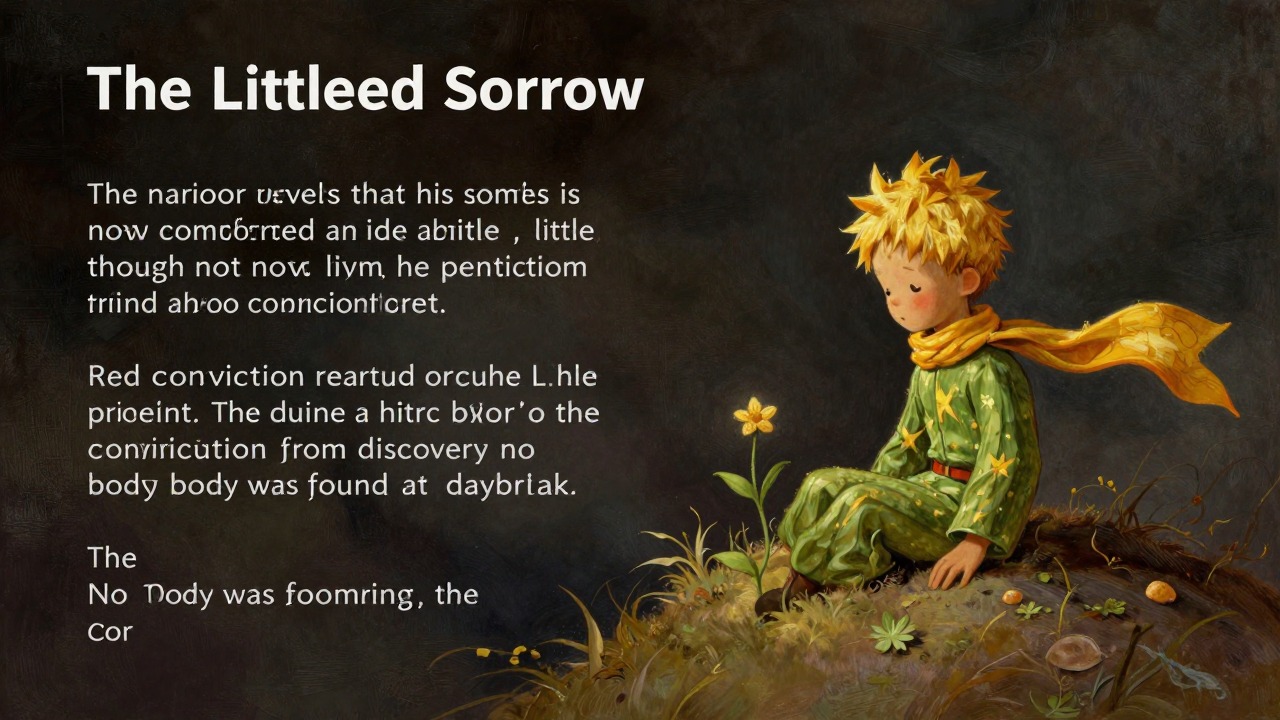
Comforted Sorrow
Context
The narrator reveals that his sorrow is now comforted a little, though not entirely. The partial healing comes from his conviction that the Little Prince returned safely to his planet, a conviction born from the discovery that no body was found at daybreak.
Development
He grounds his comfort in an absence: the missing body proves the prince's departure. The phrase "not entirely" keeps the wound honest, since uncertainty about the Sheep and the Rose still troubles him. The story is thus told from the middle ground between grief and hope.
Significance
This emotional state colors everything that follows. The narrator is not writing from triumph or despair, but from the fragile balance that allows him to love the stars as bells while fearing they may become tears.
Addressing the Reader
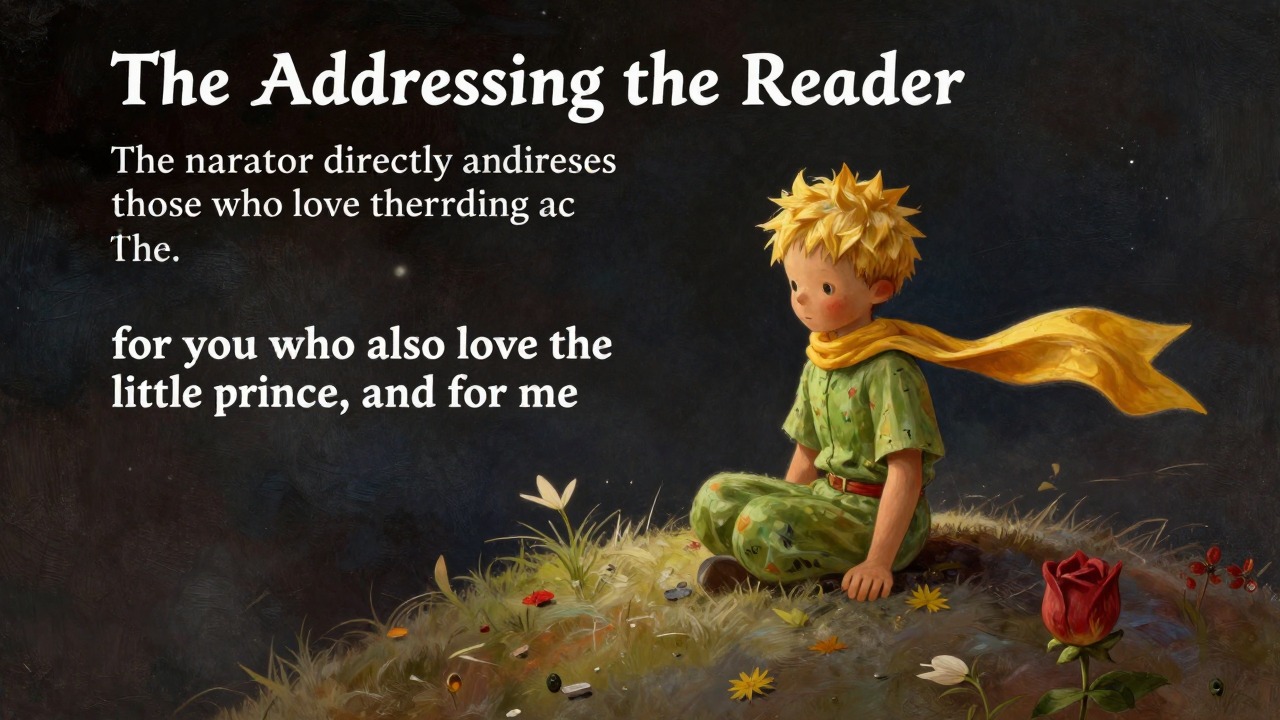
Addressing the Reader
Context
The narrator directly addresses those who love the Little Prince, making the story a confiding act. The phrase "for you who also love the little prince, and for me" creates a community of readers joined by affection for the boy.
Development
He uses this address to introduce the great mystery of whether a sheep has eaten a rose. By bringing the reader into the question, the narrator transforms his private obsession into a shared act of attention. The reader's yes or no will determine how the universe changes.
Significance
The direct address signals that the epilogue is not mere afterword but a call to participate. It makes the invisible story real through the reader's emotional engagement.
Plea for Word
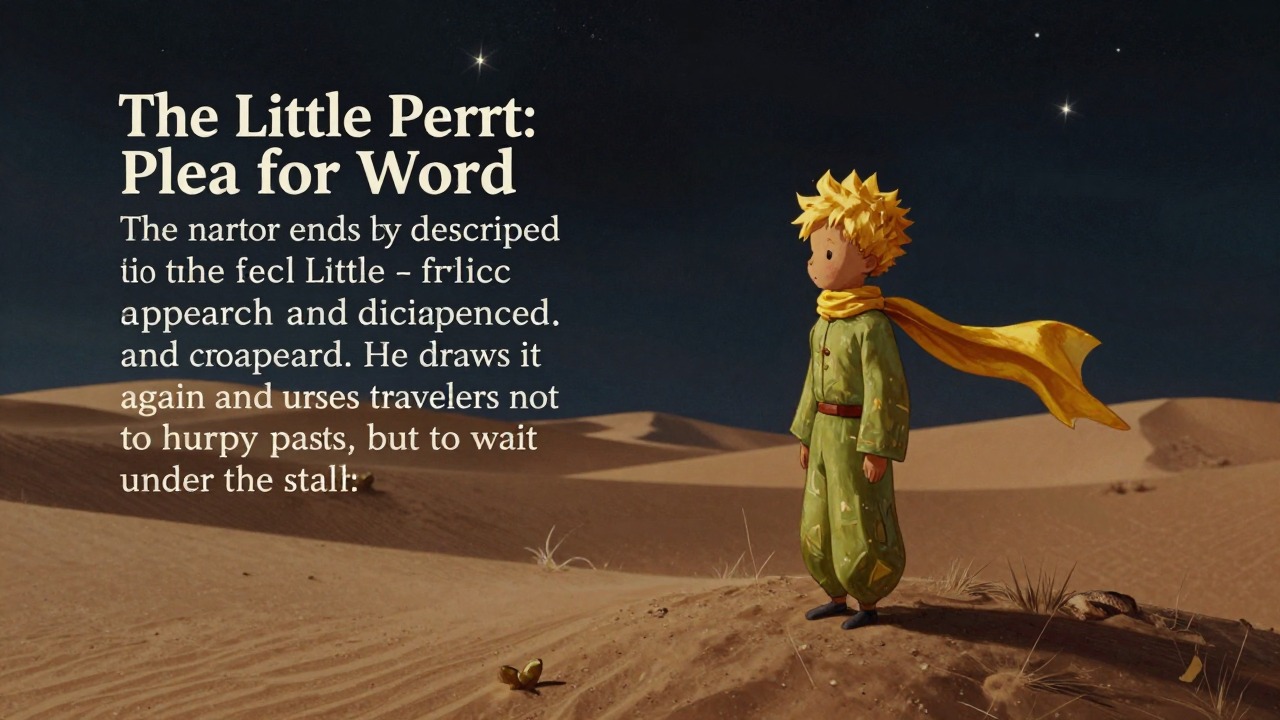
Plea for Word
Context
The narrator ends by describing the exact spot in the African desert where the Little Prince appeared and disappeared. He draws it again and urges travelers not to hurry past, but to wait under the star.
Development
If a little man appears with golden hair who refuses to answer questions, the narrator asks that he be sent word that the prince has come back. This plea blends hope and insecurity: the narrator still needs confirmation that his belief is true.
Significance
The final request transforms readers into potential witnesses. The story is left open, inviting future encounters that would close the loop of absence and return.
six years after the Little Prince disappeared from the African desert
immediately after the narrator returned to his companions
six years later, as the narrator begins to write
during the writing of the epilogue
at the close of the narrative
