
The Unanswered Question of the Sheep's Escape
The Little PrinceFollows the uncertain possibility of the Sheep having slipped out at night, and the permanent doubt it plants in the narrator's mind.
increasing Bearing strength in each event
 decreasing
Bearing strength in each eventdecreasingWatched Sheep
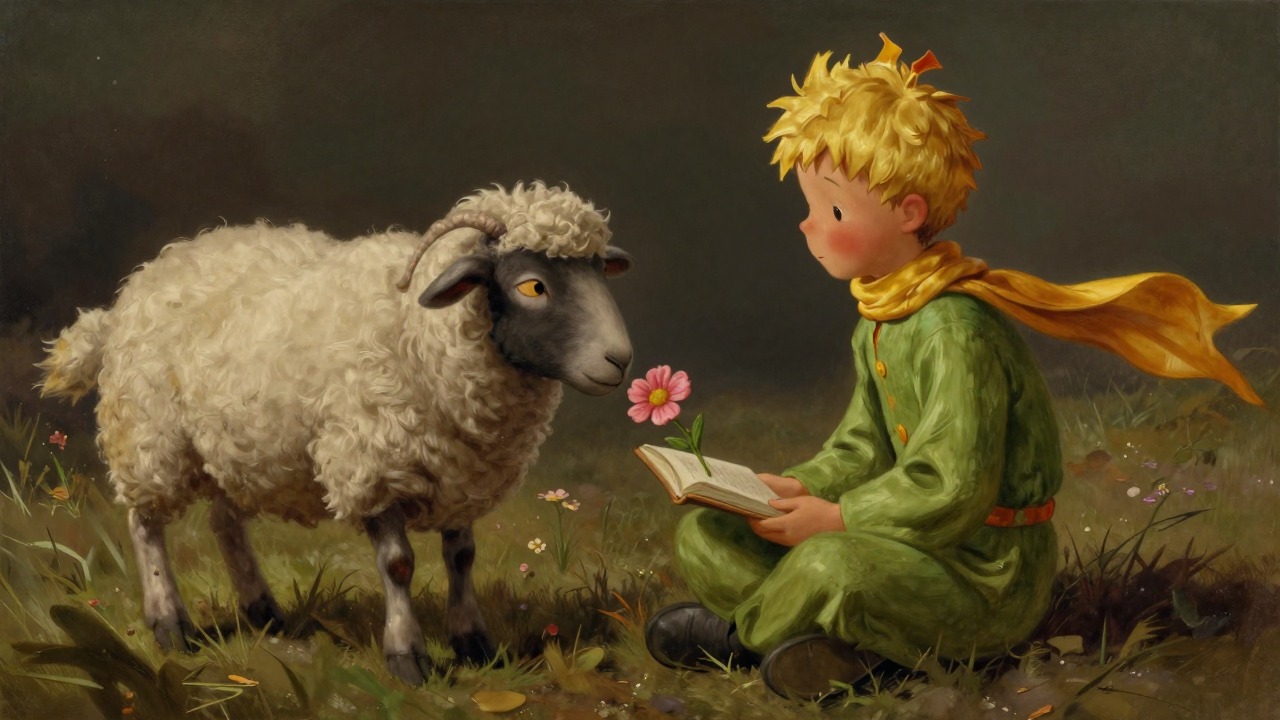
Watched Sheep
Context
The narrator remembers that the Little Prince watches over his Sheep very carefully. The Sheep is not malevolent by nature; it is only an animal that might eat a flower.
Development
The careful watch is the prince's response to the danger. He accepts the Sheep as a companion, but he monitors it to keep the Rose safe. The watch is part of love.
Significance
The watched sheep is the baseline of safety. The narrator's later doubt arises from the possibility that vigilance may fail.
Nocturnal Escape
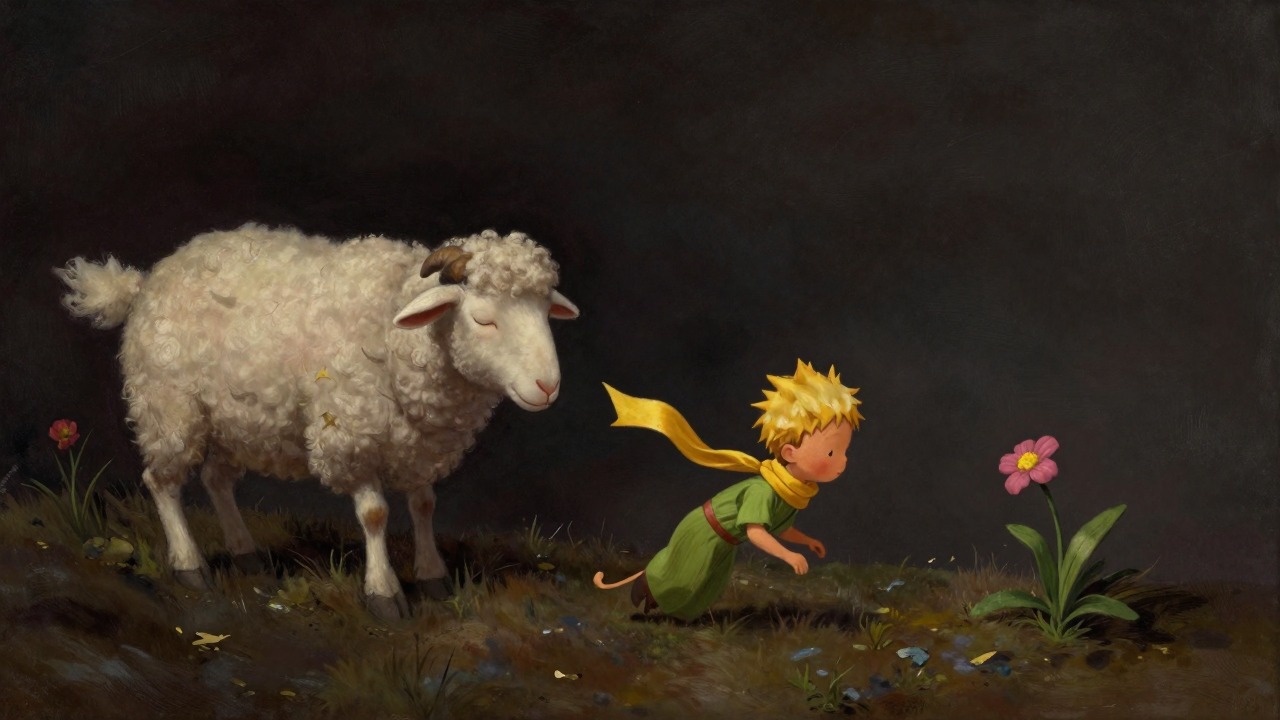
Nocturnal Escape
Context
The narrator imagines the Sheep getting out without making any noise in the night. The small animal slips away while the prince sleeps, moving unseen through the dark toward the flower.
Development
The escape is quiet, unobserved, and therefore impossible to reconstruct. It belongs to the gap in the daily routine that vigilance cannot cover. The Sheep's natural appetite takes over.
Significance
Nocturnal escape is the counter-scenario to careful watching. It represents the limits of human attention.
Question Hardening
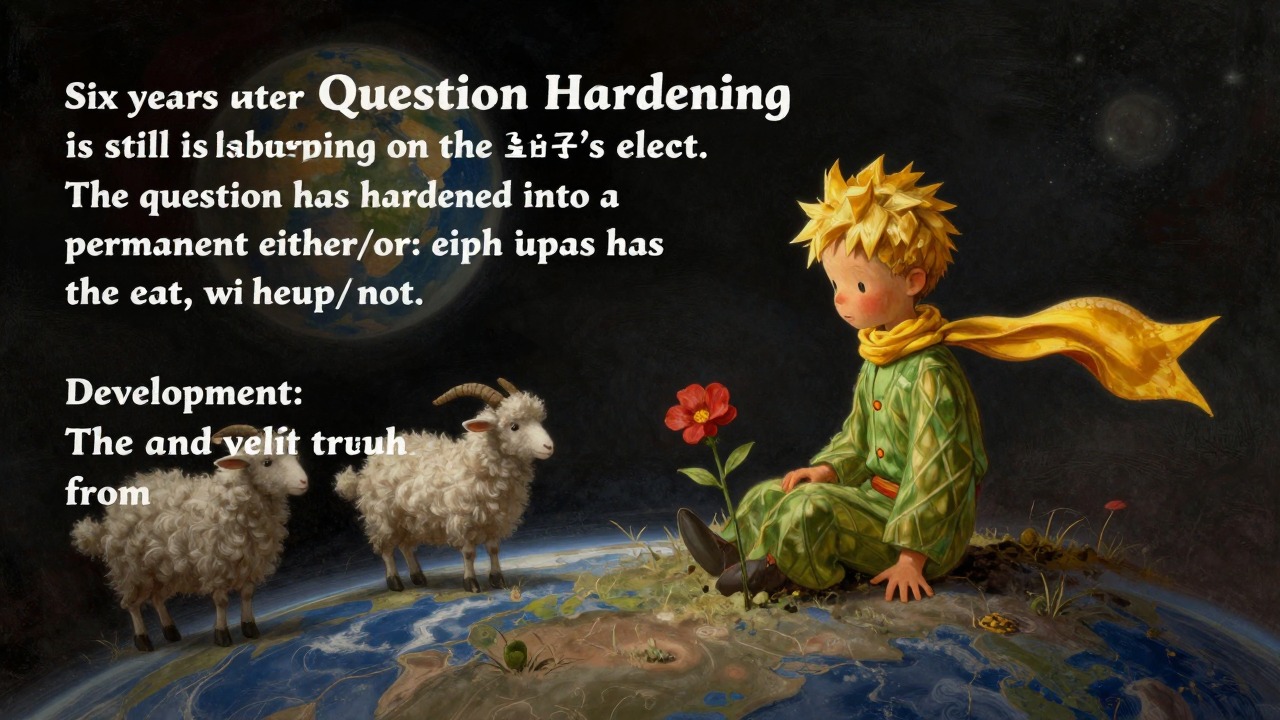
Question Hardening
Context
Six years later, the narrator is still asking himself what is happening on the prince's planet. The question has hardened into a permanent either/or: perhaps the Sheep has eaten the flower, perhaps not.
Development
The narrator cannot verify the truth from Earth. His memory of the missing strap prevents him from discarding the possibility. The question becomes part of the story's structure.
Significance
This hardening transforms a practical concern into an existential one. The narrator's identity is now bound to a question he cannot answer.
Yes or No
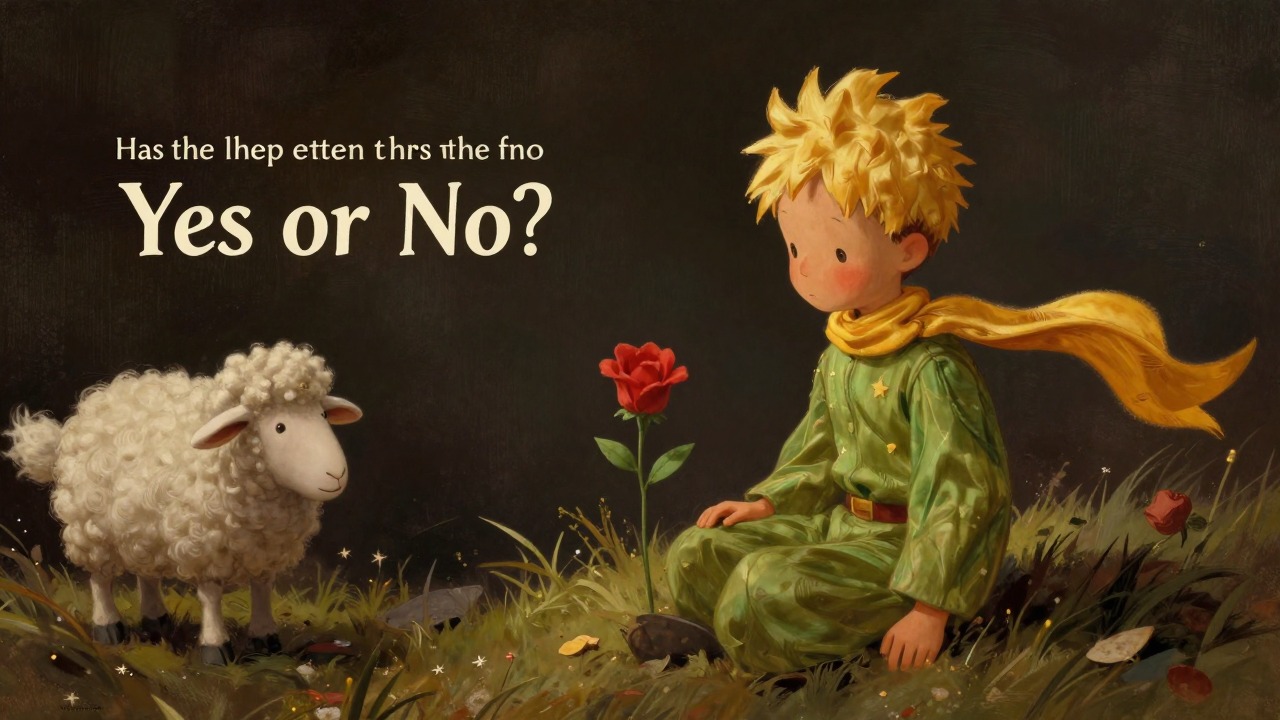
Yes or No
Context
The narrator reduces the entire mystery to a binary: has the Sheep eaten the flower, yes or no? The answer to this single question will alter how the universe feels.
Development
The binary is deceptively simple. If yes, the stars weep; if no, they laugh. The narrator cannot choose, so he passes the question to the reader.
Significance
Yes or no becomes a test of outlook. Each reader's answer reveals how they see loss and love.
Tears in the Stars
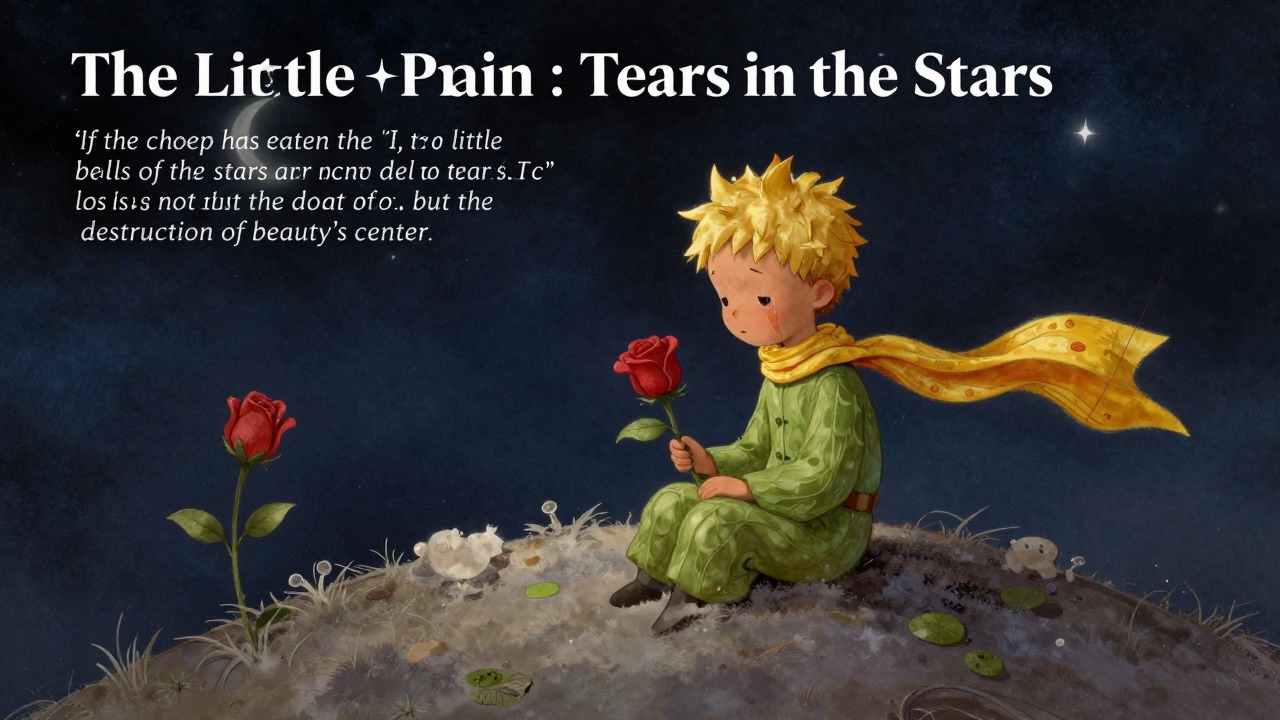
Tears in the Stars
Context
If the Sheep has eaten the Rose, the little bells of the stars are changed to tears. The loss is not just the death of a flower but the destruction of beauty's center.
Development
The narrator's grief would then be confirmed, and the universe would become a place where careless oversight destroys what is loved. The stars would no longer be laughter; they would be lament.
Significance
Tears in the stars give the negative answer an emotional form. The epilogue refuses to take sides, leaving the reader suspended between bells and tears.
when the Little Prince was on his planet with the Sheep
during a hypothetical night when the prince is not watching
in the narrator's mind six years after the disappearance
when the narrator asks whether the Sheep has eaten the Rose
when the potential answer is yes
