Forgetting the strap
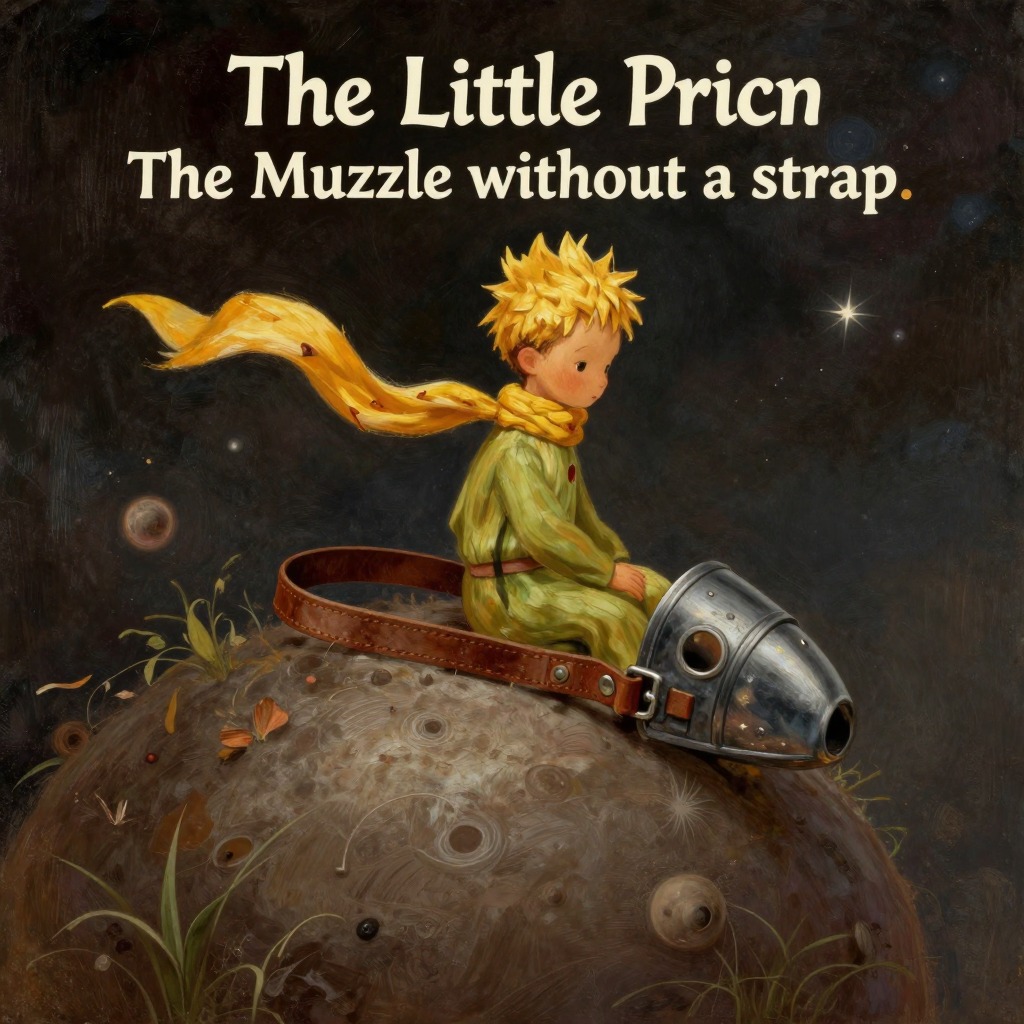
The Little PrinceThe omission of the leather strap from the muzzle drawn for the Little Prince's sheep is a small, almost invisible act of forgetfulness that becomes the central, unresolved mystery of the narrator's grief. In the six years since the Little Prince's disappearance, the narrator has never told this story, telling his returning companions only that he was tired. But the real weight of his sorrow is not the loss itself—it is the uncertainty created by a single absent-minded mistake. The forgotten strap means the sheep may never have been properly muzzled, and therefore may have eaten the rose. This possibility, which can never be confirmed or denied, transforms the entire universe into a question, and the narrator's consolation into a fragile, alternating rhythm of hope and tears.
The Act of Forgetting
The narrator drew the muzzle for the Little Prince's sheep, but in the drawing he forgot to add the leather strap that would have fastened it securely. This is not a dramatic failure—it is a moment of ordinary absent-mindedness, the kind that happens "at some moment or other" and that "is enough" to change everything. The strap was the one detail that would have made the muzzle functional, that would have guaranteed the sheep could not eat the flower. Without it, the muzzle is merely a picture, a gesture of protection that never actually protects. The narrator's own words acknowledge the fragility of this omission: a single moment of distraction, a single evening when the glass globe was forgotten or the sheep slipped out unnoticed, and the entire story shifts from comfort to catastrophe.
The Unresolved Question
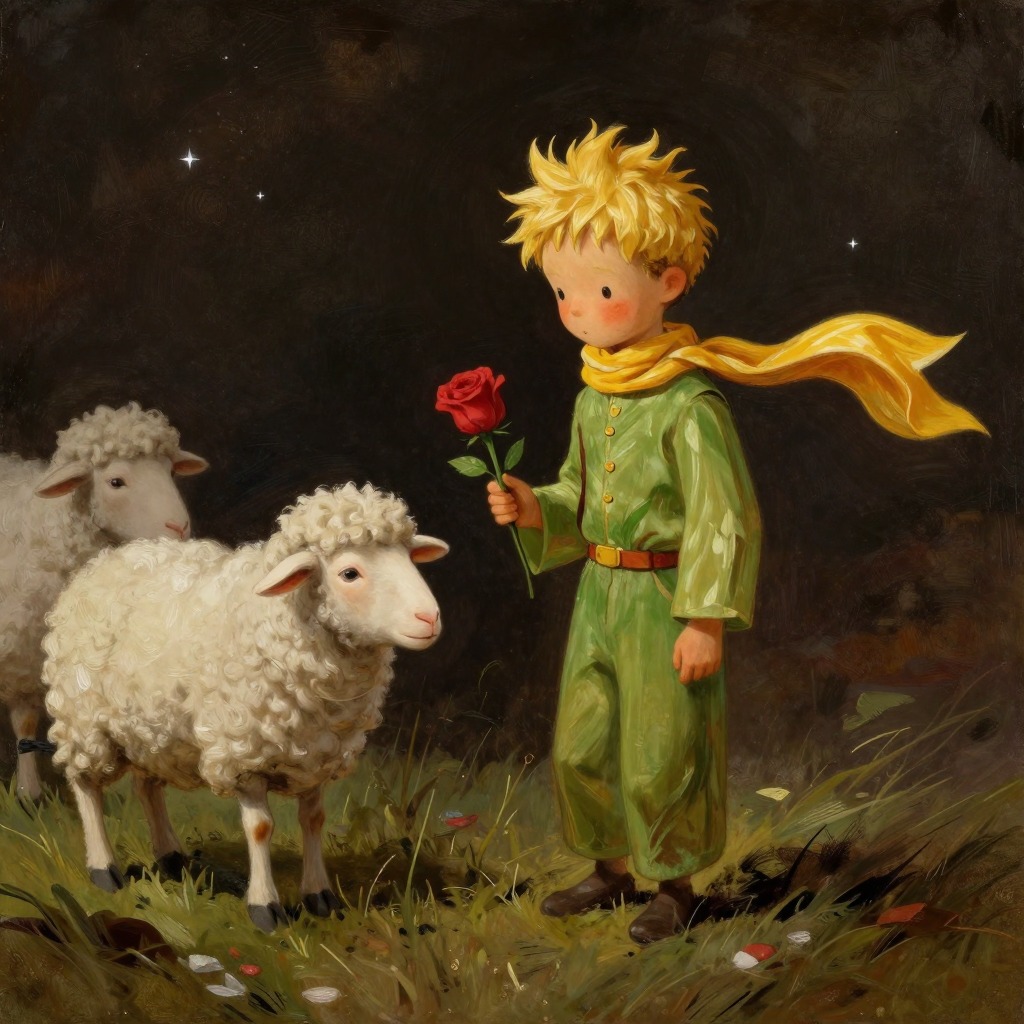
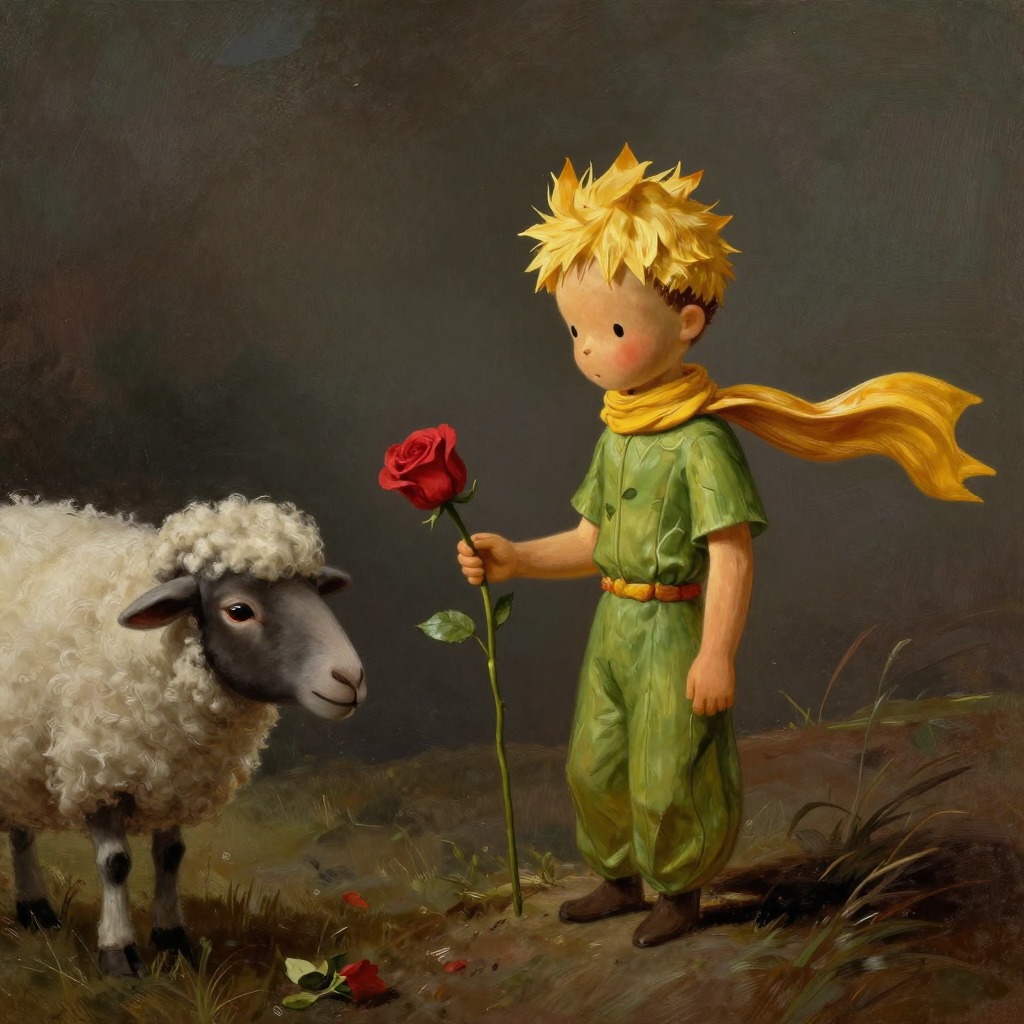
The forgotten strap creates a permanent, unanswerable question that the narrator cannot escape. He oscillates between two opposing certainties. At one time he tells himself that the Little Prince shuts his flower under its glass globe every night and watches over his sheep very carefully, and then he is happy, and there is sweetness in the laughter of all the stars. But at another time he imagines the opposite: that on some evening the glass globe was forgotten, or the sheep got out without making any noise in the night, and then the little bells are changed to tears. The strap is the hinge on which these two possibilities turn. Without it, the sheep is free to act, and the flower is vulnerable. The narrator's mind swings between these two visions, unable to settle on either, because the evidence is forever incomplete.
The Transformation of the Universe
This single forgotten detail expands into a cosmic mystery. The narrator declares that for those who love the Little Prince, nothing in the universe can be the same if somewhere, in an unknown place, a sheep that was never seen has—yes or no?—eaten a rose. The question is not trivial; it is a matter of so much importance that no grown-up will ever understand it. The narrator invites the reader to look up at the sky and ask the same question: has the sheep eaten the flower? And everything changes. The stars themselves become messengers of this uncertainty: when the narrator believes the flower is safe, the stars sound like five hundred million little bells; when he fears the worst, those same bells become tears. The forgotten strap has turned the entire cosmos into a mirror of the narrator's unresolved grief.
The Landscape of Loss
The narrator identifies the spot where the Little Prince appeared on Earth and disappeared as the loveliest and saddest landscape in the world. He draws it again to impress it on the reader's memory, and he asks that anyone who comes upon this place in the African desert should wait under the star, and if a little man appears who laughs, who has golden hair, and who refuses to answer questions, they should send word that he has come back. This plea is the direct consequence of the forgotten strap. The narrator cannot know what happened on the Little Prince's planet; he can only hope. The strap's absence means that the story has no ending, only a perpetual waiting. The landscape is lovely because it is the place of encounter, and sad because it is also the place of departure, and the uncertainty of the strap makes the departure irreversible in fact but reversible in imagination.
The Narrative Role of the Omission
The forgotten strap functions as the narrative engine of the book's final pages. It is not a plot point that is resolved; it is a gap that is never filled. The narrator's grief is not healed by knowledge but by the act of telling, and the telling itself is shaped by the absence of certainty. The strap is the one detail that, if present, would have closed the story with a guarantee of safety. Its absence keeps the story open, keeps the reader in the same state of unresolved longing as the narrator. The narrator's sorrow is comforted a little, but not entirely, and that "not entirely" is the space the forgotten strap occupies. It is the mark of human fallibility that makes the love for the Little Prince a permanent, vulnerable act of faith.