Arwen Undómiel
The Lord of the RingsArwen Undómiel, called the Evenstar of her people, is the daughter of Elrond Halfelven and Celebrían, and the granddaughter of Galadriel and Celeborn. She is described as the fairest maiden of the later age, in whom the likeness of Lúthien Tinúviel, the most beautiful of all Elves, had come on earth again. Her name Undómiel means "Evenstar" in the High-elven tongue, for she was the last and most beautiful of the Elves to dwell in Middle-earth before the fading of the Third Age.
Appearance and Character
Arwen is tall and queenly, with dark hair untouched by frost, white arms, and a clear face flawless and smooth. Her eyes are grey as a cloudless night, bright with the light of stars, and in them dwell thought and knowledge of many things that the years bring. She is clad in soft grey raiment, with a cap of silver lace netted with small glittering white gems, and a girdle of leaves wrought in silver. When Frodo first sees her in the Hall of Fire at Rivendell, he is struck by a loveliness beyond anything he had ever seen or imagined, and the light of her eyes pierces his heart. She is grave and queenly, yet also gentle, and her voice is clear and musical.
Life in Rivendell and Lothlórien
Arwen dwells for long years in Rivendell with her father Elrond, but she also spends time in Lothlórien with the kin of her mother, Celebrían. She is present at the feast in Rivendell after Frodo's recovery, seated near Elrond, and later she is seen speaking with Aragorn in the Hall of Fire. She is deeply loved by her father, and her brothers Elladan and Elrohir are often away on errantry with the Rangers of the North. She is described as having the life of the Eldar, and for many years she remains unchanged by mortal time.
The Choice of Lúthien
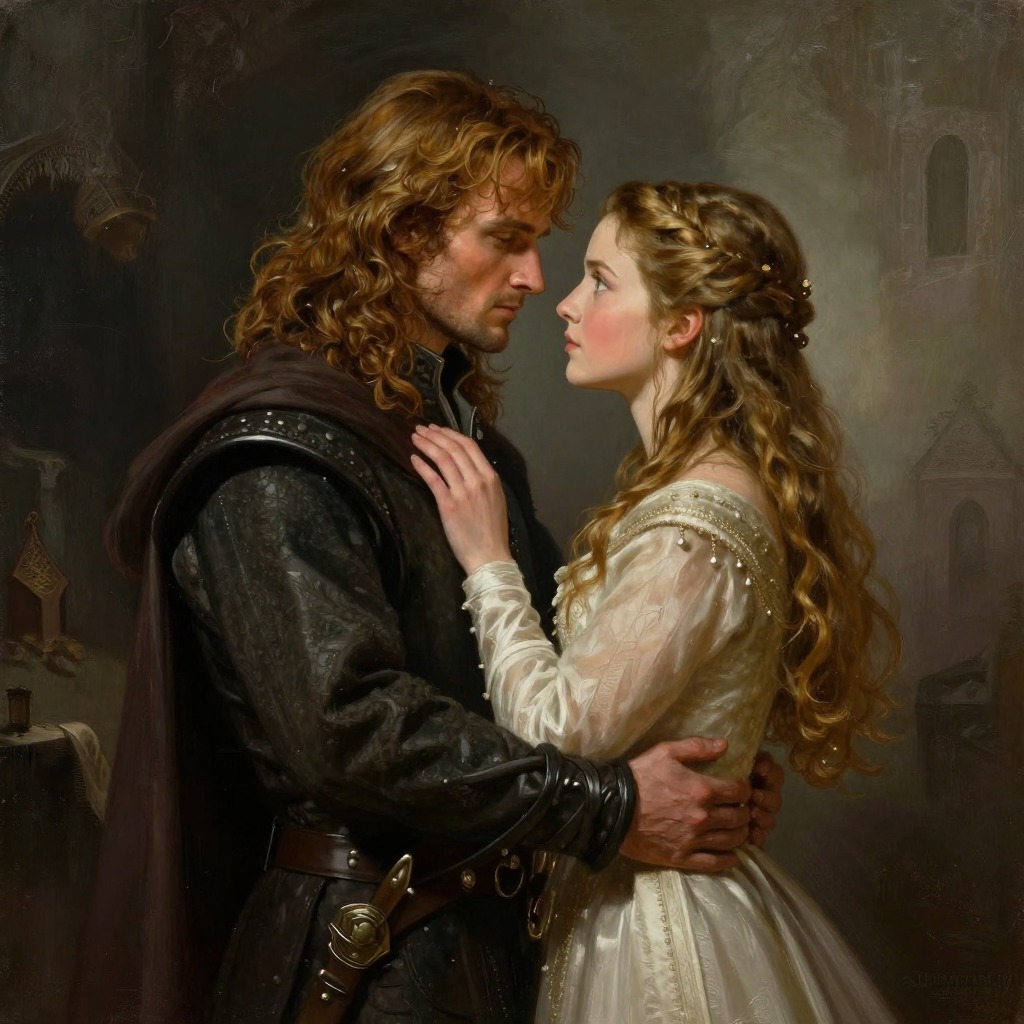
Arwen's fate is bound to the ancient choice of the Half-elven: she may either pass with Elrond over the Sea into the Uttermost West, remaining immortal, or she may choose mortality and remain in Middle-earth, dying as a mortal woman. When she meets Aragorn in the woods of Rivendell, she is moved by his love, and later, in Lothlórien, she plights her troth to him on the hill of Cerin Amroth. She chooses to cleave to him, renouncing the Twilight of the Elves and accepting the Doom of Men. This choice is a source of great sorrow for Elrond, who foresees that their victory will bring him only parting and grief.
Marriage and Queenship
After the War of the Ring, Aragorn is crowned King Elessar of Gondor and Arnor. On Midsummer's Day, he weds Arwen in the City of the Kings, and she becomes Queen of Elves and Men. She dwells with him for six-score years in great glory and bliss, and she bears him a son, Eldarion, and daughters. She is the Lady of the Golden Wood and the Evenstar of her people, and her presence brings light and beauty to the restored kingdom.
The Passing of the King and Arwen's Grief
When Aragorn feels the approach of old age, he goes to the House of the Kings in the Silent Street and lays himself down to die. Arwen, knowing that her doom is now upon her, pleads with him to stay, but he reminds her that they accepted this fate together on Cerin Amroth. He gives back the gift of life, and she must abide the Doom of Men: the loss and the silence. After his death, she goes forth from Minas Tirith, her eyes quenched, and passes to Lothlórien, where she dwells alone under the fading trees. There, when the mallorn-leaves are falling, she lays herself to rest upon Cerin Amroth, and there is her green grave, until the world is changed and all the days of her life are utterly forgotten.
Narrative Role and Significance
Arwen's story is the last union of Elves and Men in the Third Age, and it fulfills the ancient pattern of Lúthien and Beren. Her choice to become mortal is a central act of love and sacrifice, and it binds the fate of the Elves to the destiny of the race of Men. She is a figure of great beauty and sorrow, and her passing marks the end of the Elder Days in Middle-earth. Her gift to Frodo—a white gem on a silver chain that brings aid when the memory of fear and darkness troubles him—and her standard, wrought for Aragorn and unfurled in the Battle of the Pelennor Fields, are tokens of her enduring presence in the story.