
The Occupied World's New Order
The Man in the High CastleThe social rank of place divides white inhabitants, Japanese rulers, and the conquered peoples of the Pacific States, determining every chance of survival and dignity.
increasing Bearing strength in each event
 decreasing
Bearing strength in each eventdecreasingChildan Learns Place

Childan Learns Place
Context
The novel opens with Robert Childan dreading a call from his Japanese customer Nobusuke Tagomi. Childan knows he is a yank, a white tradesman, living at the mercy of those he must serve.
Turning Point
A young Japanese couple enters the store and treats him with kindness, which feels like a gift. Childan dreams of a time when place will no longer separate people.
Significance
Place is the social vocabulary of this occupied world. From the first page, the reader sees how deeply the white Americans have internalized their subordinate rank.
Frink's Fear of the Blacklist
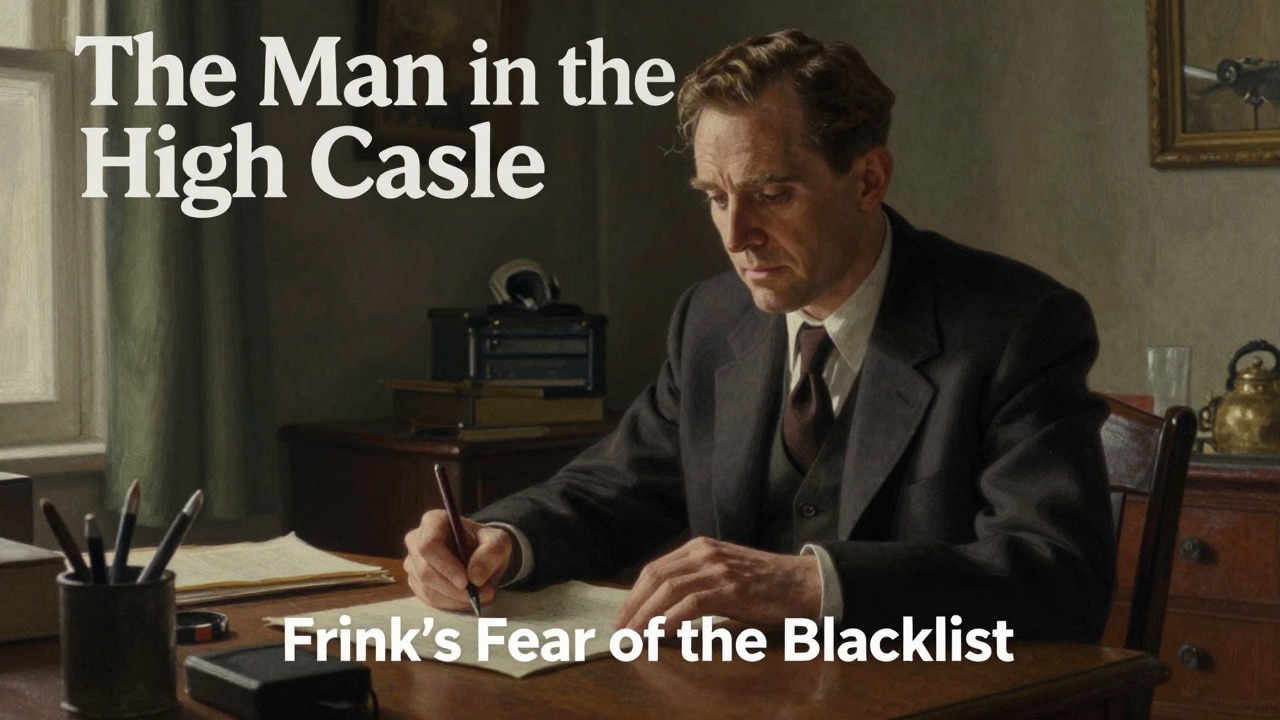
Frink's Fear of the Blacklist
Context
Frank Frink wakes in his Hayes Street room knowing he has been fired from W-M Corporation. He fears the Laborers' Justification Commission and the Trade Missions, the real authorities over his working life.
Turning Point
Frink is a Jew, and he knows that outside Japanese territory the Reich would destroy him. He has no choice but to submit to the system of place.
Significance
The fear of place makes Frink cautious and silent. It is the same force that later lets him be arrested without a struggle, because the system can simply label him as a German Jew.
The Kempeitai Call
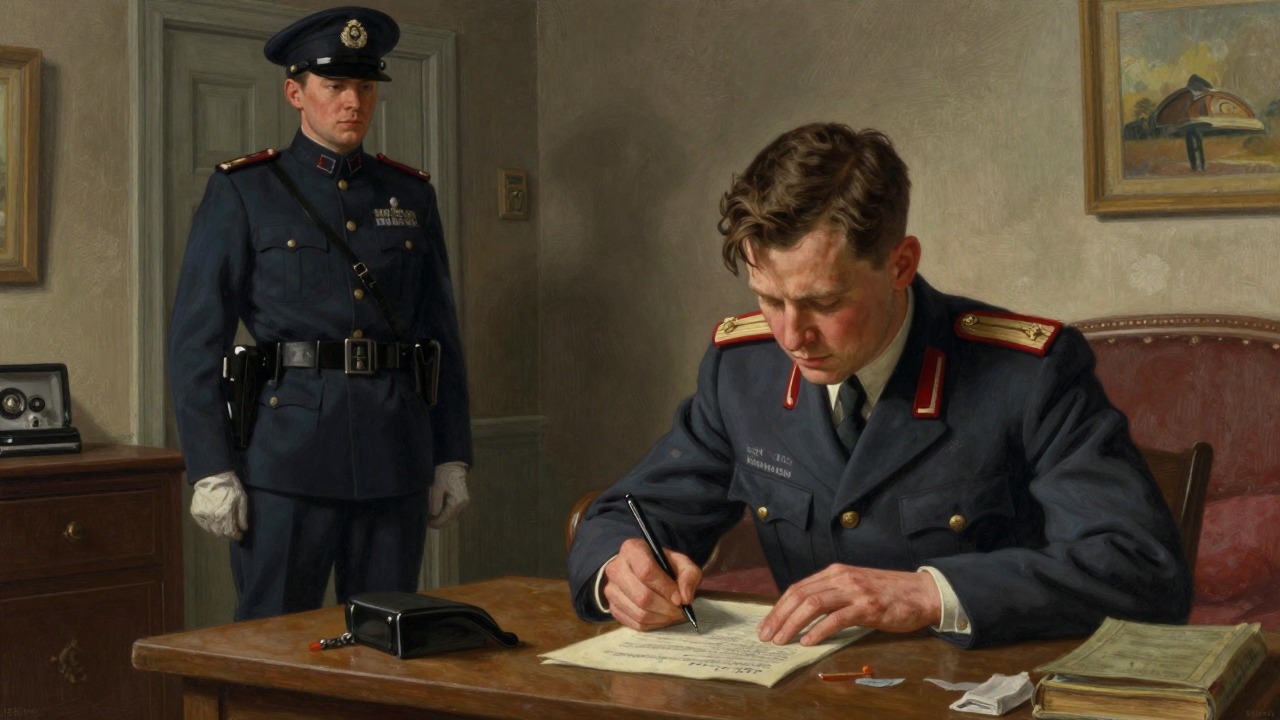
The Kempeitai Call
Context
When Robert Childan returns home, he finds a Kempeitai officer waiting in his room. The secret police are investigating the fake admiral case and want Childan to sign a statement accusing Frank Frink.
Turning Point
Childan signs without protest and feels protected by the law-and-order of the occupation. He is glad to have the power of the Empire against a Jew who frightened him.
Significance
The scene shows how the puppet government and its police keep the white population compliant. It also seals Frink's fate, though Tagomi will later overturn it.
Tagomi's Status and Guilt
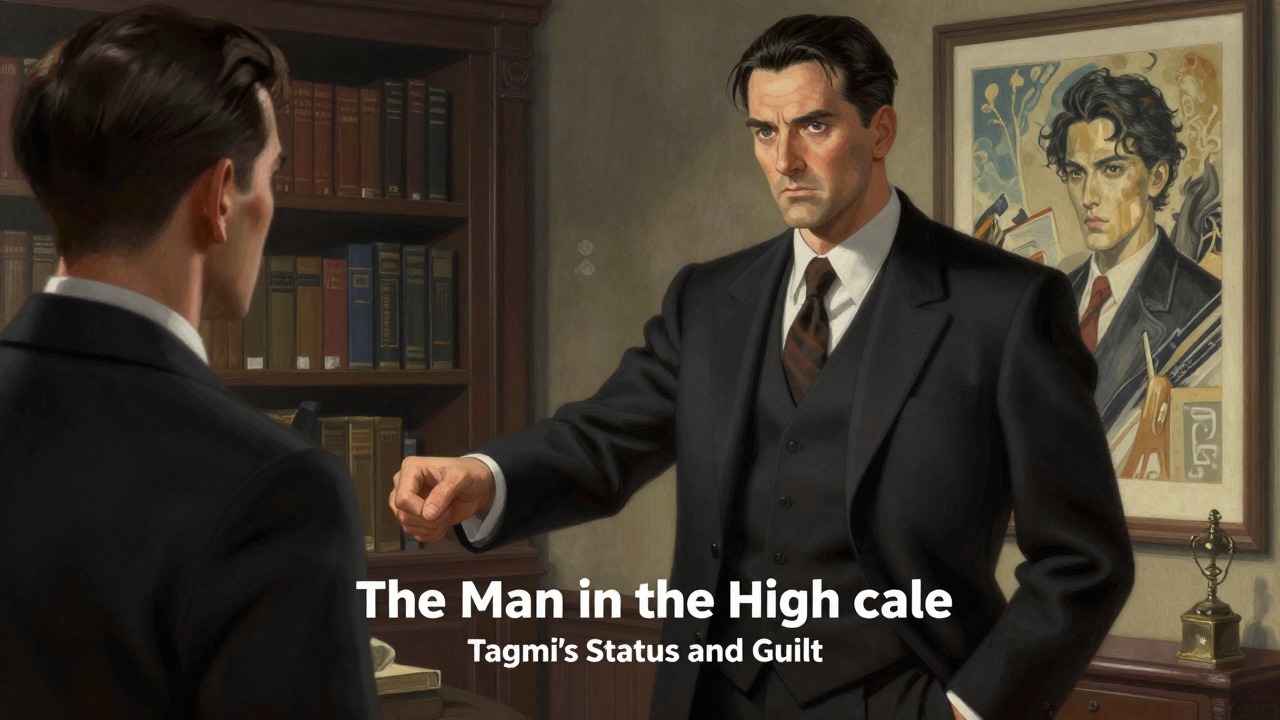
Tagomi's Status and Guilt
Context
After the SD raid, Nobusuke Tagomi is a hero and a murderer at the same time. His high place in the Japanese hierarchy shields him from prosecution, but it cannot protect his conscience.
Turning Point
He deliberately uses his rank to veto the extradition of Frank Frink, scribbling Release on the Reich's demand. It is the one act of atonement available to him in the wake of killing.
Significance
The incident reveals the paradox of place: the higher one stands, the more alone one becomes. Tagomi's authority makes him free to save Frink, but it also leaves him with a heart attack and despair.
Frink's Release as a Gift of Place
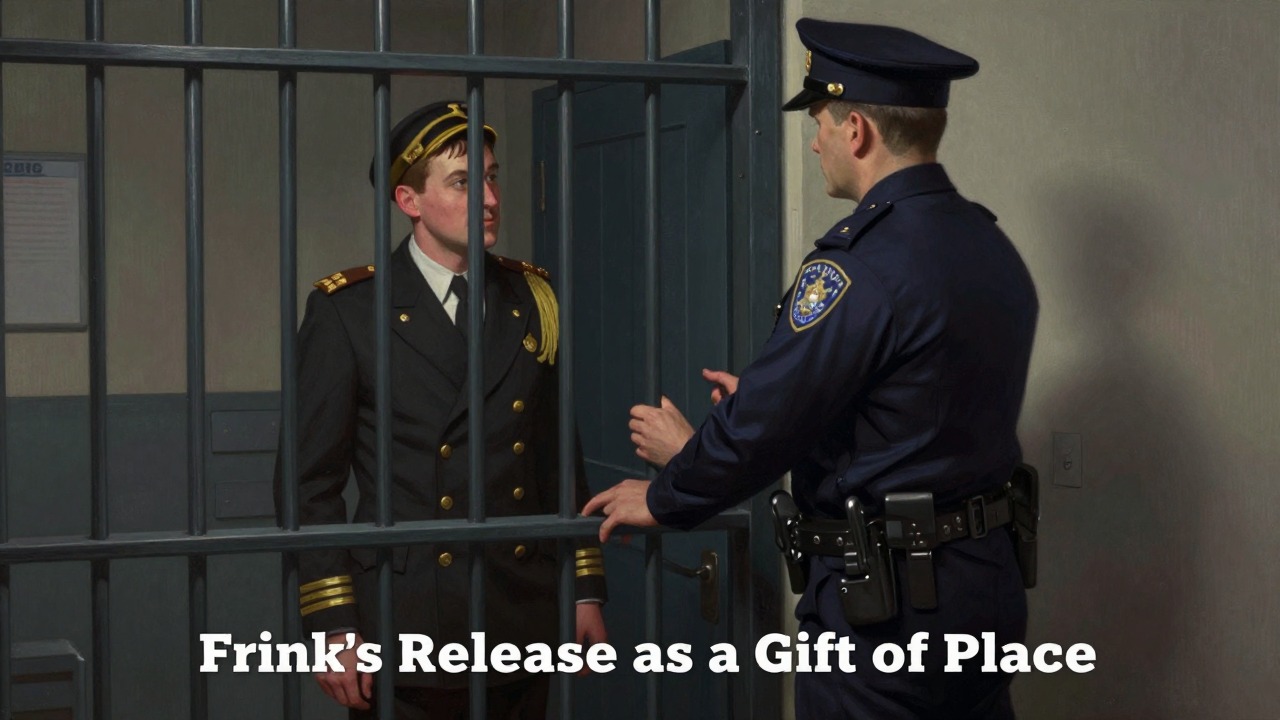
Frink's Release as a Gift of Place
Context
Frank Frink is thrown into a police cell, accused of the fake admiral swindle and identified as a Jew who can be remanded to Germany. He is certain he will be gassed.
Turning Point
A police officer unlocks his cell and sends him away without explanation. Nobusuke Tagomi, in an act of personal power, has voided the extradition request.
Significance
Frink's life is saved not by law but by the whim of a single high-placed man. He steps into the evening air reborn, knowing he must never understand his luck, only keep moving.
his first morning opening American Artistic Handcrafts
the morning Frank Frink wakes up after being fired
the night after the Kasoura dinner
when Tagomi returns to his office after the shooting
the evening Frank Frink is let out of Kearny Street Police Station
