
Conscience in Totalitarian Evil
The Man in the High CastleIndividuals caught inside the Nazi and imperial systems must choose between complicity and protest, and their small choices define their humanity.
increasing Bearing strength in each event
 decreasing
Bearing strength in each eventdecreasingThe Bureaucrat Awakes
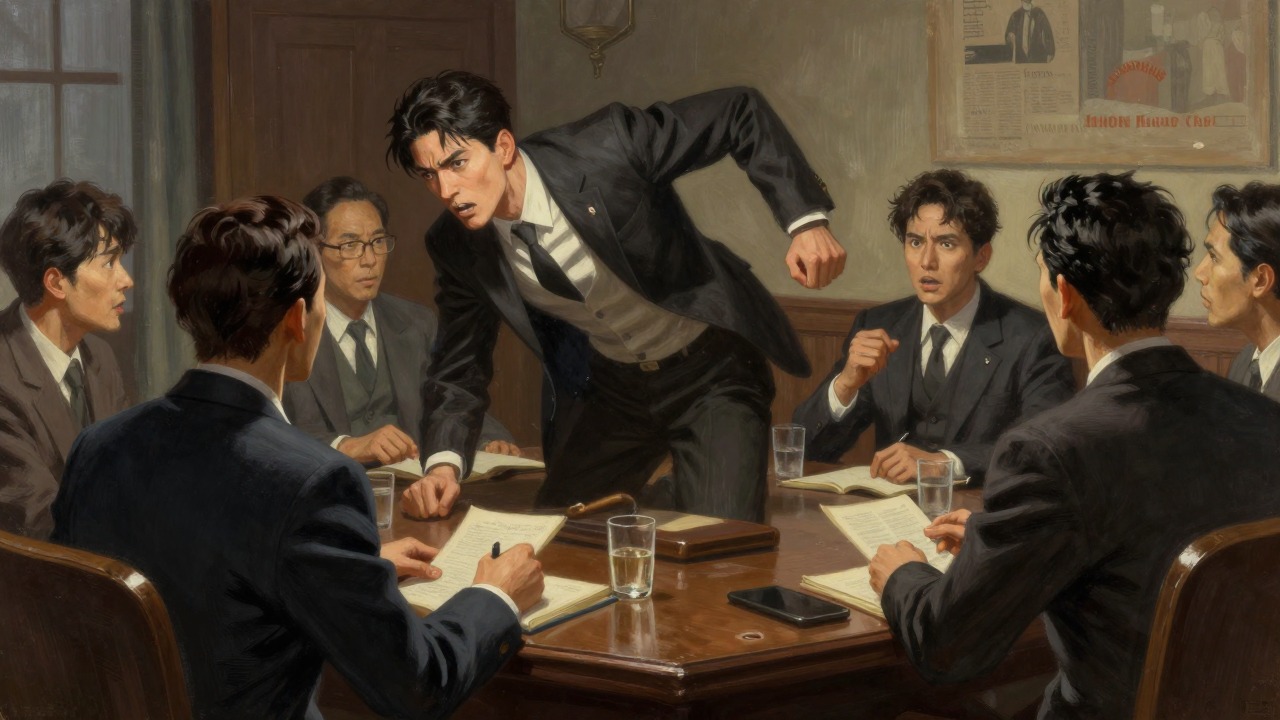
The Bureaucrat Awakes
Context
Nobusuke Tagomi, a loyal Japanese official, listens to a factual account of Nazi crimes. He cannot dismiss it as politics; he recognizes it as evil.
Turning Point
His body revolts, and he flees the meeting in a panic. The abstract problem has become a spiritual crisis.
Significance
Conscience is born in a meeting room. The novel shows that the first step toward resistance is painful, physical awareness of wrong.
The Consul's Doubt
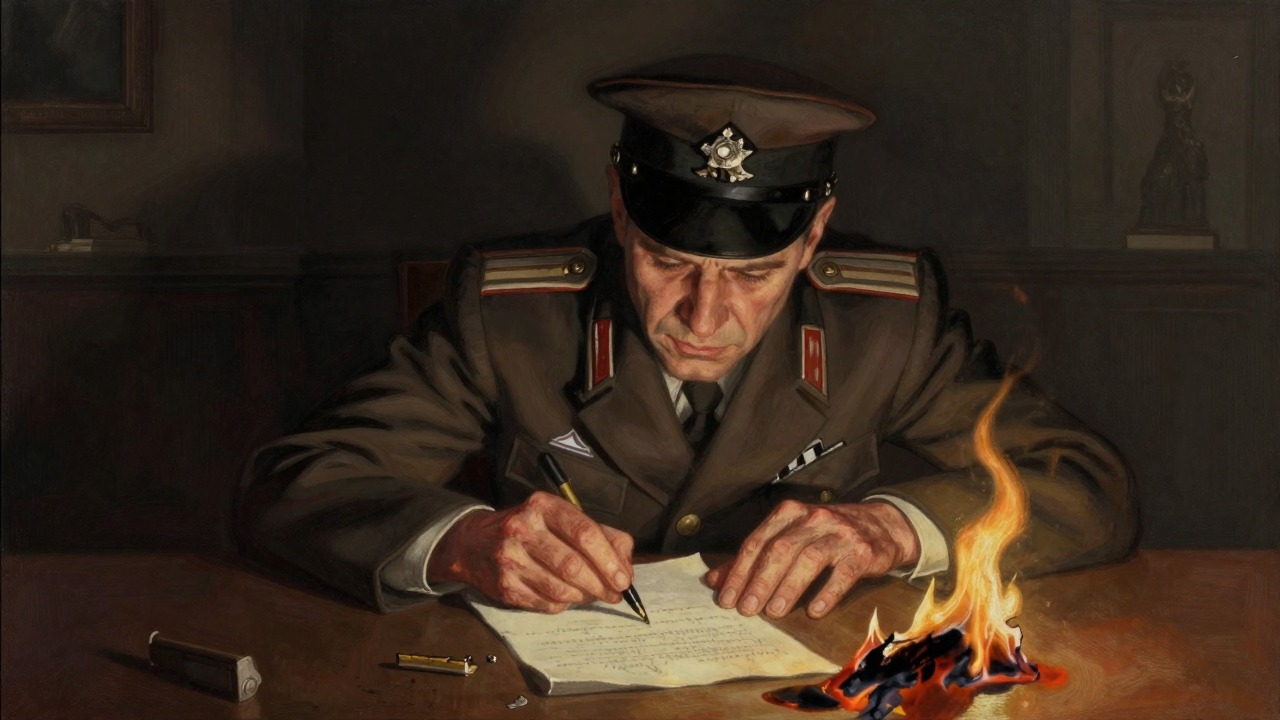
The Consul's Doubt
Context
Hugo Reiss, a Nazi functionary, realizes the regime he serves is a monstrous lie. The Grasshopper haunts him so much that he briefly plans the author's murder.
Turning Point
He scratches the note out and burns it, too afraid to act. He does nothing, but he has at least recognized the immorality of the order.
Significance
Conscience can exist even among the servants of evil, but it is often too weak to change their actions. Reiss is the novel's example of complicity from cowardice.
The Killer's Hesitation

The Killer's Hesitation
Context
Joe Cinnadella, an SD assassin, gives a full-throated defense of Fascism in the car. Yet underneath he is full of anger and emptiness.
Turning Point
Juliana's questioning reveals his self-contempt and cynicism. He says nothing is true or certain, and she sees the kind of despair that allows evil to recruit the broken.
Significance
Totalitarian evil is shown as a distorted response to human suffering. Joe's conscience has been suppressed, not erased, and it makes him dangerous to himself.
Mercy Against the Law
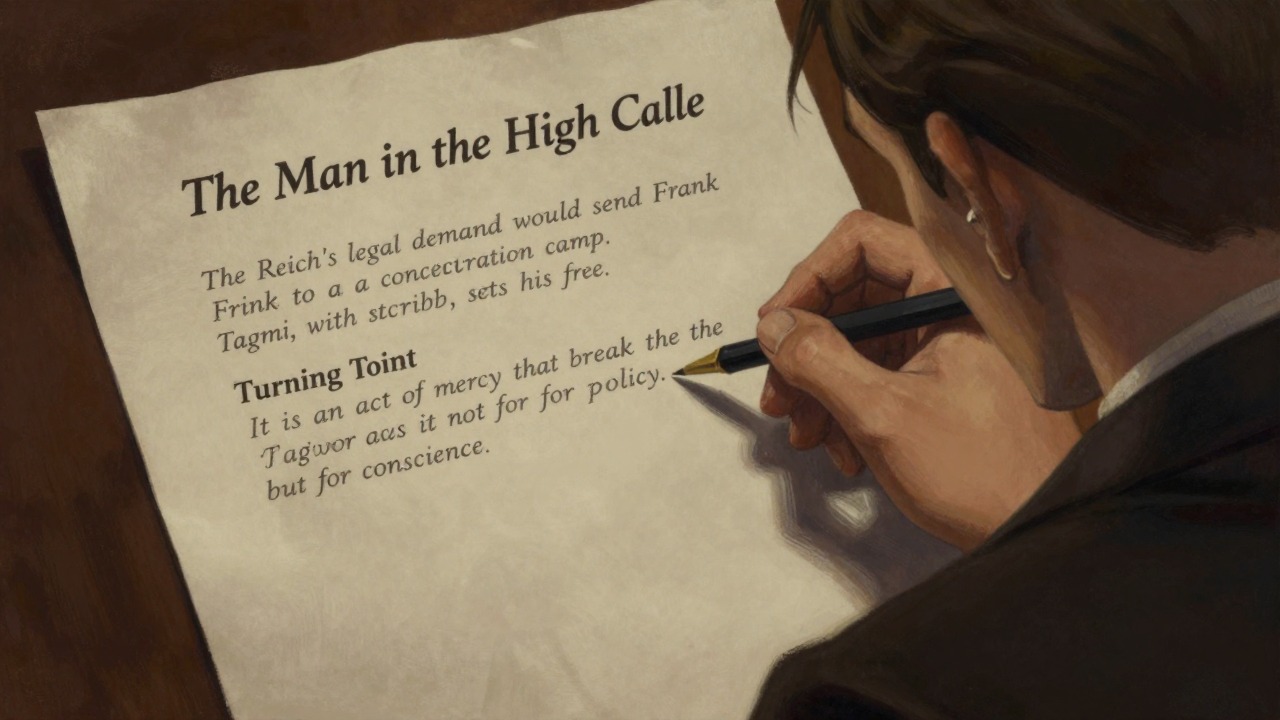
Mercy Against the Law
Context
The Reich's legal demand would send Frank Frink to a concentration camp. Tagomi, with a scribbled word, sets him free.
Turning Point
It is an act of mercy that breaks the letter of the protocol. Tagomi does it not for policy but for conscience.
Significance
The novel suggests that in a corrupt order, the only moral choice is to violate its rules. A single humane act can be more powerful than an empire.
The Assassin Refused
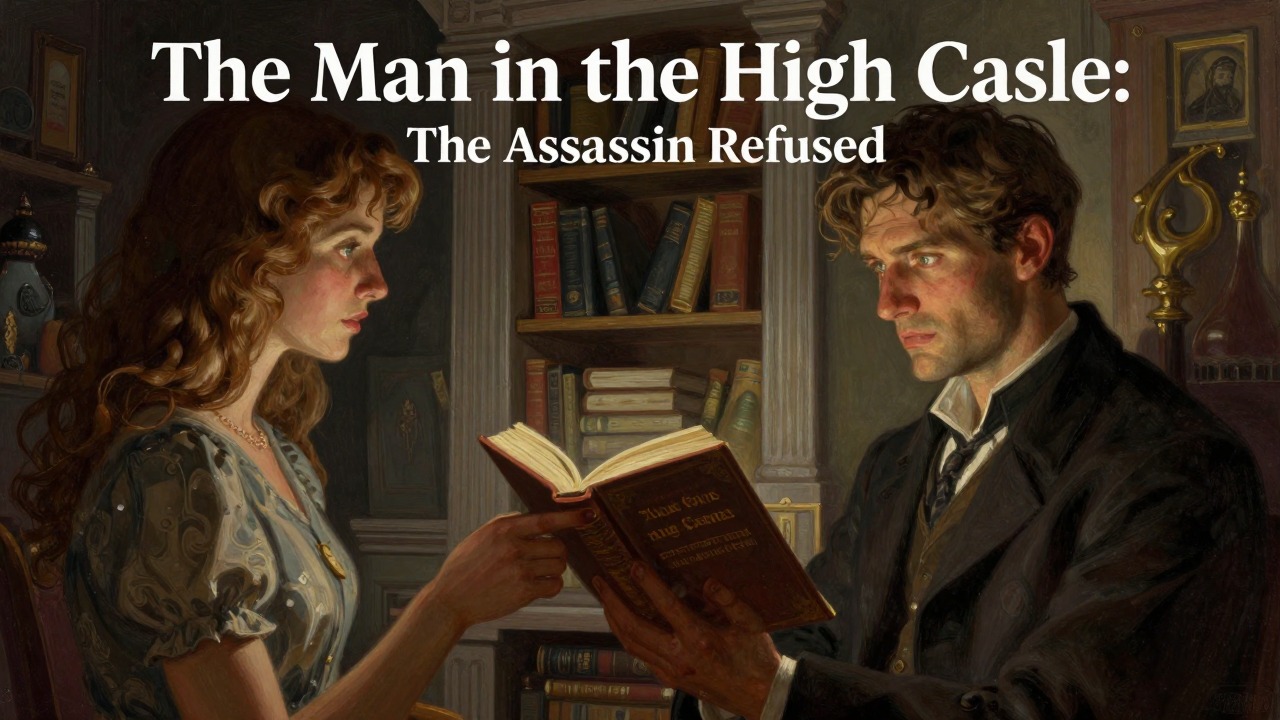
The Assassin Refused
Context
Juliana refuses to let Abendsen escape the truth of his book. She demands that he face the oracle's answer, even if it shatters his political world.
Turning Point
Abendsen cannot accept it, but he does not punish her. The house of fiction is opened to reality, and conscience forces the author to see his own work differently.
Significance
The novel ends with a warning to the readers: do not hide in the High Castle of comfortable lies. Conscience requires us to face the Inner Truth, even at the price of our illusions.
when Tagomi hears the Nazi profile at the embassy
when Reiss reads the Grasshopper and burns his note
when Juliana asks Joe about his beliefs
when Tagomi releases Frink
when Abendsen accepts the truth through Juliana
