Latunsky
The Master and MargaritaLatunsky is a literary critic in Mikhail Bulgakov's The Master and Margarita who orchestrates a venomous press campaign against the master's unpublished novel about Pontius Pilate, publishing an article titled 'A Militant Old Believer' that brands the work as an apology for Jesus Christ and its author as an 'icon-dauber.' His attacks, alongside those of the critics Ariman and Mstislav Lavrovich, trigger the master's psychological collapse, and his name becomes the target of Margarita's vengeful fury during her transformation into a witch, marking him as a symbol of the cowardly, state-serving literary establishment that persecutes genuine art.
Identity and Role in the Literary World
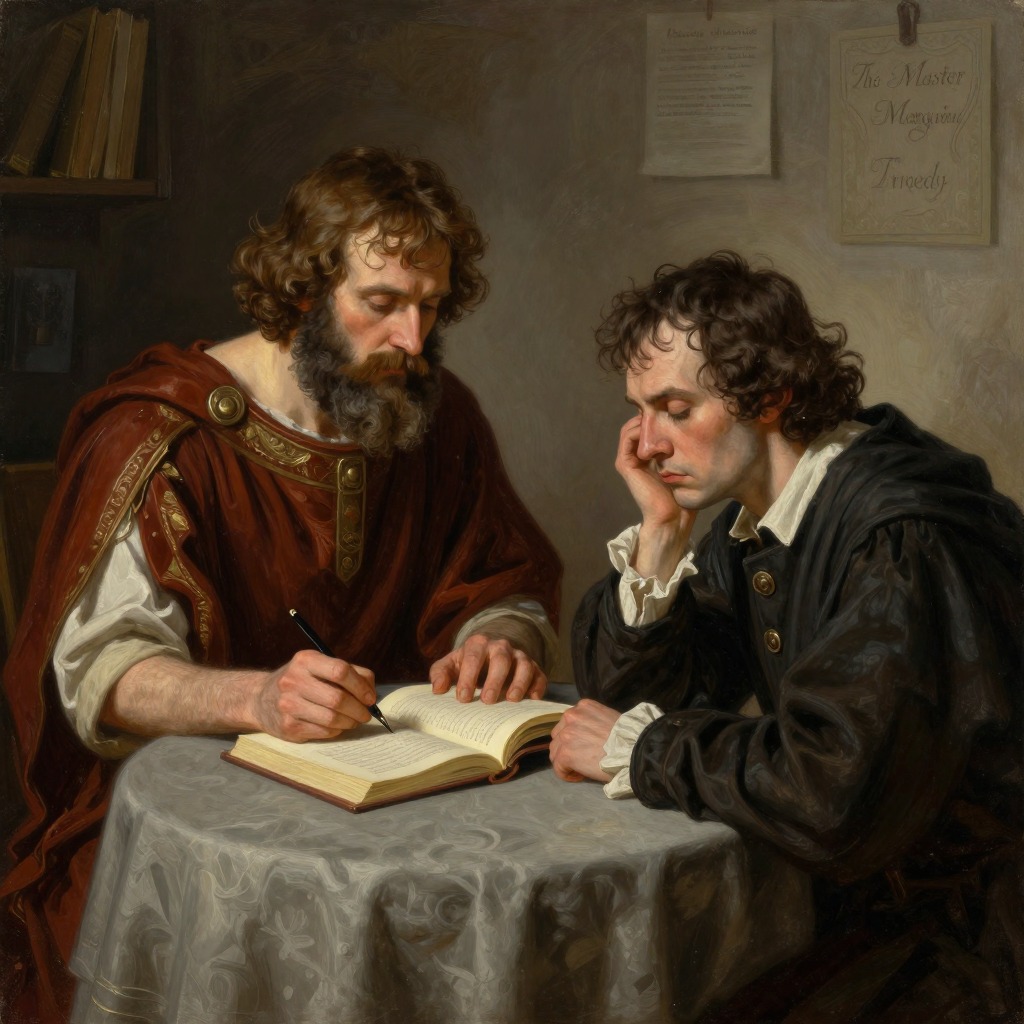
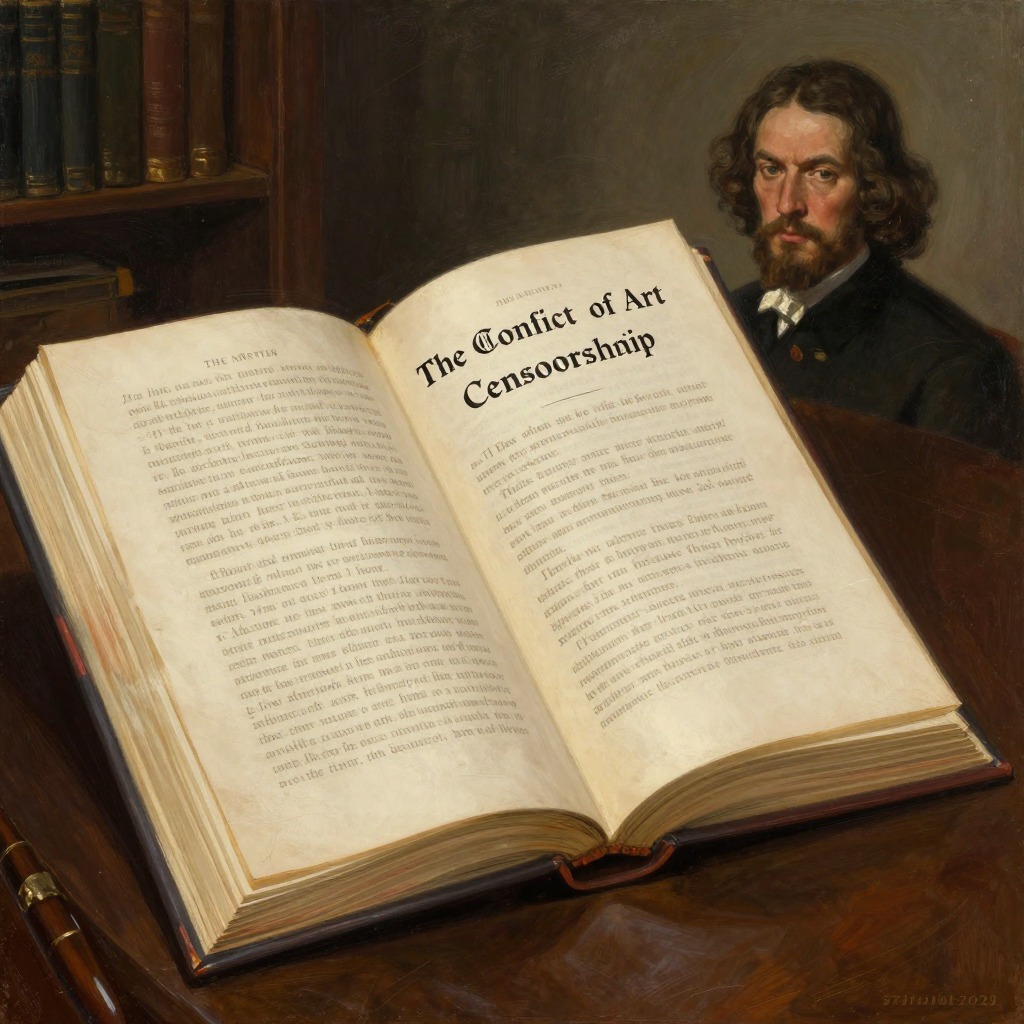
Latunsky is one of three critics—alongside Ariman and the writer Mstislav Lavrovich—who form the hostile literary tribunal that condemns the master's novel before it can be published. The master, a historian by training who has written a novel about Pontius Pilate, first encounters this opposition when the editor who reads his manuscript declares that he cannot decide the question on his own and that other members of the editorial board must acquaint themselves with the work, specifically naming Latunsky, Ariman, and Lavrovich. When the master returns two weeks later, the editorial secretary Lapshennikova tells him that the publisher is provided with material for two years ahead and that the question of printing his novel 'did not arise.' The rejection is followed by a coordinated public assault: the critic Ariman publishes an article warning all and sundry that the master has attempted to foist into print an apology for Jesus Christ, and two days later Mstislav Lavrovich publishes another article recommending striking hard at 'Pilatism' and at the 'icon-dauber' who had ventured to foist it into print. Latunsky's own article, 'A Militant Old Believer,' is the most devastating of all; the master, reading it, reflects that the works of Ariman and Lavrovich could be counted as jokes compared with what Latunsky wrote.
The Campaign Against the Master and Its Consequences
The press campaign, led by Latunsky, has a profound and destructive effect on the master's psyche. The master describes how the articles, despite their threatening and confident tone, contain a 'rare falsity and insecurity' that he senses in every line, and he comes to feel that the authors are not saying what they want to say and that their rage springs precisely from that. This realization ushers in a third stage—fear—not of the articles themselves but of other things totally unrelated to them or to the novel: he begins to be afraid of the dark, and as he is falling asleep he imagines a very cold and pliant octopus stealing with its tentacles immediately and directly towards his heart, forcing him to sleep with the light on. The master's beloved, Margarita, changes visibly under the strain: she becomes thinner and paler, stops laughing, and keeps asking him to forgive her for having advised him to publish an excerpt. She urges him to drop everything and go to the Black Sea, but the master, in the grip of mental illness, eventually burns the heavy manuscript of the novel and the draft notebooks in the stove, an act that coincides with the final collapse of his will. The campaign thus directly precipitates the master's descent into madness and his eventual confinement in Professor Stravinsky's psychiatric clinic.
Margarita's Vengeance and Thematic Significance
Latunsky's name becomes the object of Margarita's ferocious wrath after she transforms into a witch and gains supernatural power. During her flight on a broomstick, the master's secret wife, who had earlier declared in a hoarse voice, pounding the table with her fist, that she would poison Latunsky, now has the opportunity to act on that threat. She wreaks havoc on the critic's apartment, smashing windows and destroying his possessions, in a cathartic act of vengeance that the narrative presents as a justified settling of scores. This destruction is part of the broader carnivalesque logic of the novel, in which the oppressed—the artist and his muse—strike back against the cowardly literary functionaries who serve the state's ideological apparatus. Latunsky, as the most aggressive of the critics, embodies the mechanism by which official Soviet literary culture silences and destroys independent creative work, not through direct arrest but through a campaign of public denunciation that isolates the author and drives him to self-destruction. His article 'A Militant Old Believer' is a perfect specimen of the genre: it uses the language of ideological orthodoxy to brand the master's work as retrograde and dangerous, while the real militancy belongs to the critic himself, who acts as an enforcer of literary terror.