Lon Hammond Jr.
The NotebookLon Hammond Jr. is the fiancé of Allie Nelson and the primary romantic rival to Noah Calhoun in the novel. As a member of one of the most powerful and influential families in North Carolina, with "cotton money" that made the death of his father front-page news, Lon represents the world of social status and class privilege that Allie's parents believe is right for their daughter. Yet the novel portrays him not as a villain but as a fundamentally good man whose quiet dignity in the face of losing Allie complicates the love triangle and deepens the moral weight of Allie's final choice.
Identity and Background
Lon Hammond Jr. is a successful lawyer in Raleigh who has his own practice and is known for mastering the law and charming juries. He is eight years older than Allie, handsome, intelligent, and driven, pursuing his job with passion and winning cases while making a name for himself. His vigorous pursuit of success reflects the values of his upbringing and the social circle in which he moves, where family name and accomplishments are often the most important consideration in marriage. Allie met him in 1942, when the world was at war and she was volunteering at a hospital downtown, tending to broken young soldiers. Lon introduced himself at a party with easy charm, and she saw in him exactly what she needed: someone with confidence about the future and a sense of humor that drove all her fears away. Over nearly four years, she gradually came to love him, finding him a gentleman, mature and responsible, who never once turned her away during the terrible periods of the war when she needed someone to hold her.
Relationship with Allie
Lon and Allie became engaged six months before the novel's present action, and their engagement was news that dominated the social pages, with almost five hundred people invited, including the governor, one senator, and the ambassador to Peru. Allie describes Lon as handsome, charming, and successful, kind to her and able to make her laugh, and she believes he loves her in his own way. Yet she also recognizes that there is always going to be something missing in their relationship. Lon is not the type of man to share feelings easily; like her father, he is uncomfortable with emotional intimacy. Allie has tried to explain that she needs to be closer to him, but it has never seemed to make a difference. He works long hours, and though he promises to shorten his hours after marriage, Allie sees him regularly only one night a week, on Wednesdays, when he makes it a point to leave work by seven. She has never been to bed with him, using the excuse that she wants to wait until marriage, but she knows that part of the reason is that Lon does not evoke in her the passion and romance she once had with Noah. When she shows Lon one of her abstract paintings, he asks her what it is supposed to be, revealing a fundamental gap in how they perceive art and creativity.
The Night of the Phone Calls
On the evening of Allie's first visit to Noah, Lon calls her inn four times, growing increasingly concerned when she does not answer. He is the last one in his office as usual, working on an ongoing trial, and a little detail begins to bother him. He runs through their phone conversation and realizes that Allie had mentioned checking in to New Bern. This triggers a memory of a comment Allie's mother made long ago at a party, about Allie being in love once with a young man from New Bern, which Allie's mother called "puppy love." Lon remembers that Allie did not smile at the comment; she was angry, and he guessed then that she had loved that person far more deeply than her mother suggested, perhaps more deeply than she loved him. Now, with Allie in New Bern, Lon considers the possibility that she is with that man. He becomes frightened and makes up his mind that he will do anything it takes to keep her, because she is everything he has always needed and he will never find another quite like her. With trembling hands, he dials the phone for the fourth and last time that evening, and again there is no answer.
The Confrontation and His Response
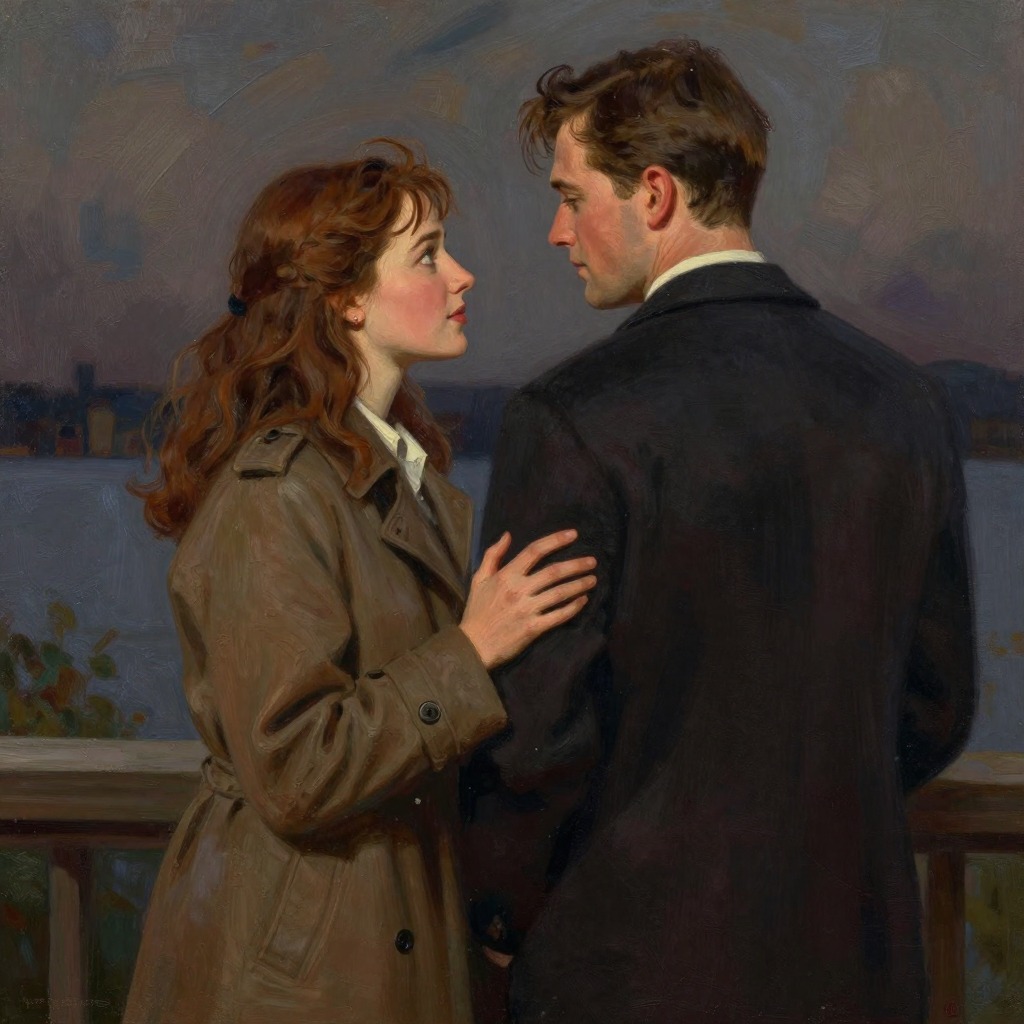
The following day, Lon arranges to have his trial postponed until Monday, a request the judge calls unusual, and drives to New Bern. He finds Allie at the inn, and they sit on a bench by the old Methodist church. Allie explains that she must stay, that she has always loved Noah. Lon holds her hand even as she tells him this, and he tries for almost an hour to change her mind. But when she stands firm and says, "I can't go back with you, I'm so sorry," he simply nods. They sit together for a long time without speaking. When he finally walks her to her car, he tells her that Noah is a lucky man. He behaves as a gentleman would, and Allie later reflects that his reaction proves he cared for her as well. Noah himself, hearing this story years later, understands why Allie's choice was so hard, recognizing that Lon was a good man.
Thematic Significance
Lon Hammond Jr. functions in the novel as the embodiment of the socially acceptable, financially secure marriage that Allie's world expects of her, yet he is never reduced to a mere obstacle or villain. His genuine love for Allie, his dignified acceptance of her decision, and his final act of grace in acknowledging Noah's worth all serve to elevate the moral stakes of Allie's choice. The novel uses Lon to demonstrate that love is not always a simple matter of choosing between a good man and a bad one, but sometimes between two good men who represent different kinds of futures. Lon's presence ensures that Allie's decision to stay with Noah is not a rejection of an unworthy suitor but a profound choice of one kind of love over another, a choice that carries real cost and real pain for everyone involved.