
The Lottery and Luck
The Old Man and the SeaSantiago's superstitions about luck, expressed through the lottery and the number eighty-five, reflect his cultural context.
increasing Bearing strength in each event
 decreasing
Bearing strength in each eventdecreasingThe Number Eighty-Five
The Number Eighty-Five
A Lucky Number?
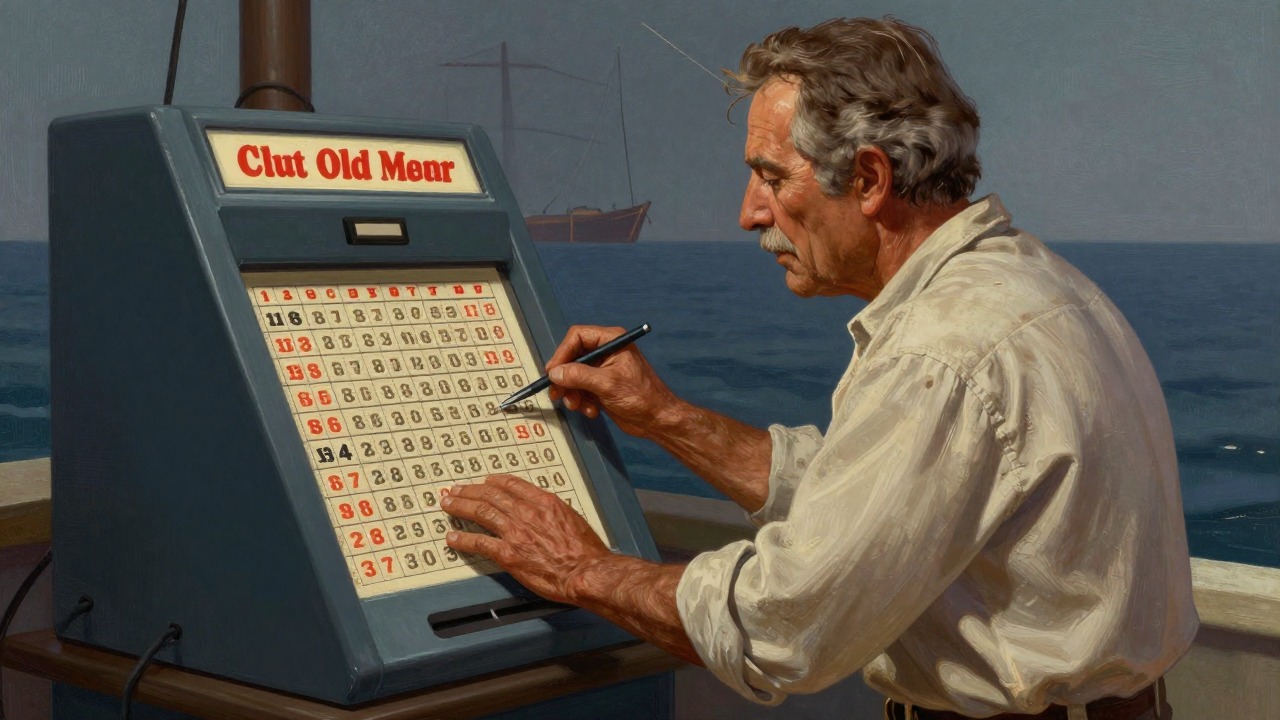
Santiago suggests buying a lottery terminal with the number eighty-five, because tomorrow is the eighty-fifth day of his run. The boy reminds him of the eighty-seven-day record. The old man says it cannot happen twice, but he hopes.
The Cost of Hope
He needs two dollars and a half for the ticket. He says he can borrow, but he dislikes borrowing. He knows that first you borrow, then you beg. This shows his pride and his poverty.
The lottery is a small gamble, but it represents his desire to change his luck.
Luck as a Sin
Luck as a Sin
A Philosophical Reflection
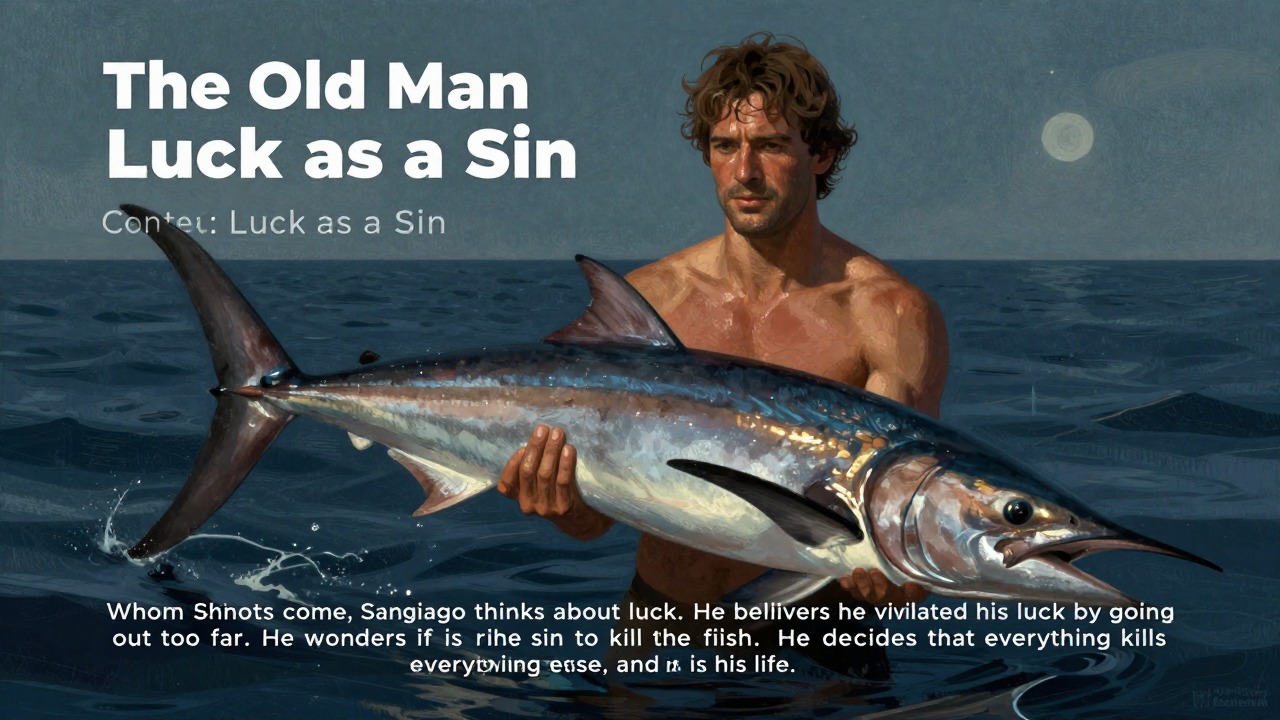
When the sharks come, Santiago thinks about luck. He believes he violated his luck by going out too far. He wonders if it is a sin to kill the fish. He decides that everything kills everything else, and fishing is his life.
The Nature of Luck
He thinks of luck as a force that can be bought or lost. He says, "Luck is a thing that comes in many forms." He would pay any price for it. But in the end, he accepts that he has no luck left.
This thread questions the role of fate and personal responsibility.
The Boy's Refusal of Luck
The Boy's Refusal of Luck
A New Beginning
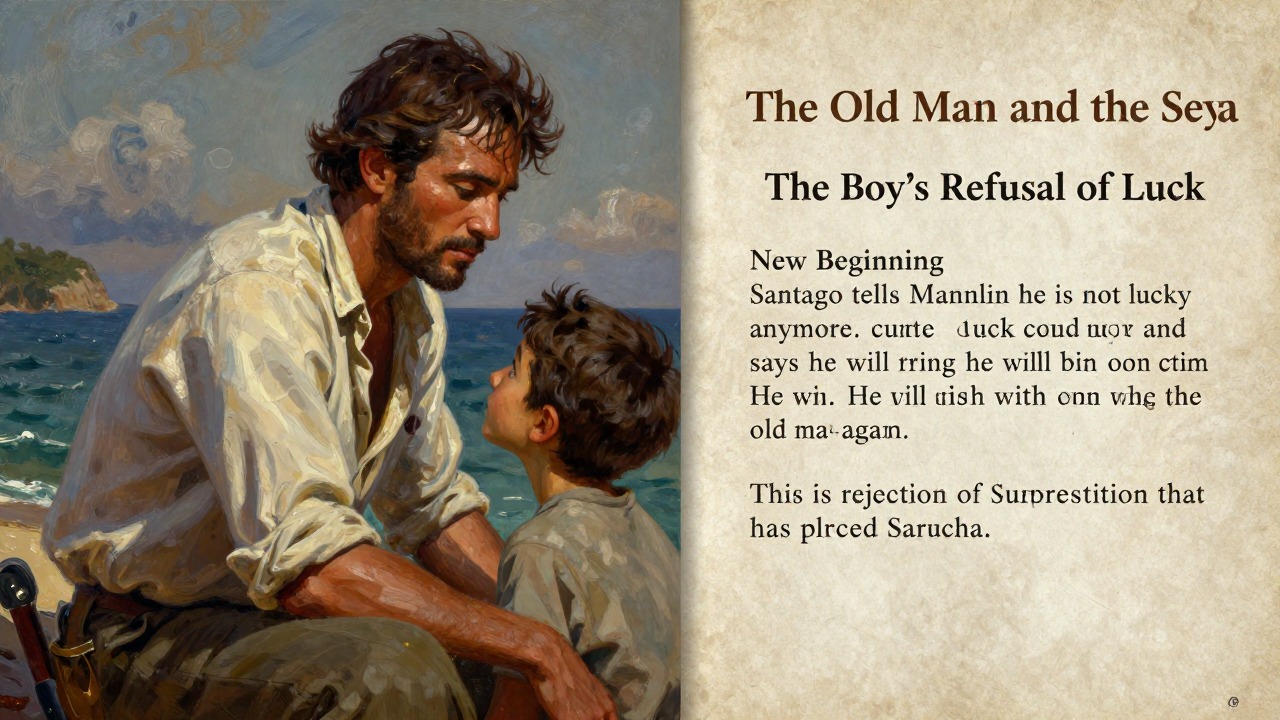
Santiago tells Manolin he is not lucky anymore. The boy curses luck and says he will bring his own luck. He will fish with the old man again. This is a rejection of the superstition that has plagued Santiago.
The Future
Manolin's loyalty is a form of luck. He will provide the tools, the youth, the faith. The old man's luck may be restored not by the lottery, but by the boy's love.
The lottery subplot closes with the promise of a new start.
the evening before the eighty-fifth day
during the third day at sea
after the return, in the shack
