
The Theme of Sin and Redemption
The Old Man and the SeaSantiago's reflections on sin, particularly the killing of the marlin, and his search for redemption through suffering.
increasing Bearing strength in each event
 decreasing
Bearing strength in each eventdecreasingThe Question of Sin
The Question of Sin
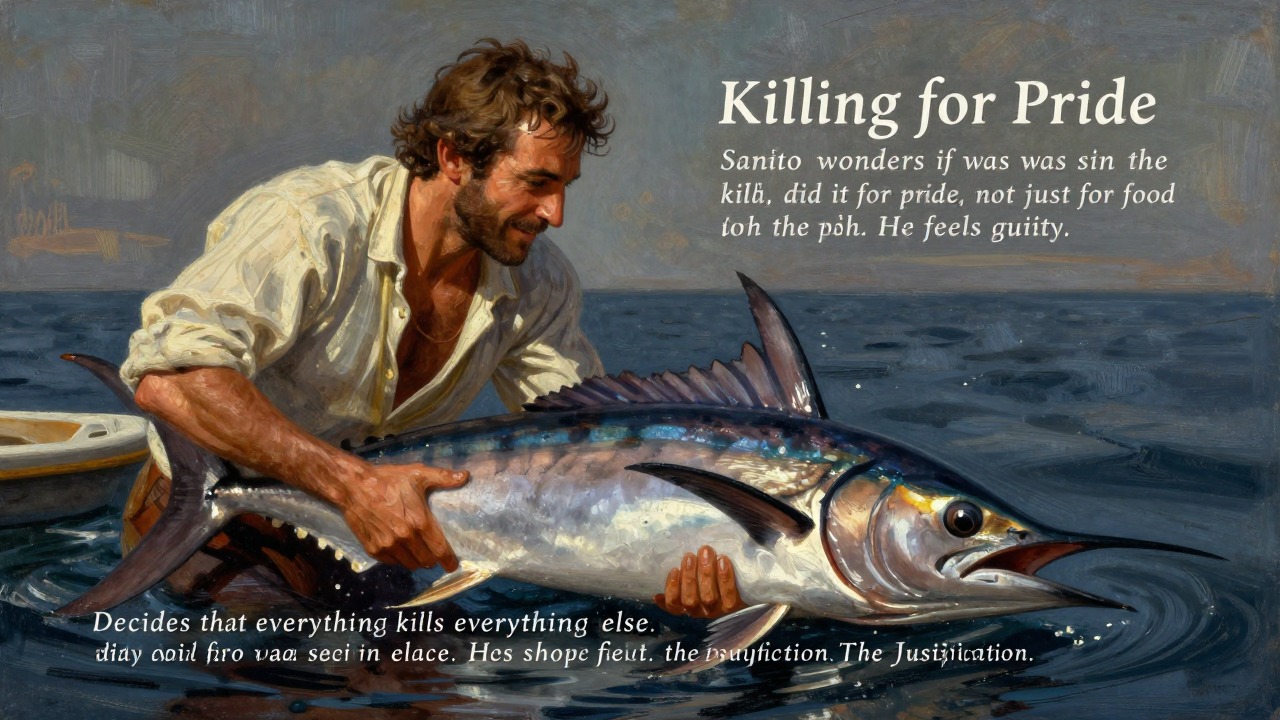
Killing for Pride
Santiago wonders if it was a sin to kill the fish. He did it for pride, not just for food. He loved the fish. He feels guilty.
The Justification
He decides that everything kills everything else. Fishing is his life. He was born to be a fisherman. The fish was born to be a fish. There is no sin. But he is not sure.
This uncertainty is part of his moral struggle.
The Idea of Punishment
The Idea of Punishment
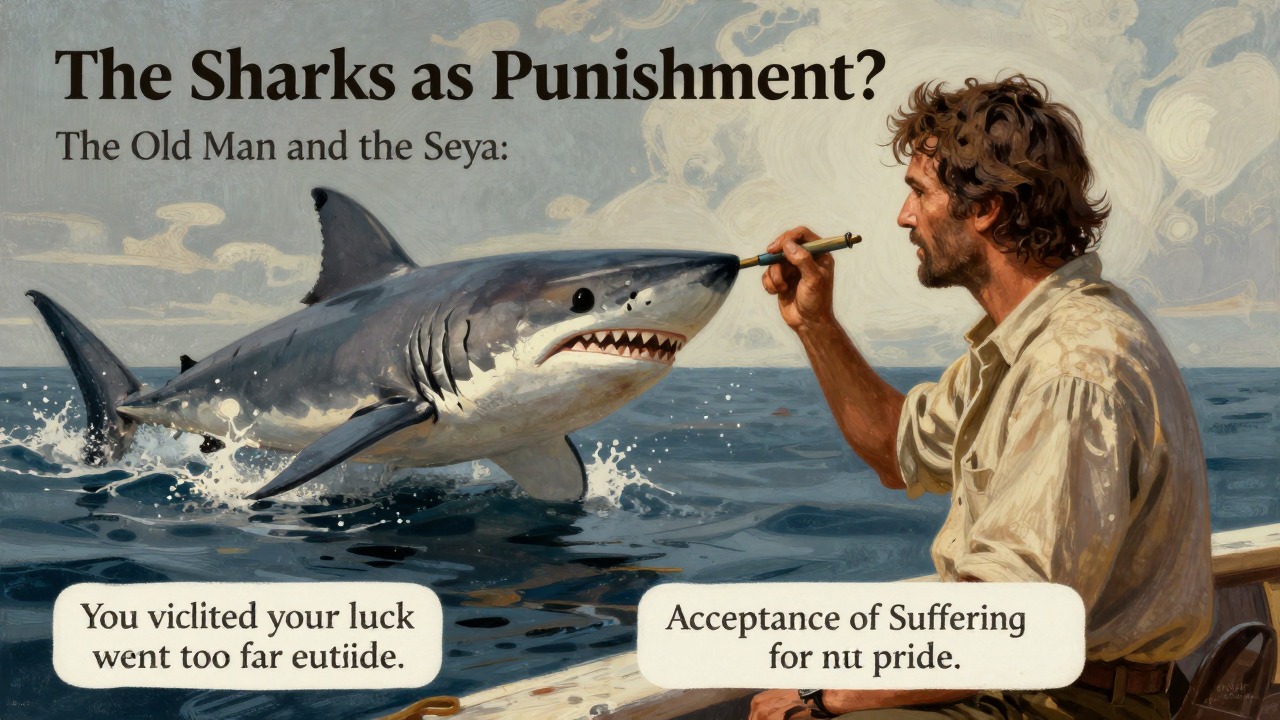
The Sharks as Punishment?
Santiago sees the shark attacks as a consequence of going too far out. He says, "You violated your luck when you went too far outside." He feels he is being punished for his pride.
The Acceptance of Suffering
He does not complain. He accepts the suffering as part of the bargain. He says, "I am sorry that I killed the fish though." His suffering is a form of redemption.
This reflects a Catholic sense of sin and penance.
The Redemption through Love
The Redemption through Love
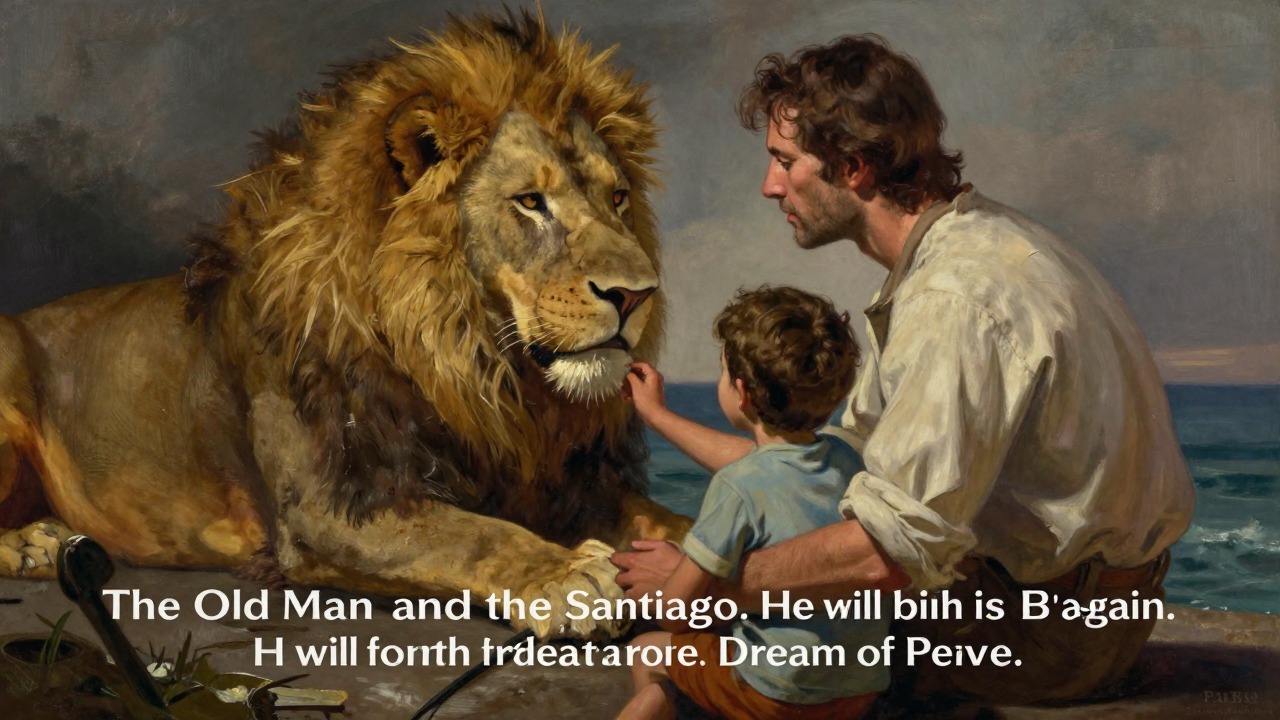
The Boy's Forgiveness
Manolin does not blame Santiago. He loves him. He will fish with him again. The boy's love is a form of redemption. Santiago is not alone.
The Dream of Peace
He dreams of the lions, a symbol of innocence and peace. He has been redeemed by his suffering and by the boy's loyalty. The sin is forgotten.
This thematic thread ends with a quiet hope.
during the third day
during the shark attacks
the end of the story
