
The Dreams of the Lions
The Old Man and the SeaSantiago's recurring dream of lions on an African beach symbolizes his youth, vitality, and inner peace.
increasing Bearing strength in each event
 decreasing
Bearing strength in each eventdecreasingThe First Dream
The First Dream
Africa in His Sleep
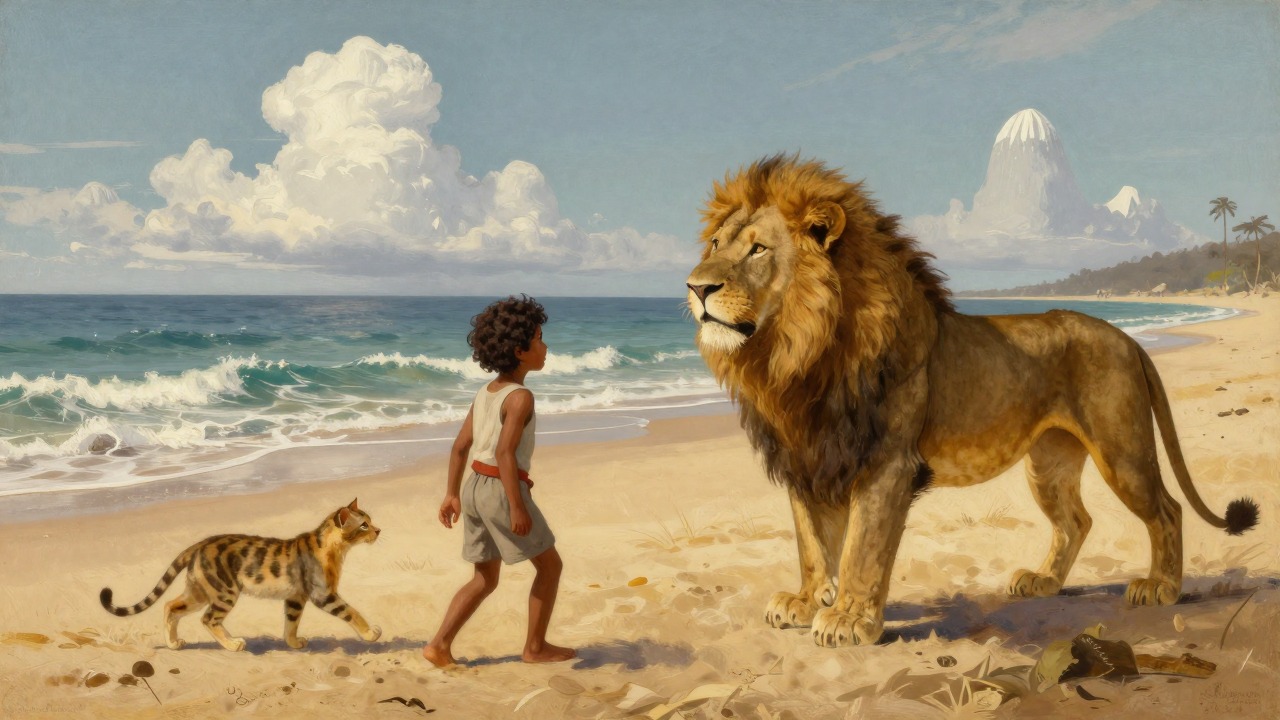
Santiago dreams of Africa when he was a boy. He sees the long golden beaches, the white peaks, and the lions playing like young cats. He loves them as he loves the boy. This dream warms him before his great ordeal.
A Symbol of Youth
The lions represent his past strength and adventure. He no longer dreams of women, storms, or great fish. Only the lions remain. They are a source of comfort and hope.
When he wakes, he is ready to face the day.
The Dream During the Fight
The Dream During the Fight
A Brief Respite
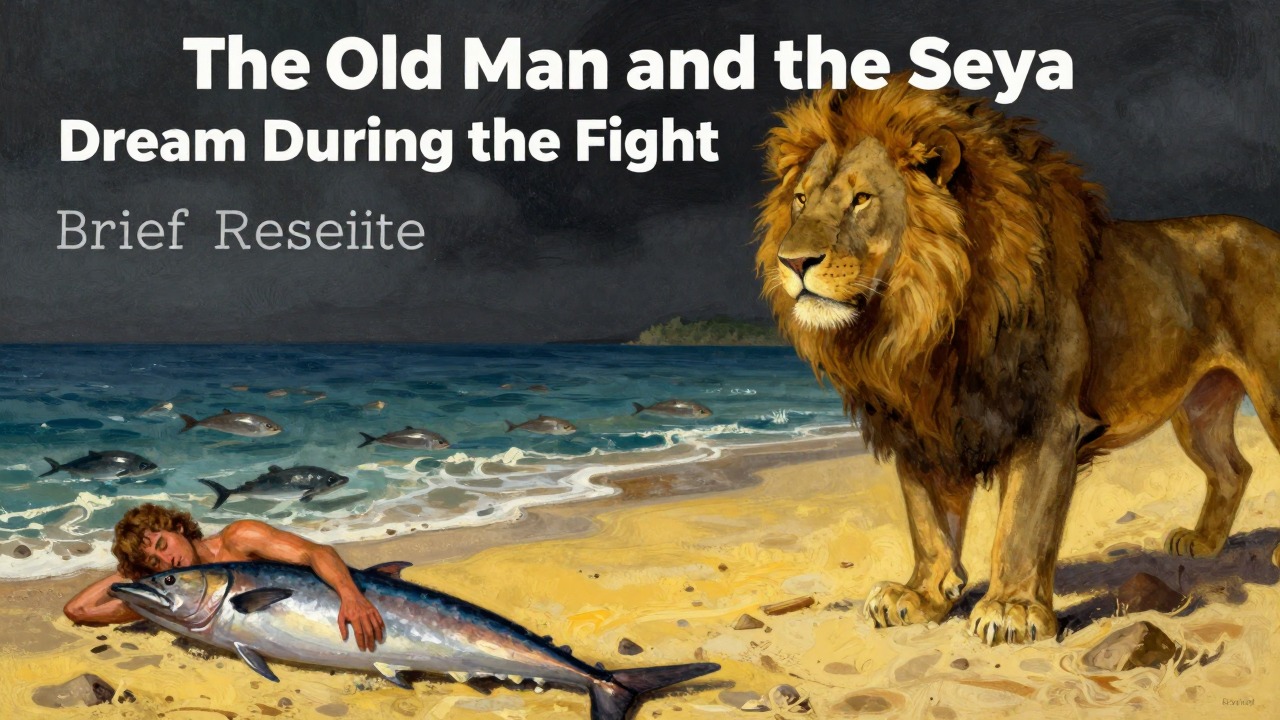
Santiago falls asleep for a few minutes while the fish is calm. He does not dream of the lions at first. Instead, he dreams of a vast school of porpoises mating. Then he dreams of the yellow beach and the lions coming down in the dark.
Renewed Strength
He wakes with the line burning his hand, but the dream has refreshed him. The lions give him a sense of peace and timelessness. They remind him that there is beauty beyond the struggle.
This dream helps him continue the fight.
The Final Dream
The Final Dream
Peace at Last
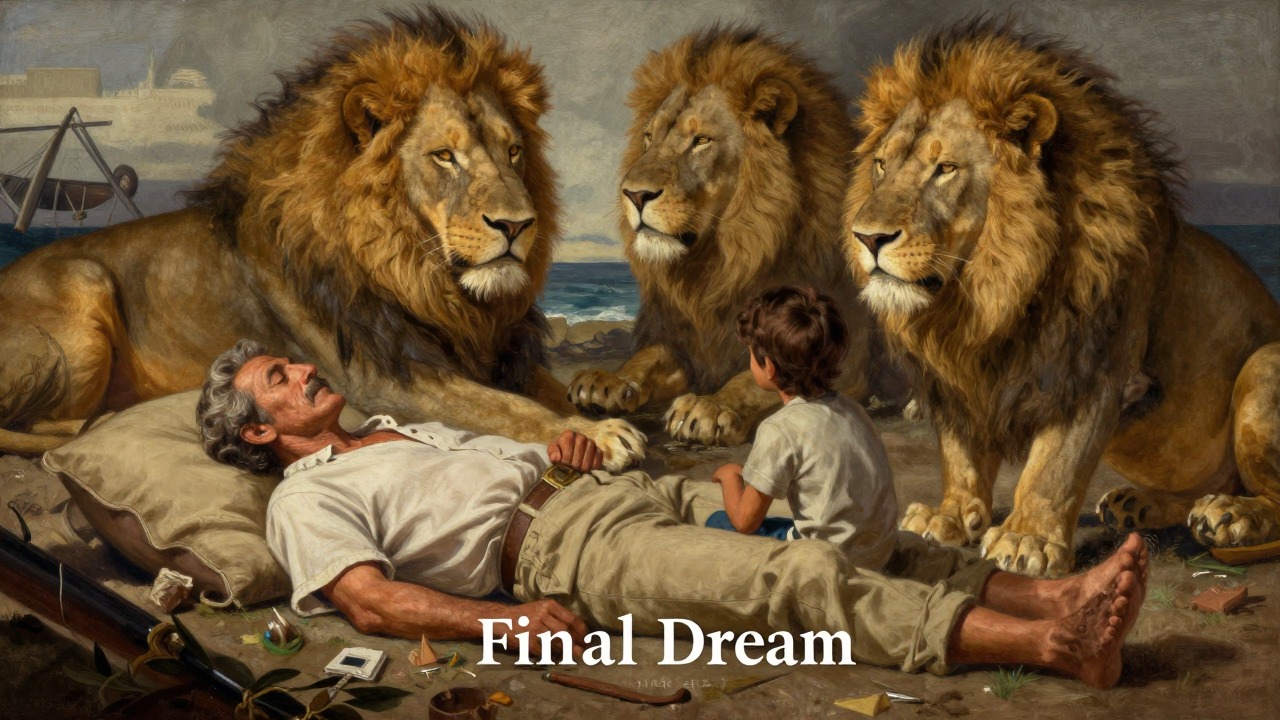
After the ordeal, Santiago sleeps on his face. He dreams of the lions again. The boy sits by him, watching. The old man is at peace. The lions are the main thing that is left.
A Circular Ending
The novel ends as it began, with the dream of the lions. Santiago has gone through suffering, but he returns to his essential self. The lions represent his indomitable spirit, untouched by age or defeat.
This dream is the antidote to the skeleton in the harbor. It affirms life.
night before the eighty-fifth day
during the second night at sea, when he sleeps briefly
after the return, in the shack
