the champion
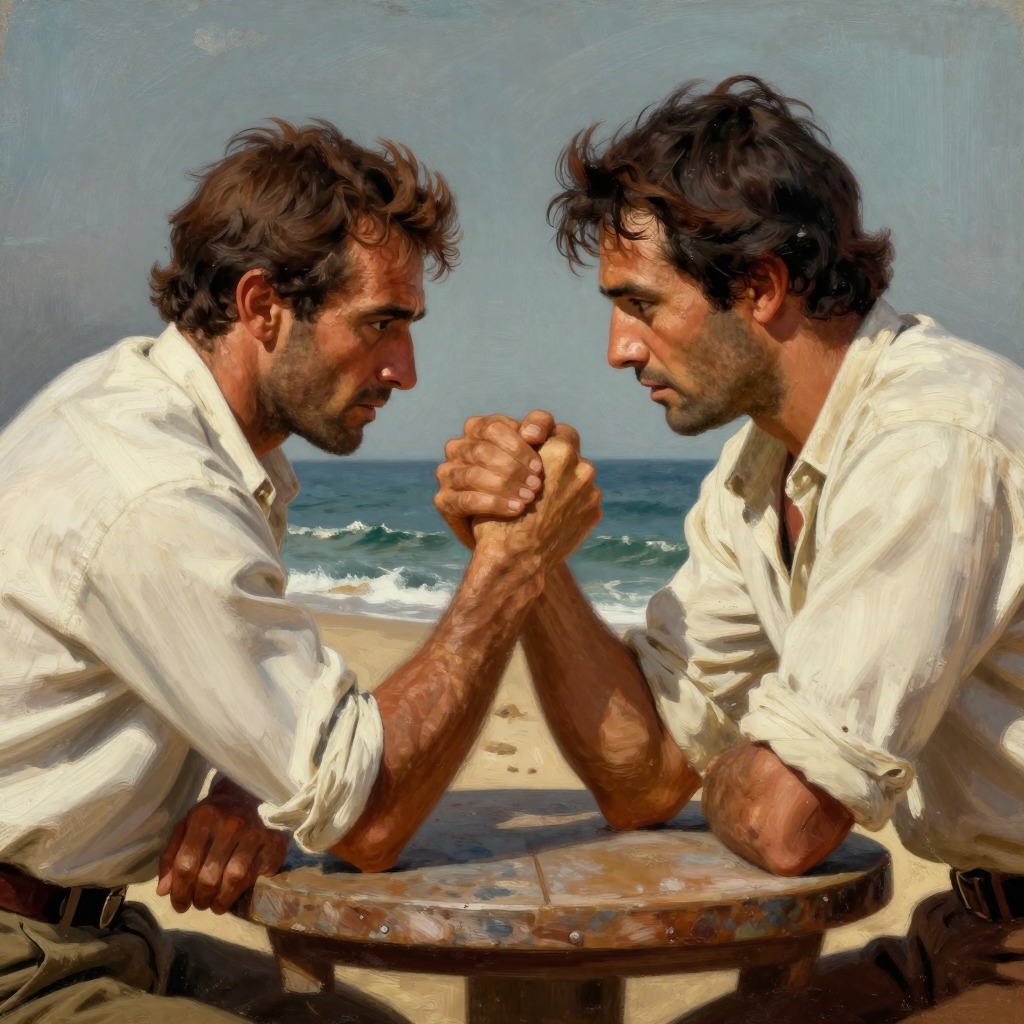
The Old Man and the SeaThe champion is a title that Santiago earned in his youth, a mark of physical supremacy that he carried into old age as a measure of his will and endurance. The name "Santiago El Campeon" was bestowed after he defeated the great negro from Cienfuegos, who was considered the strongest man on the docks, in a hand-wrestling match that lasted more than a day. This victory was not merely a personal triumph but a public event that transformed Santiago's reputation among the fishermen of Havana and the surrounding coast.
The Hand Game and the Victory
The match that made Santiago the champion took place in a tavern in Casablanca, where he and the negro from Cienfuegos sat with their elbows on a chalk line drawn across a table, their forearms straight up and hands gripped tight. The contest began on a Sunday morning and did not end until the following Monday morning, spanning a full day and night. During the match, bettors came and went, the referees were changed every four hours so they could sleep, and the room was lit by kerosene lamps that cast the negro's huge shadow against the bright blue wooden walls. Blood came out from under the fingernails of both men's hands as they strained against each other. The negro was fed rum and had cigarettes lit for him by his supporters, and at one point he nearly had Santiago three inches off balance. But Santiago raised his hand back to dead even, and at daylight, when the bettors were asking for a draw and the referee was shaking his head, Santiago unleashed his effort and forced the negro's hand down until it rested on the wood. For a long time after that, everyone called him The Champion. A return match was held in the spring, but Santiago won it quite easily because he had broken the confidence of the negro from Cienfuegos in the first match.
The Champion's Legacy and Santiago's Later Life
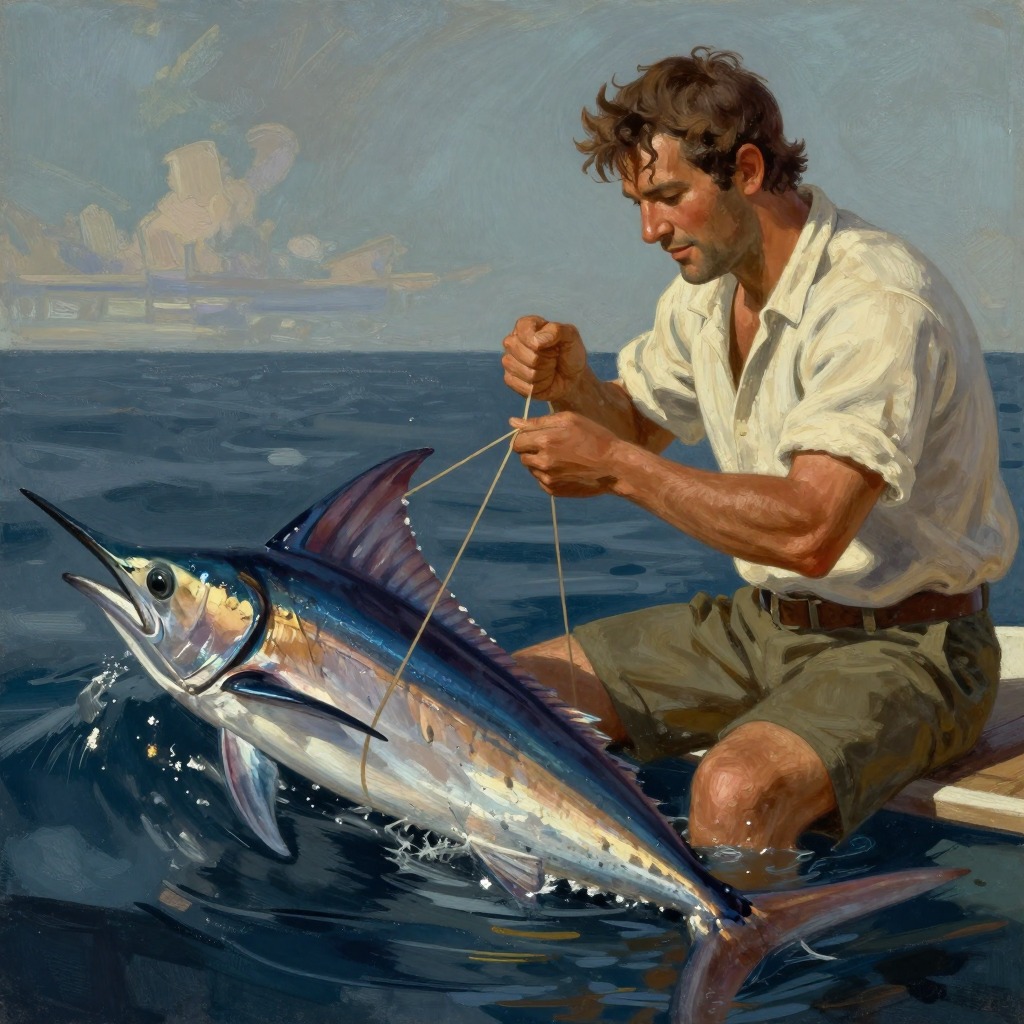
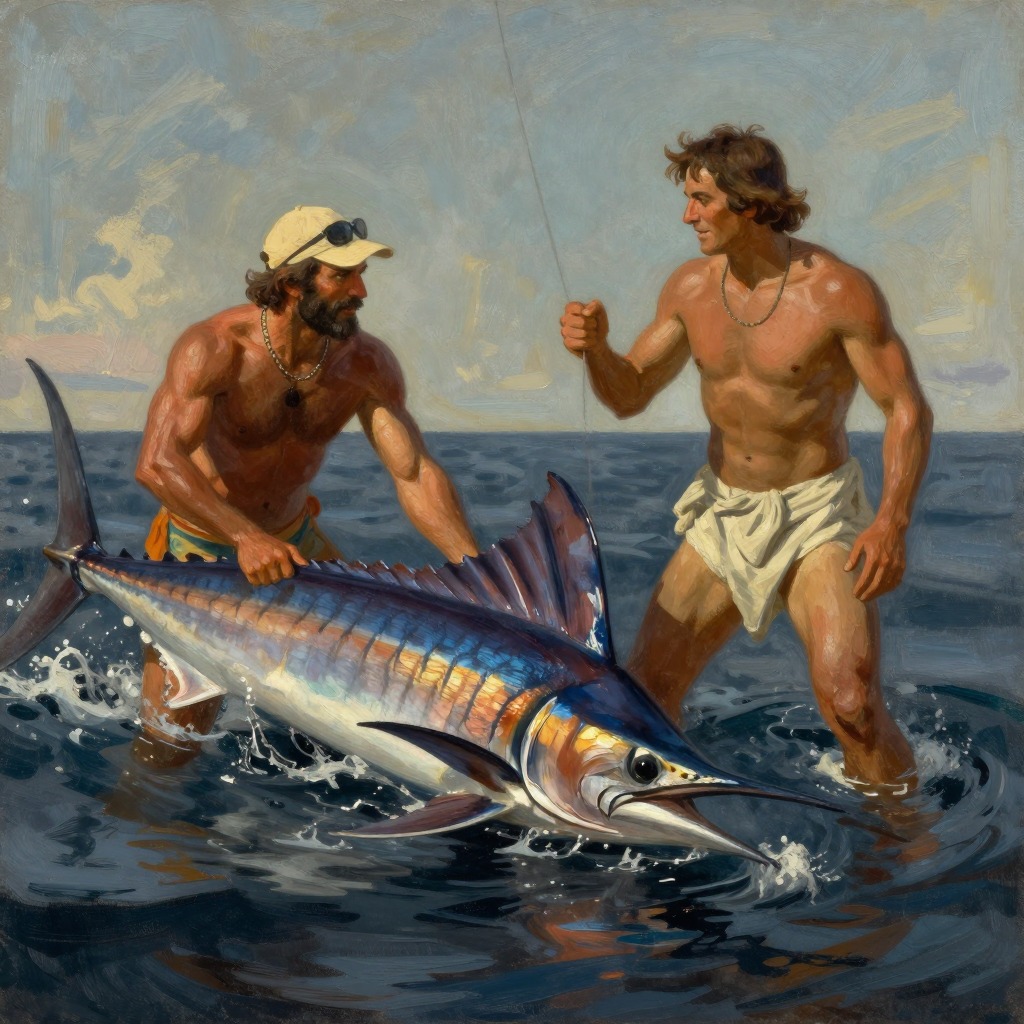
After his victory, Santiago had a few more matches and then stopped, deciding that he could beat anyone if he wanted to badly enough and that the contests were bad for his right hand for fishing. He tried a few practice matches with his left hand, but his left hand had always been a traitor and would not do what he called on it to do, and he did not trust it. The title of champion remained with him as a private resource, not something he boasted about but something he could draw on when his strength was tested. During his three-day struggle with the great marlin, when his left hand cramped and his body was exhausted, he thought of the hand game and of the great DiMaggio, who played with the pain of a bone spur in his heel. He told himself that he must be worthy of the great DiMaggio, who did all things perfectly even with pain, and he remembered that he had once been Santiago El Campeon. The memory of that victory gave him confidence that he could endure the suffering of the line cutting into his hands and back.
The Champion as a Symbol of Endurance and Pride
The champion is not just a past achievement but a living principle that Santiago embodies throughout the novel. When he says, "I told the boy I was a strange old man," and then adds, "Now is when I must prove it," he is invoking the same will that made him champion. The thousand times that he had proved it meant nothing; each time was a new time, and he never thought about the past when he was doing it. The champion's pride is not arrogance but a quiet, unshakeable resolution that allows him to say, "A man can be destroyed but not defeated." Even after the sharks have stripped the marlin to a skeleton, Santiago does not consider himself beaten by the fish; he says, "They beat me, Manolin. They truly beat me," but immediately the boy corrects him: "He didn't beat you. Not the fish." The champion's defeat is not in the loss of the fish's meat but in the physical limits of his old body, and even then, he retains the dignity of having fought beyond what seemed possible. The title of champion, earned in a single contest of strength, becomes a lifelong code of conduct that Santiago lives by, and it is this code that the boy, Manolin, recognizes and honors when he says, "There are many good fishermen and some great ones. But there is only you."