the fish as a brother
The Old Man and the SeaIn Ernest Hemingway's The Old Man and the Sea, the idea that the great marlin is not merely a quarry but a brother forms the emotional and philosophical core of Santiago's journey. This concept transforms the epic battle from a simple contest of skill into a complex, tragic relationship built on mutual respect, shared suffering, and an inescapable duty to kill. It is a bond that elevates the fish to the status of a worthy equal and, in doing so, deepens the old man's own sense of purpose and his eventual sense of loss.
The Declaration of Brotherhood
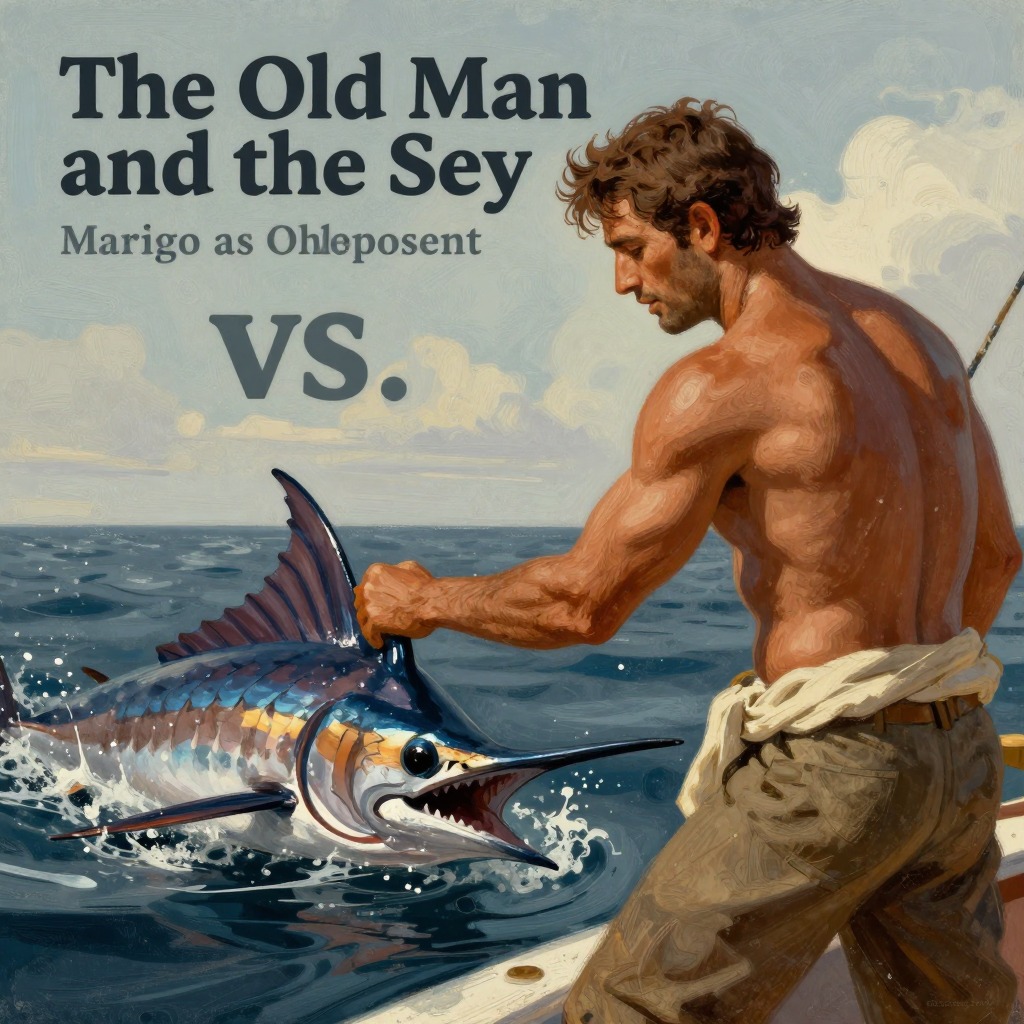
The explicit naming of the fish as a brother comes after hours of grueling struggle, as Santiago's initial admiration deepens into a personal connection. Having held the line through the night, he speaks to the unseen fish, saying, "I love you and respect you very much. But I will kill you dead before this day ends." This declaration of love and respect, immediately followed by the intent to kill, establishes the paradox of their relationship. Later, as the fish begins to circle and the fight reaches its climax, Santiago's identification with his opponent becomes even more intimate. He thinks, "You are killing me, fish... But you have a right to. Never have I seen a greater, or more beautiful, or a calmer or more noble thing than you, brother." By calling the fish "brother," Santiago acknowledges a shared fate and a fundamental equality, recognizing the marlin's nobility and its right to fight for its life, even as he himself is being pushed to his limits.
A Bond Forged in Suffering and Respect
The brotherhood is not a sentimental notion but a bond forged in the shared ordeal of the hunt. Santiago feels the fish's pain as his own, thinking, "I wish I could feed the fish... He is my brother." This empathy extends to a profound respect for the marlin's dignity and behavior. He marvels at the fish's calm, noble fight, contrasting it with the panic of other fish he has caught. The old man's respect is so deep that he questions the very act of killing such a creature, pondering, "You did not kill the fish only to keep alive and to sell for food... You killed him for pride and because you are a fisherman. You loved him when he was alive and you loved him after. If you love him, it is not a sin to kill him. Or is it more?" This internal debate reveals that the bond of brotherhood complicates the simple act of fishing, turning it into a moral and spiritual dilemma. The fish is not an enemy to be vanquished but a brother to be honored, even in death.
The Aftermath of the Killing: Loss and Guilt
The killing of the marlin does not bring triumph but a profound sense of loss and guilt that is amplified by the brotherhood Santiago feels. After driving the harpoon home, he thinks, "I have killed this fish which is my brother and now I must do the slave work." The victory is immediately tempered by the sorrow of having destroyed a kindred spirit. This sorrow turns to regret as the sharks arrive to devour the marlin's carcass. Watching the first shark attack, Santiago feels the mutilation of the fish as a personal wound: "When the fish had been hit it was as though he himself were hit." He later apologizes to the fish, saying, "I'm sorry about it, fish. It makes everything wrong." His final, bitter lament, "I shouldn't have gone out so far, fish... Neither for you nor for me. I'm sorry, fish," is a confession of shared responsibility for their mutual ruin. The brotherhood, which once gave the struggle meaning, now makes the destruction of the fish a personal tragedy.
Thematic Significance: A Man's Place in the Natural Order
The concept of the fish as a brother is central to the novel's exploration of humanity's relationship with nature. It rejects a purely adversarial or exploitative view, instead proposing a model of kinship and mutual respect within a cycle of life and death. Santiago's bond with the marlin is part of a larger pattern of seeing the natural world as a community of equals. He thinks of the porpoises as "our brothers" and the flying fish as his "principal friends on the ocean." This worldview culminates in his reflection that "it is enough to live on the sea and kill our true brothers." The phrase "true brothers" acknowledges the painful necessity of killing for survival while insisting on the dignity and kinship of the creature being killed. The brotherhood of the fish is what elevates Santiago's struggle from a mere physical contest to a spiritual ordeal, and its loss is what makes his final defeat—the destruction of the marlin's carcass—a tragedy that tests the very limits of his famous maxim that "a man can be destroyed but not defeated."