The pearl is like a sin
The PearlIn John Steinbeck's novella The Pearl, the phrase "the pearl is like a sin" is the stark, desperate judgment Juana pronounces on the great pearl, marking the moment when her maternal wisdom names the jewel's true, destructive nature and sets her in direct opposition to Kino's obsessive attachment. This expression crystallizes the story's central moral conflict: the pearl, which initially appears as a miraculous solution to poverty and a gateway to a better future for their son Coyotito, reveals itself as an object of greed, violence, and spiritual corruption that threatens to destroy everything the family holds dear.
Origin and Context of the Utterance
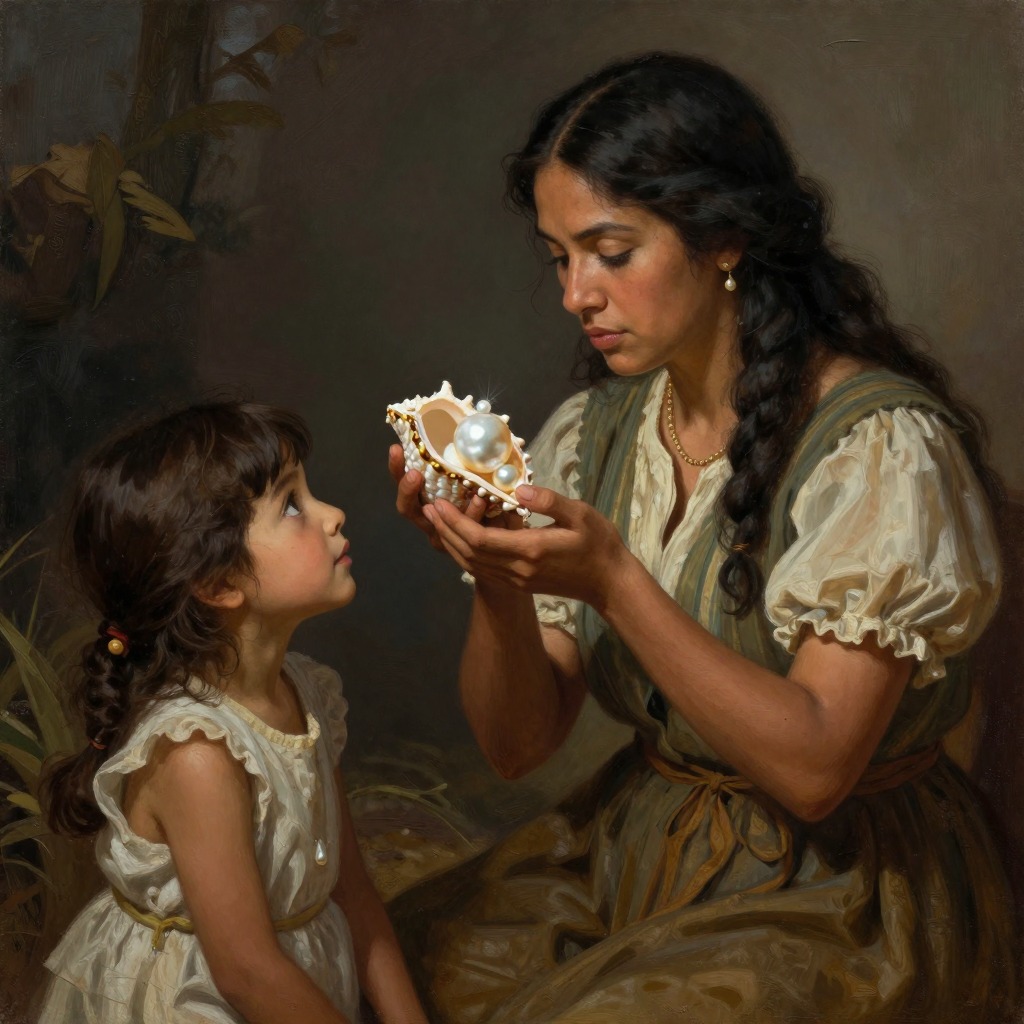
The phrase erupts from Juana during the first night after Kino has been attacked by an intruder who tried to steal the pearl. Kino has just fought off the assailant in the darkness of their brush house, suffering a gash on his forehead, and the tension that had been building in Juana since the pearl's discovery finally boils over. In the dim light of a consecrated candle, she cries out harshly, "This thing is evil," and then delivers the defining line: "This pearl is like a sin! It will destroy us." Her voice rises shrilly as she urges Kino to throw it away, to break it between stones, to bury it and forget the place, or to cast it back into the sea. The utterance is not a philosophical reflection but a cry of terror from a woman who sees her family's safety unraveling.
Juana's Perspective and the Maternal Imperative
Juana's condemnation of the pearl as a sin flows directly from her role as mother and protector. Throughout the novella, she is portrayed as the practical, life-preserving force in the family. When Coyotito is stung by the scorpion, it is Juana who insists on seeking the doctor, who sucks the poison from the wound, and who applies a seaweed poultice. Her primary concern is the survival and well-being of her child, and she perceives the pearl as a direct threat to that survival. Her warning is not abstract theology but concrete fear: "It will destroy us all," she insists, "Even our son." This maternal imperative drives her to act on her conviction later that same night, when she attempts to throw the pearl back into the sea herself, an act that provokes Kino to strike her in the face and kick her among the boulders on the beach.
The Pearl as a Corrupting Force in the Community
Juana's insight that the pearl is "like a sin" is validated by the broader social reaction to Kino's discovery. The news of the pearl stirs up "something infinitely black and evil in the town," as Steinbeck describes it, a "black distillate" that is "like the scorpion, or like hunger in the smell of food, or like loneliness when love is withheld." The pearl buyers, who operate as a collusive syndicate, immediately conspire to cheat Kino, offering only a thousand pesos for a pearl they know is worth a fortune. The doctor, who had refused to treat Coyotito when Kino was poor, now arrives unbidden, poisons the baby to create a medical crisis, and then administers an antidote, all to gain access to the pearl. The priest visits to remind Kino of his spiritual obligations, his thoughts turning to "certain repairs necessary to the church." Every institution and individual in the town—the church, the medical profession, the commercial class—is corrupted by the pearl's promise of wealth, confirming Juana's sense that the object itself is a moral poison.
The Contrast with Kino's Vision
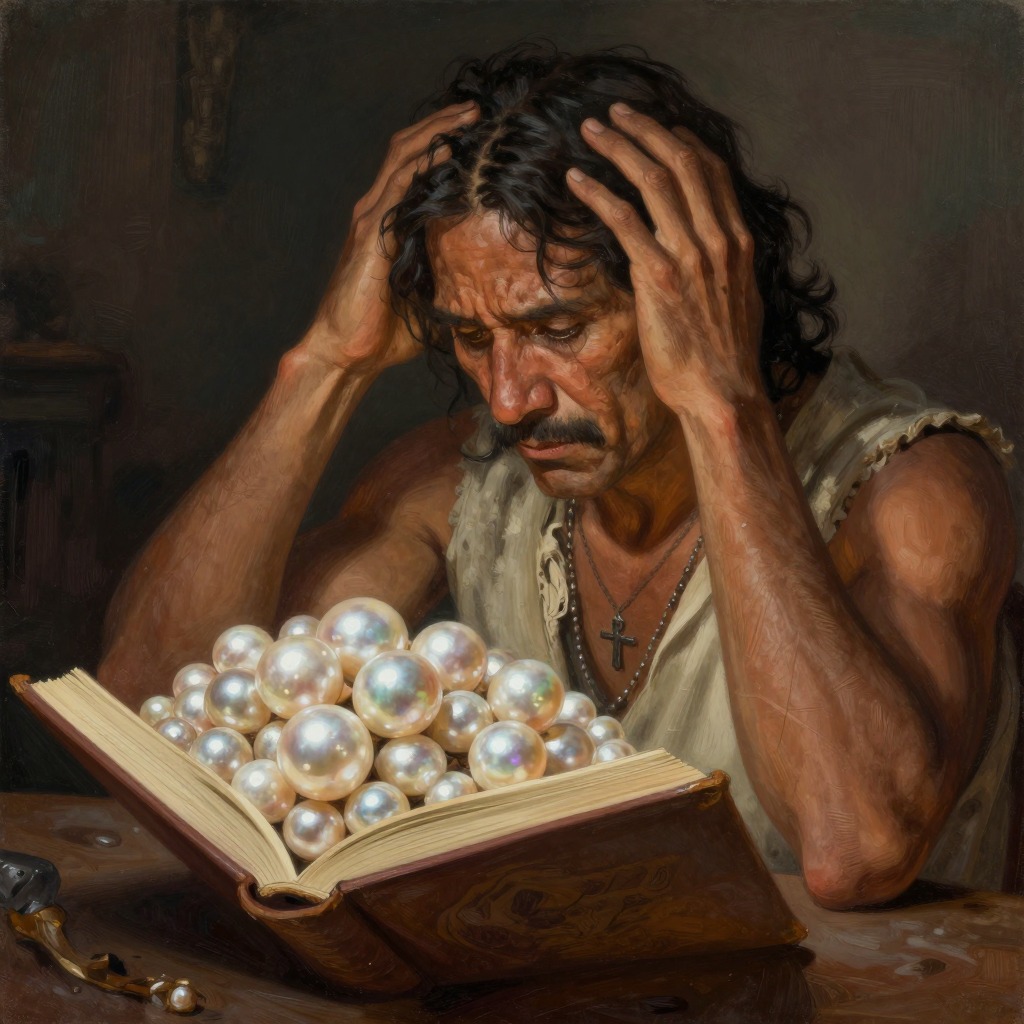
Juana's identification of the pearl with sin stands in stark opposition to Kino's vision of the pearl as salvation. For Kino, the pearl is the instrument of his son's liberation: it will pay for Coyotito's education, buy him a rifle, provide new clothes, and enable a church wedding. He sees in its luminous surface "dream forms" of a transformed future. But as the narrative progresses, the visions in the pearl darken. When Kino looks into it after killing a man, he sees only "a huddled dark body on the ground with shining blood dripping from its throat." He sees Juana "with her beaten face crawling home through the night" and Coyotito's face "thick and feverish from the medicine." The pearl's surface, once beautiful, becomes "gray and ulcerous," showing him "the frantic eyes of the man in the pool" and finally "Coyotito lying in the little cave with the top of his head shot away." Juana's characterization of the pearl as a sin proves prophetic: it has indeed become the instrument of their son's death.
The Expression's Thematic and Structural Role
The phrase "the pearl is like a sin" functions as a key thematic statement that aligns the novella with its biblical and medieval antecedents. Steinbeck explicitly intended readers to recall the biblical "pearl of great price," the metaphor for Heaven for which a merchant trades everything he owns. In Steinbeck's inverted parable, however, the pearl becomes the opposite of Heaven—a source of evil that demands the sacrifice of everything the family possesses, including their child. The expression also echoes the medieval poem Pearl, in which the poet must renounce his attachment to his lost daughter and give her up to God. Juana's warning, repeated and reinforced by events, leads to the novella's final act: Kino, having lost his son, offers the pearl to Juana so that she can throw it away. She refuses, saying simply, "No, you," allowing him to reclaim some part of his damaged manhood by casting the evil object back into the sea himself. The pearl settles to the ocean floor, and "the music of the pearl drifted to a whisper and disappeared." Juana's judgment that the pearl was like a sin is thus the moral truth that the entire narrative confirms.