
The Ghost's Past in Mazenderan
The Phantom of the OperaThe subplot of Erik's earlier life in Persia, his crimes, and his relationship with the Persian.
increasing Bearing strength in each event
 decreasing
Bearing strength in each eventdecreasingErik at the Court of the Shah
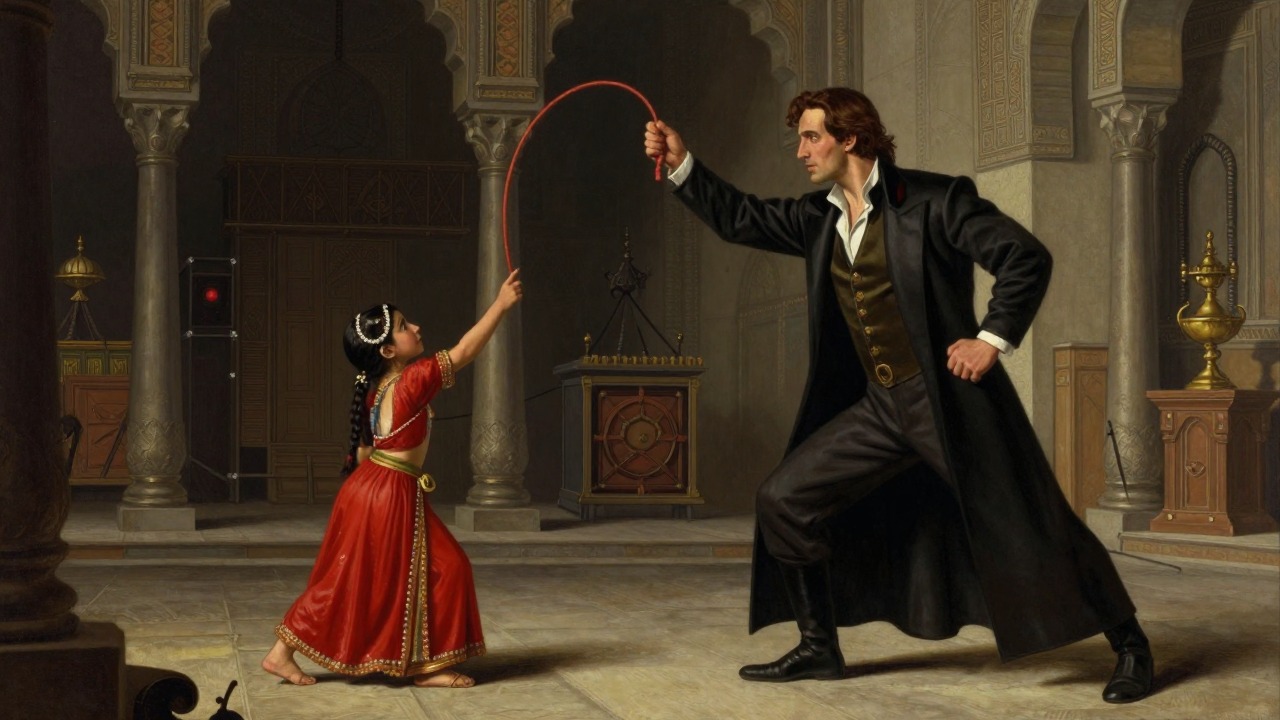
Erik at the Court of the Shah
The Architect of Horrors
Erik served the Shah of Persia, building a palace of traps and secret passages. He also taught the little sultana the Punjab lasso, which she used to kill people for sport. The 'Rosy Hours of Mazenderan' were a time of terror and amusement.
The Shah's Fear
The Shah became afraid of Erik's knowledge and ordered his execution. The Persian, then daroga, saved Erik's life by helping him escape. Erik fled to Constantinople and then to Paris.
The Persian's Guilt
The Persian feels responsible for Erik's continued existence. He knows that Erik is capable of great evil, but he also pities him. This history is the reason the Persian is determined to stop Erik's crimes.
Erik's Don Juan Triumphant
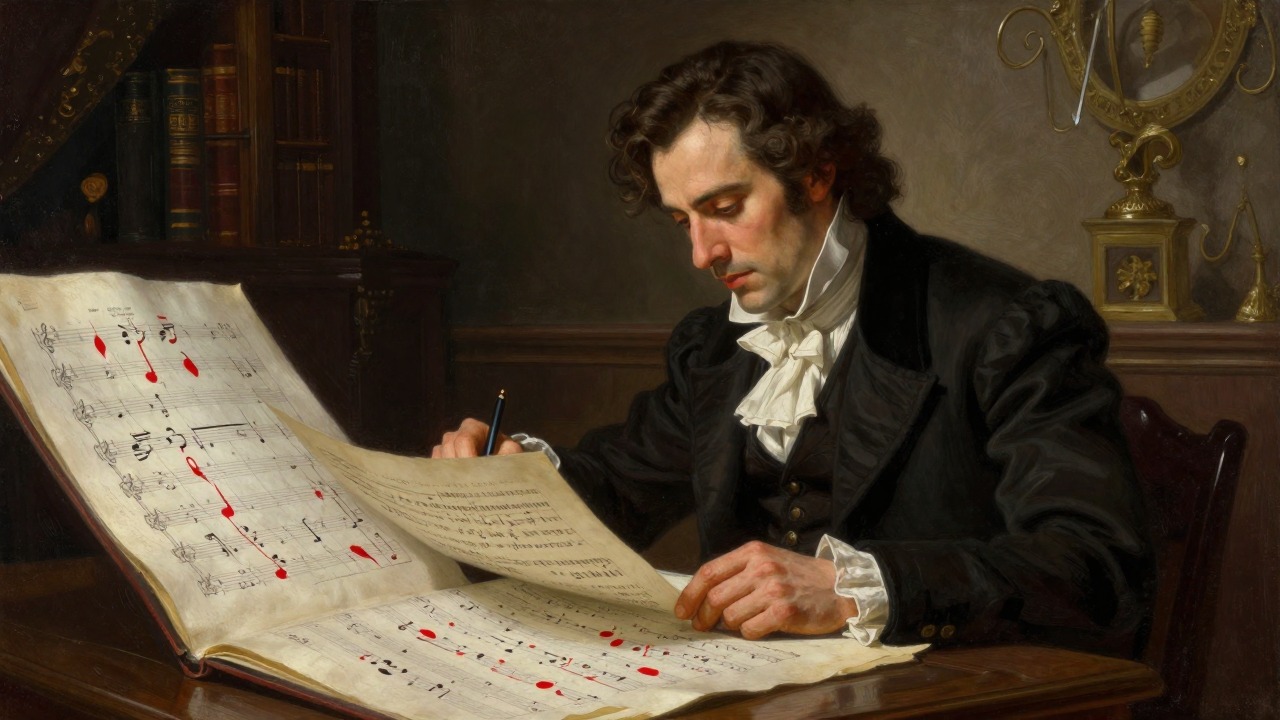
Erik's Don Juan Triumphant
The Masterpiece
Erik is composing an opera called Don Juan Triumphant. He works on it for days and nights, living on music alone. The score is filled with red notes and is said to be so powerful that it consumes those who hear it.
The Meaning of the Work
The opera is Erik's expression of his own demonic nature. He says, 'Don Juan burns, and yet he is not struck by fire from Heaven.' The work is a testament to his genius and his despair.
The Legacy
After Erik's death, the score is believed to be hidden in the house on the lake. The narrator hopes to find it one day. Don Juan Triumphant represents Erik's ultimate artistic ambition, unfulfilled by his tragic life.
years before the novel, during the Rosy Hours of Mazenderan
during his stay in the Opera cellars
