
The Last Bullet
The RoadThe man's plan to kill the boy and himself to prevent capture, and the boy's knowledge of it.
increasing Bearing strength in each event
 decreasing
Bearing strength in each eventdecreasingThe Two Bullets
The Argument
The Wife's Accusation
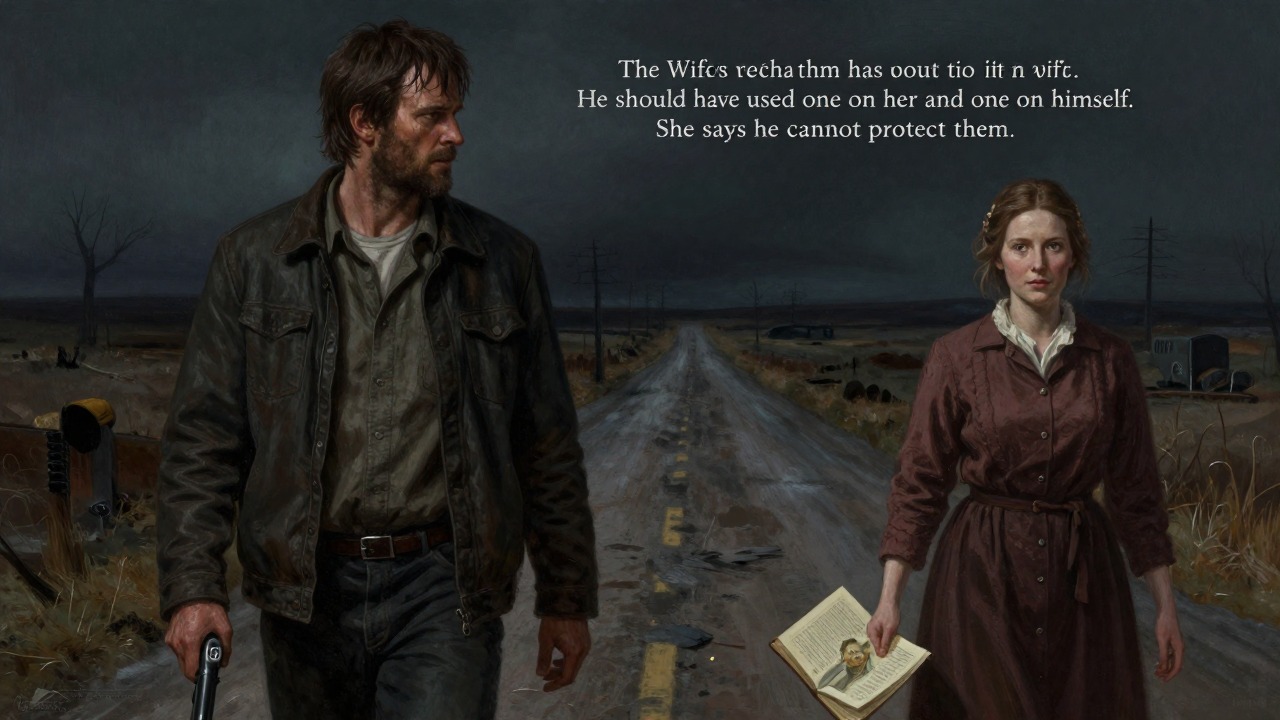
The wife says the man has two bullets in the gun. He should have used one on her and one on himself. She says he cannot protect them.
The Man's Refusal
The man says he would die for them, but she says that is not enough. She walks out into the night, leaving him with the boy and the pistol.
The Lesson
The man learns that he must be prepared to use the last bullet on the boy and himself. He carries that burden.
The Instruction to the Boy
The Moment
The Fear
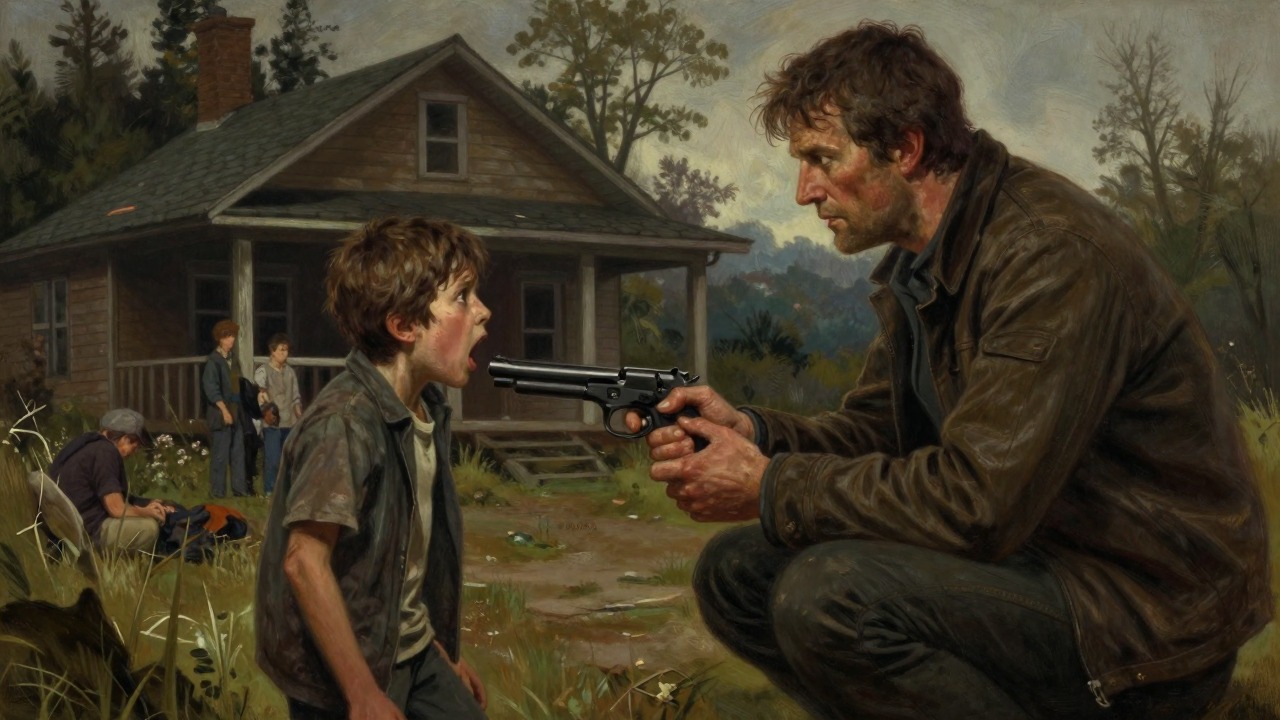
When they are hiding from the people at the house, the man tells the boy that if they are found, he must put the pistol in his mouth and pull the trigger.
The Boy's Terror
The boy is terrified. He says he doesn't know if he can do it. The man takes the gun back. He says he will do it if needed.
The Promise
The man promises he will not leave the boy. He will be with him. The boy is relieved. The last bullet is a shared secret.
The End of the Bullet
The Final Use
The Father's Death
The man dies of illness, not by the bullet. He has not used the last bullet. The boy still has the pistol.
The Boy's Choice
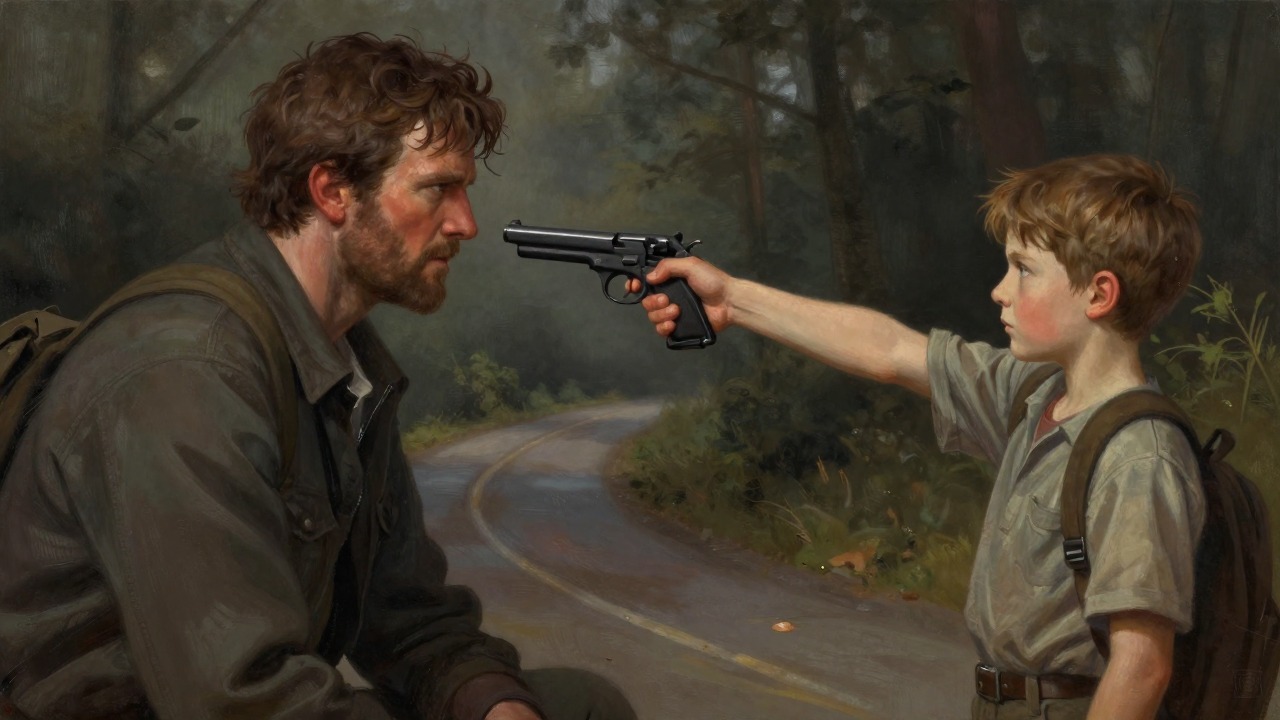
When the good man appears, the boy points the pistol at him. He asks if he is a good guy. The man says yes. The boy puts the pistol away. He does not need to use the last bullet.
The Symbol
The last bullet is never used. It represents the fine line between life and death. The boy chooses to trust.
early in the journey, flashback to wife's suicide
during the encounter with the basement prisoners
near the end
