canned goods
The RoadCanned goods are the most vital material resource in the post-apocalyptic world of The Road, representing survival, hope, and the last tangible link to a vanished civilization. Their discovery, rationing, and eventual depletion drive the narrative's central conflict between starvation and sustenance, while their presence in the bunker and elsewhere transforms the father and son's journey from a desperate march toward death into a fragile, temporary reprieve.
Discovery and the Bunker's Riches
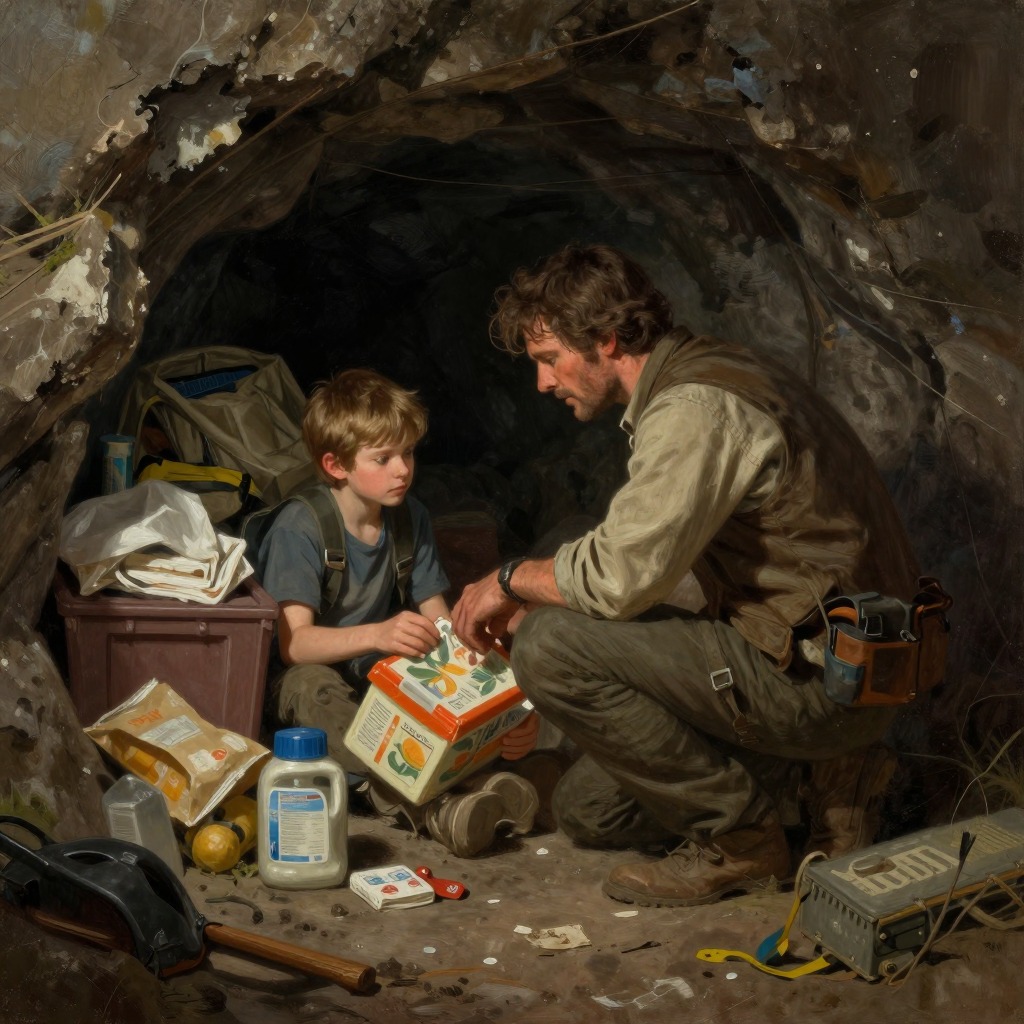
The most significant cache of canned goods is discovered in a hidden underground bunker beneath a garden shed. After the man digs through the earth and pries open a plywood hatch, he descends rough wooden stairs into a concrete-block room and finds "crate upon crate of canned goods. Tomatoes, peaches, beans, apricots. Canned hams. Corned beef." The boy, initially terrified, is led down to see the bounty. The man holds a can of peaches aloft and declares, "It's here because someone thought it might be needed. But they didn't get to use it." The boy asks if it is okay for them to take the food, and the man assures him that the people who stored it "were the good guys" and would want them to have it. The bunker also contains hundreds of gallons of water in ten-gallon plastic jerry jugs, paper towels, toilet paper, paper plates, and plastic trash bags stuffed with blankets. The man methodically goes through the stores, shifting boxes and crates from one side of the room to the other, and finds a box of .45 ACP cartridges and three boxes of .30-30 rifle shells, though no gun. He also discovers a double handful of gold krugerrands in a cloth sack at the bottom of a plastic jar of bolts and screws, but he merely dumps them out, kneads them in his hand, and scoops them back into the jar, recognizing their uselessness.
Immediate Sustenance and Ritual
From the bunker's stores, the man and boy immediately eat a can of pears, then a can of peaches, licking the spoons and tipping the bowls to drink the rich sweet syrup. The man warns the boy not to get sick from eating too much after a long period of starvation. The boy asks if they should thank the people who gave them all this, and he offers a prayer: "Dear people, thank you for all this food and stuff. We know that you saved it for yourself and if you were here we wouldn't eat it no matter how hungry we were and we're sorry that you didn't get to eat it and we hope that you're safe in heaven with God." The man later cooks a sumptuous meal by candlelight: ham, green beans, mashed potatoes with biscuits and gravy, followed by peaches and cream over biscuits for dessert, with coffee. He finds four quarts of bonded whiskey and drinks a little, but it makes him dizzy. They play checkers and the man puts the boy to bed. The man also uses the canned goods to make a measured cube of supplies in the corner of the shelter, planning what they can take when they leave.
Rationing, Sharing, and Depletion
As they travel, the canned goods are carefully rationed. When they encounter the old man Ely, the boy insists on giving him a tin of fruit cocktail. The man opens it with his can opener and hands it to the boy, who gives it to Ely. The boy later argues with his father about what else to give the old man, and in the end Ely receives some cans of vegetables and fruit. The man tells the boy, "I wouldn't have given him mine." Later, when their stores are nearly gone, the man sorts through cans, squeezing them like a man checking for ripeness at a fruit stand, and throws out a few that look questionable. They eat the last of their provisions, and the man measures the road to the coast with a piece of string, knowing they still have a long way to go. At the beach, they eat plates of okra and beans and the last of the canned potatoes, with the fruit long gone. The man opens a can of peaches and eats them slowly with his spoon while the boy sleeps, and he says, "Every day is a lie. But you are dying. That is not a lie."
Theft and Recovery
The precious canned goods are stolen when a thief takes their cart while they are on the beach. The man and boy chase him down, and the man forces the thief to strip naked and leave his clothes in the road. The boy is devastated, sobbing, "Just help him, Papa. Just help him." The man relents and they try to find the thief, but he has vanished. They leave his clothes and shoes with a rock on top of them. The boy later says, "But we did kill him." The canned goods are recovered, but the moral cost is immense.
The Boat's Spoiled Stores
On the wrecked sailboat Pájaro de Esperanza, the man finds cans in the galley floor that are not salvable, badly rusted and some with an ominous bulbed look. They have been stripped of their labels, with the contents written on the metal in black marker pen in Spanish. He sorts through them, shaking them and squeezing them in his hand, and stacks the good ones on the counter. He also finds a can of olive oil, some cans of milk, tea in a rusted metal caddy, a plastic container of some meal he does not recognize, and a half-empty can of coffee. He methodically goes through the shelves in the locker, sorting what to take from what to leave, and makes a bindle in a plastic tarp of some cans of juice, fruit, and vegetables.
The Last Can and the End
Near the end of their journey, when they have almost nothing left, the man sorts through the cans one by one, holding them in his hand and squeezing them like a man checking for ripeness at a fruitstand. He sorts out two he thinks questionable and packs away the rest. They have for food a single tin of peaches, but the man makes the boy eat it and will not take any himself. The boy saves his father's half until tomorrow. The canned goods, once a symbol of abundance and hope in the bunker, dwindle to this final, shared meal, marking the approach of the man's death and the boy's ultimate aloneness.