Nathaniel's suicide jump
The SandmanNathaniel's suicide jump is the catastrophic climax of E. T. A. Hoffmann's "The Sandman," in which the protagonist, driven mad by the traumatic return of the Sandman figure Coppelius and the revelation that his beloved Olympia was an automaton, leaps from a town hall tower to his death on the cobblestones below, fulfilling the dark prophecy of his own poetry and ending his tormented life.
The Tower and the Looking-Glass
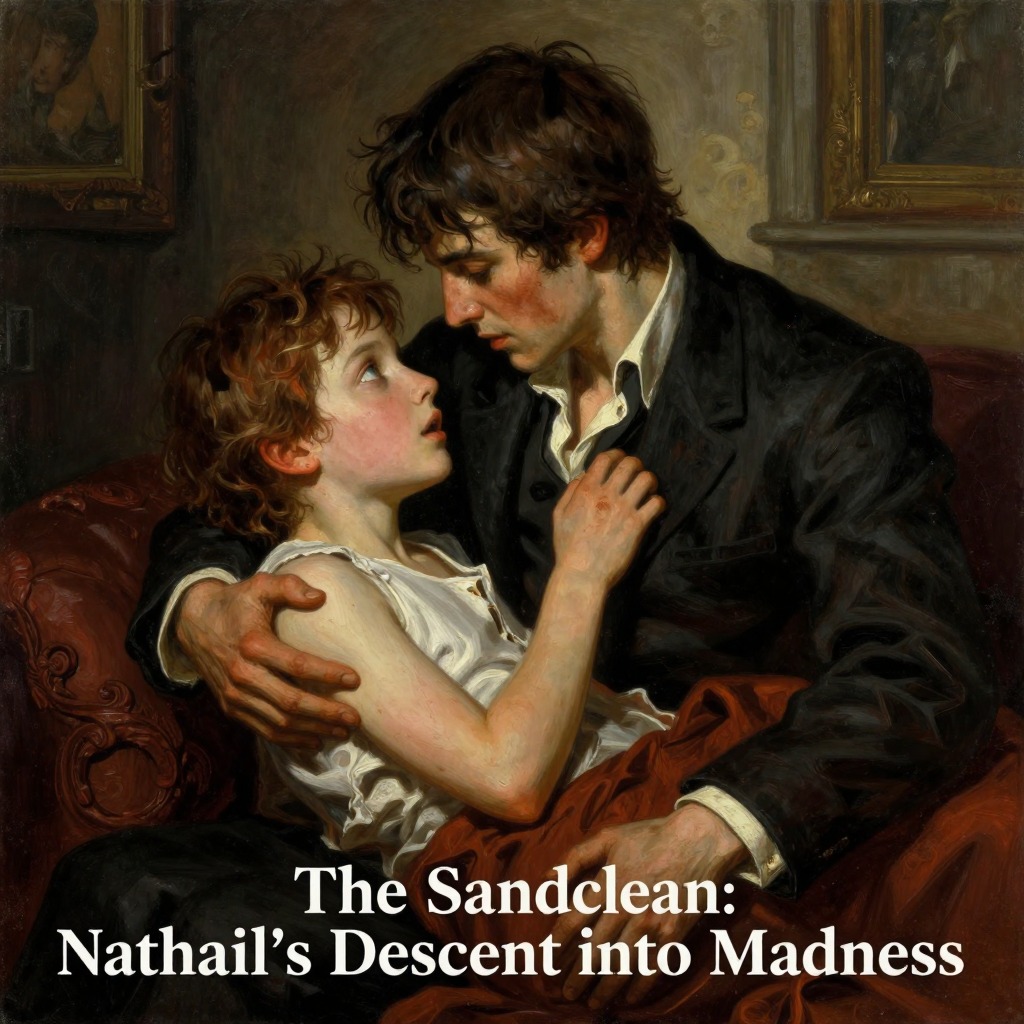
Months after his recovery from the madness that followed the revelation of Olympia as a lifeless doll, Nathaniel had returned to his family home, where his mother, his beloved Clara, and his friend Lothar nursed him back to health. He had become more gentle and childlike than ever, and only now truly recognized Clara's heavenly pure spirit. The four planned to move to a small country estate left by a deceased uncle. On the day of their move, they walked through the city streets to buy supplies. The tall town hall tower cast a long shadow over the market place. Clara suggested they climb it one last time to gaze at the distant mountains. Nathaniel and Clara ascended together, while Lothar, disinclined to mount the many steps, stayed below. At the highest lookout gallery, the two lovers stood arm in arm, peering at the sweet-scented ring of woods and the blue mountains beyond. Clara pointed out a strange little grey bush that seemed to be drawing near. Nathaniel mechanically reached into his coat pocket and found Coppola's looking-glass, the same finely crafted pocket telescope through which he had first seen Olympia's face come alive. He turned it sideways, and there was Clara standing in the eye of the lens.
The Return of Madness
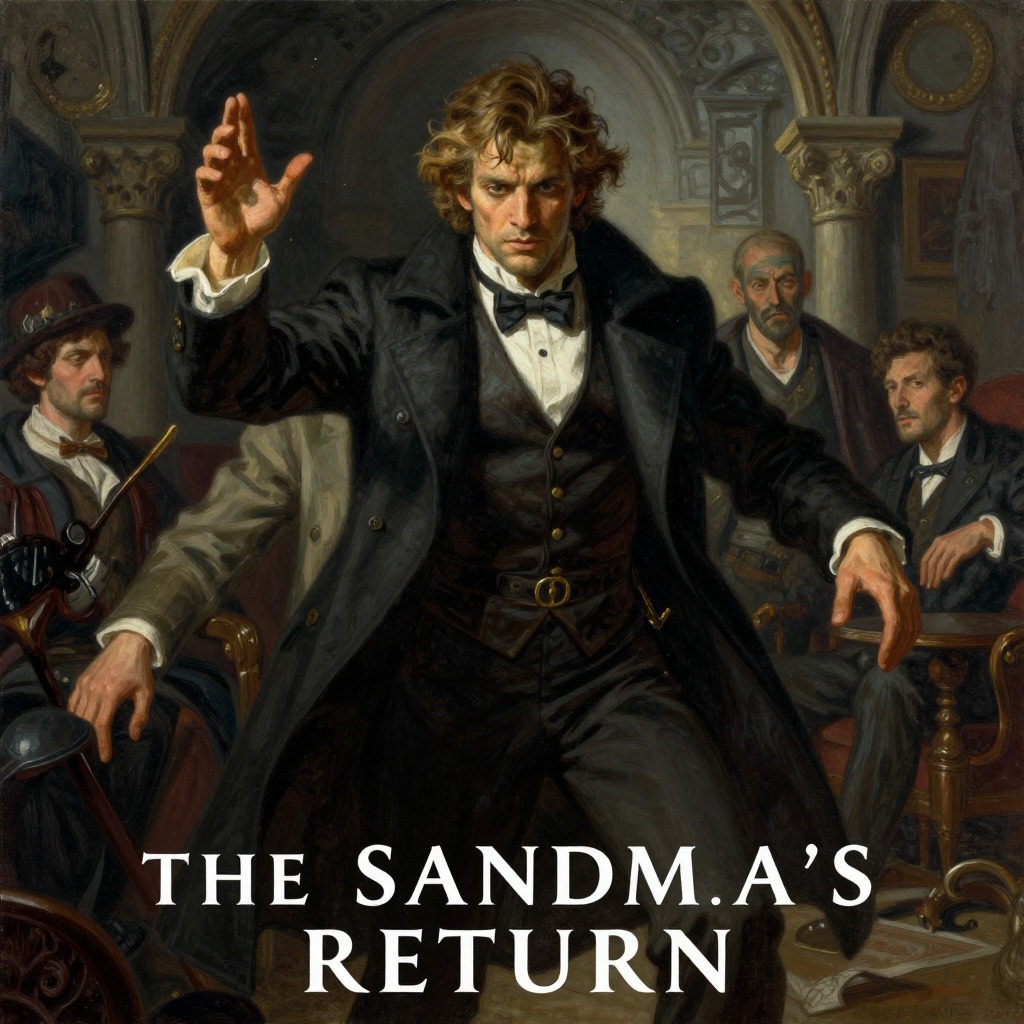
The sight through the looking-glass triggered an immediate and violent relapse. A spasmodic quiver started up in Nathaniel's veins and arteries; he turned deathly pale, and sparks of fire flashed from his rolling eyes. He let out a horrible cry like a hunted animal, jumped high in the air, and with a curious cackle screamed out shrilly: "Turn, little wooden doll, turn!" With a great burst of strength, he grabbed hold of Clara and tried to hurl her off the balcony. Clara clung for dear life to the metal railing. Hearing the madman's raving and Clara's terrified screams, Lothar clambered up the stairs, but the door to the second flight was locked. Clara's piteous screams grew louder and louder. Consumed with anger and fear, Lothar hurled himself against the door until it gave way. Clara's cries grew fainter until her voice went silent. Lothar screamed that she was done for, murdered by that madman. The door to the lookout gallery was also locked. Desperation turned him into a lion; he broke down the door. Clara dangled in Nathaniel's mad grip over the edge of the railing, holding on to the cast-iron railing by one hand. Quick as lightning, Lothar grabbed his sister, pulled her to safety, and at the same moment heaved a balled fist into the madman's face, so that he tumbled backwards and let go of his prey. Lothar raced back down the steps with his unconscious sister in his arms. She was saved. Meanwhile, Nathaniel kept flailing about on the lookout gallery, jumping high in the air and crying: "Ring of fire, turn! Ring of fire, turn!"
The Final Leap
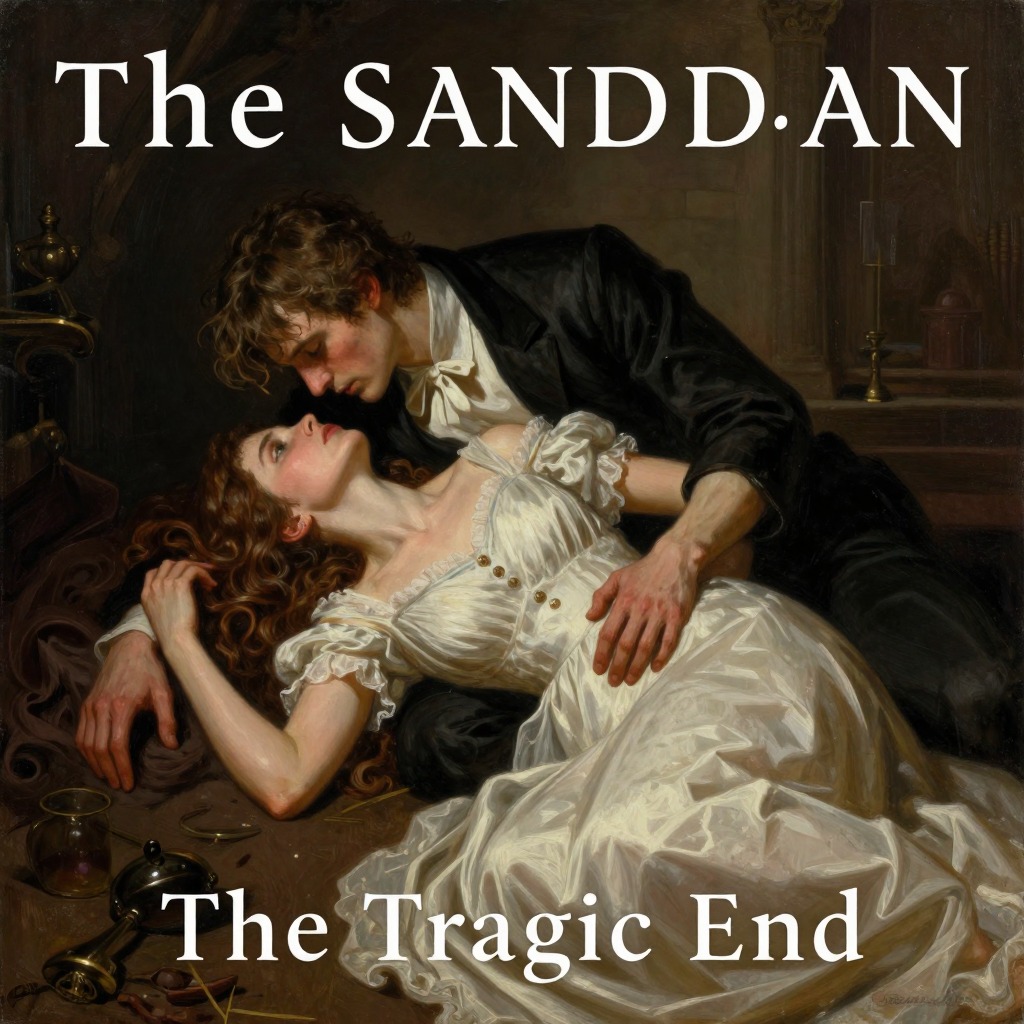
Aroused by the screams, a throng gathered below in the market square. Among them was the lawyer Coppelius, who had just come to town and made straight for the market place. Some people wanted to climb the tower to capture the madman, but Coppelius laughed and told them to be patient, that he would be down shortly on his own initiative. Nathaniel suddenly stopped dead in his tracks. He leant down, spotted Coppelius below, and with a shrill shriek — "Ha! Eyes a pretty! Eyes a pretty!" — he leapt over the parapet. As Nathaniel landed, his skull smashed on the cobblestones, while Coppelius disappeared in the crowd. The jump was the final, literal enactment of the imagery that had haunted Nathaniel since childhood: the Sandman who tears out eyes, the ring of fire from his own poem, and the wooden doll that must turn and turn. The looking-glass, the same instrument that had first revealed Olympia's illusory life, now delivered the fatal trigger that returned him to the madness from which he had only briefly emerged. The suicide fulfilled the dark premonition that had shadowed his life since the night he spied on his father and Coppelius at the hidden hearth, when Coppelius had threatened to strew glowing cinders in his eyes and his father had pleaded for him to keep them. In the end, Nathaniel's eyes, and his life, were lost to the very forces he had tried to escape.