
Hester's Public Shame and Outcast Life
The Scarlet LetterTraces Hester Prynne's emergence from prison, her public exposure on the scaffold, and her subsequent life as a social outcast marked by the scarlet letter.
increasing Bearing strength in each event
 decreasing
Bearing strength in each eventdecreasingHester Emerges from Prison
The Scaffold
The Prison Door
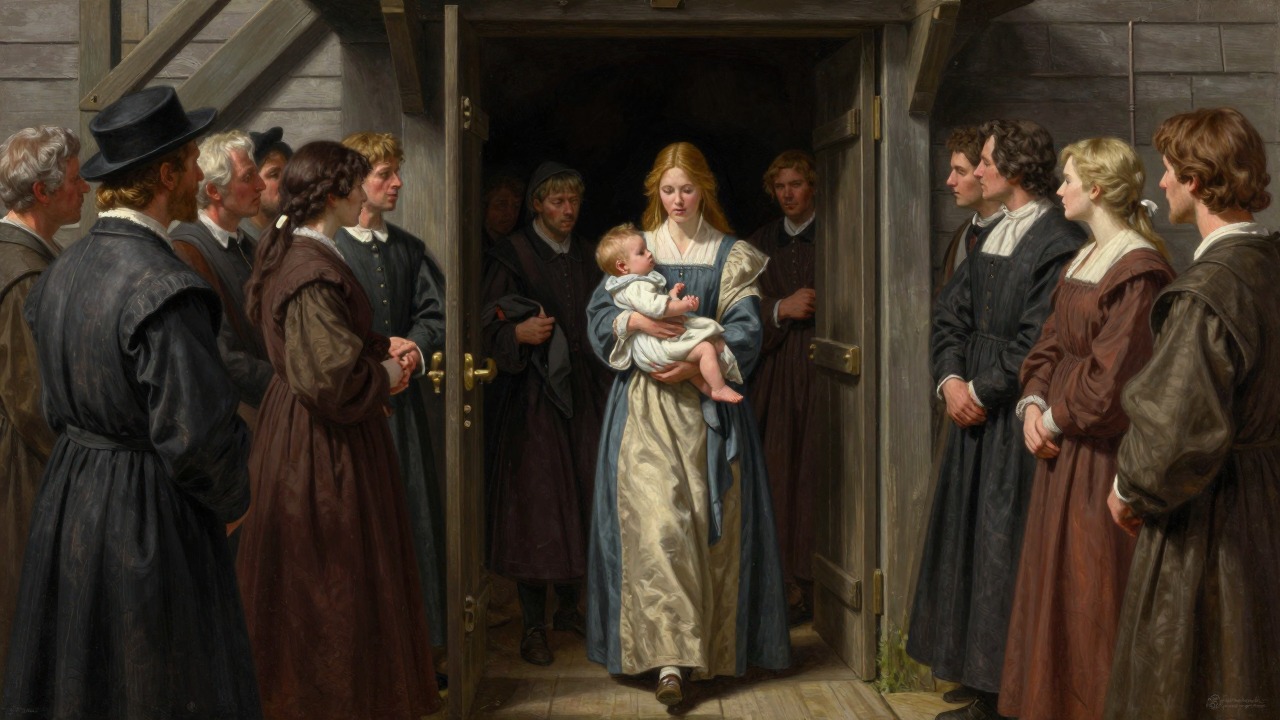
A throng of Puritan onlookers gathers before the prison door, their stern faces reflecting the rigid morality of the colony. The beadle leads Hester Prynne out, a baby in her arms, and she steps into the sunlight with a natural dignity that defies her shame. Her dress, richly embroidered, and the scarlet letter A on her breast immediately draw all eyes.
The Public Exposure
Hester ascends the scaffold in the marketplace, enduring the gaze of the entire community. She recalls her past life in England and her marriage to the aged scholar Roger Chillingworth. The crowd, including women who call for harsher punishment, watches her with a mixture of curiosity and contempt. Governor Bellingham and the ministers observe from a balcony.
The Appeal to Confess
The Reverend John Wilson urges Hester to name her fellow sinner, but she refuses. The young minister Arthur Dimmesdale, her pastor, speaks to her with apparent compassion, yet his words carry a hidden weight. Hester shakes her head and remains silent, choosing to bear the burden alone. She is returned to prison, the scarlet letter seeming to glow in the dim passage.
Hester's Life in the Cottage
The Needle and the Letter
Establishing a Home
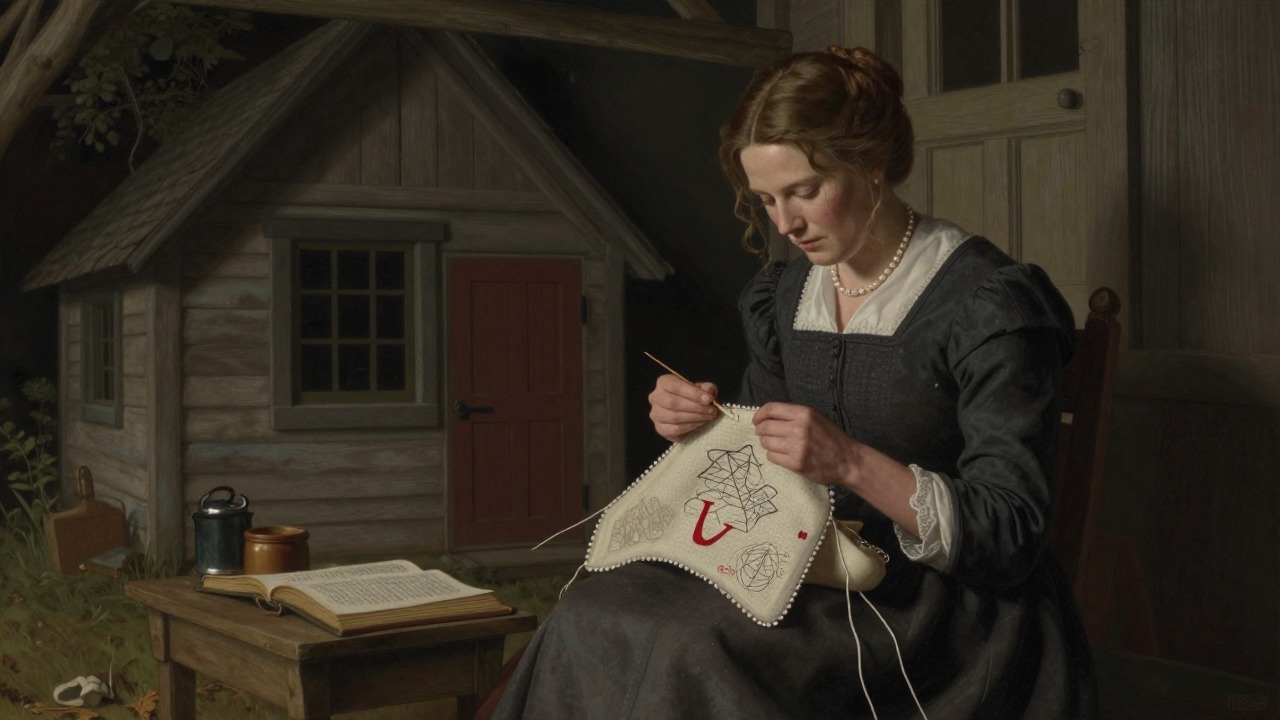
Hester settles in a small cottage on the outskirts of Boston, isolated from the community. She supports herself and her daughter Pearl through her exquisite needlework, which becomes fashionable among the Puritans despite her sinful reputation. She makes garments for the poor and for ceremonies, but never for a bride's veil.
Daily Torture
Every day, Hester faces the scorn of the townspeople. Children fear her, women whisper, and clergymen use her as a living sermon. The scarlet letter becomes a constant source of pain, yet she refuses to flee. She feels a strange attachment to the place of her shame, partly because of her hidden love for Dimmesdale.
A New Sense
Hester develops a paradoxical ability to sense hidden sin in others. The scarlet letter seems to endow her with a sympathetic knowledge of the guilt in other hearts. This perception torments her, as she sees hypocrisy everywhere, yet she also finds a measure of comfort in her growing reputation for charity and wisdom.
Hester Confronts the Governor

The Governor's Hall
The Threat to Take Pearl
Hester learns that Governor Bellingham and other leaders plan to remove Pearl from her care, believing the child to be of demon origin. She goes to the Governor's mansion to plead for her daughter. The hall is filled with ancestral portraits and a suit of armor, in which the scarlet letter appears grotesquely magnified.
The Examination of Pearl
John Wilson attempts to question Pearl about her catechism, but the child perversely refuses to answer, claiming she was plucked from a rose bush. The Governor is about to rule against Hester when she turns to Arthur Dimmesdale for help. Dimmesdale speaks eloquently, arguing that Pearl is both a blessing and a retribution from God, and that the mother-child bond is sacred.
Victory and a Witch's Invitation
Hester wins her case, and Pearl is allowed to stay. As they leave, Mistress Hibbins, the Governor's witch-like sister, invites Hester to a meeting in the forest with the Black Man. Hester refuses, but the encounter foreshadows later temptations. Dimmesdale's intervention marks a turning point in his hidden guilt.
Hester's Seven Years of Penance

The Sister of Mercy
A Changed Reputation
Over the years, Hester's constant charity and quiet endurance gradually soften the community's hostility. She becomes a self-ordained Sister of Mercy, tending the sick and helping the poor. Many people begin to reinterpret the scarlet letter as meaning "Able" rather than "Adultery." Her presence brings comfort in times of pestilence and sorrow.
Inner Transformation
Hester's character undergoes a profound change. The passionate, rebellious woman becomes contemplative and austere. She cuts off her rich hair and dresses plainly. Her beauty fades, replaced by a marble-like calm. She begins to think freely about society, religion, and the role of women, speculating on a future when a new truth might establish a better relationship between men and women.
The Burden of Thought
Yet Hester's freedom of thought isolates her further. She questions the foundations of Puritan society, but her own sin prevents her from becoming a prophetess. She recognizes that a woman stained with shame cannot lead a moral revolution. The scarlet letter remains a constant reminder of her past, and she continues to wear it even when the magistrates consider removing it.
Hester and Dimmesdale in the Forest

The Forest Meeting
A Secret Encounter
Hester learns that Dimmesdale is deteriorating under the weight of secret guilt. She resolves to tell him the truth about Roger Chillingworth. She meets him in the forest, where they can speak freely. The scene is set in a dark, secluded dell with a brook babbling nearby. Pearl plays at a distance.
Confession and Revelation
Hester reveals that Chillingworth is her husband and that he has been tormenting Dimmesdale deliberately. The minister is shocked and feels betrayed, but he forgives Hester. Together, they plan to escape on a ship to Europe, where they can start a new life. Dimmesdale, for the first time, feels a surge of hope.
A Flood of Sunshine
Hester removes the scarlet letter and lets down her hair, symbolically casting off her shame. The forest seems to respond with a burst of sunshine, and nature appears to bless their union. They call Pearl to join them, but the child hesitates, sensing the change. The reunion is bittersweet, as Pearl remains distant.
The Revelation and Death of Dimmesdale
The Scaffold Again
The Election Sermon
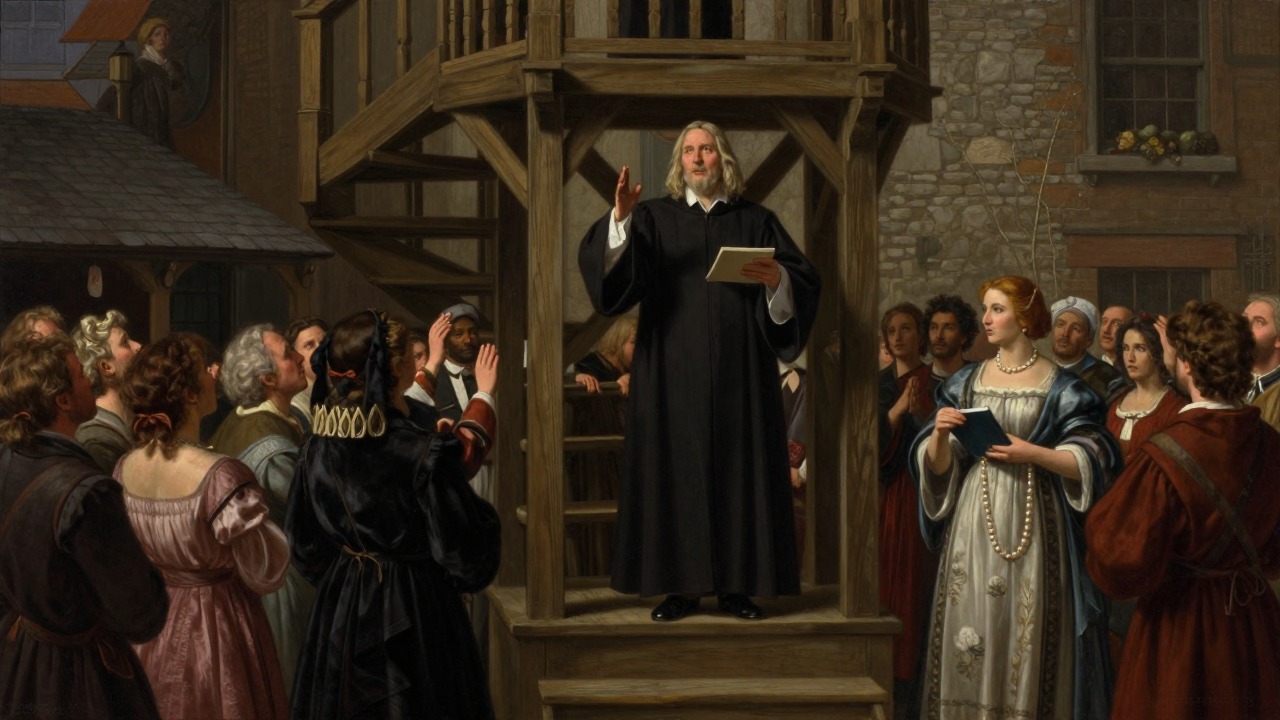
Dimmesdale preaches his most powerful sermon, filled with prophetic eloquence. The crowd is deeply moved, unaware that the minister is speaking his own spiritual farewell. After the sermon, the procession moves through the marketplace. Hester and Pearl stand near the scaffold, and Dimmesdale, supported by Hester, ascends it.
The Confession
In front of the entire community, Dimmesdale confesses his sin and reveals a scarlet letter imprinted on his chest. He tells the people that he is the one who shared Hester's guilt. He then collapses, dying in Hester's arms. The crowd is horrified and awestruck. Roger Chillingworth, who has followed, cries out that Dimmesdale has escaped him.
The Aftermath
Dimmesdale's death marks the end of the secret torment. Pearl kisses him, and her humanity is fully awakened. The community interprets the event in various ways, but the truth of the minister's sin is now public. The scarlet letter on Hester's breast loses its power to shame, and she becomes a figure of wisdom and consolation.
morning of the first day of the story
after her release from prison, over the next several years
when Pearl is about three years old
throughout the seven years after Pearl's birth
seven years after Hester's public shaming
Election Day, the third day after the forest meeting
