John Wilson
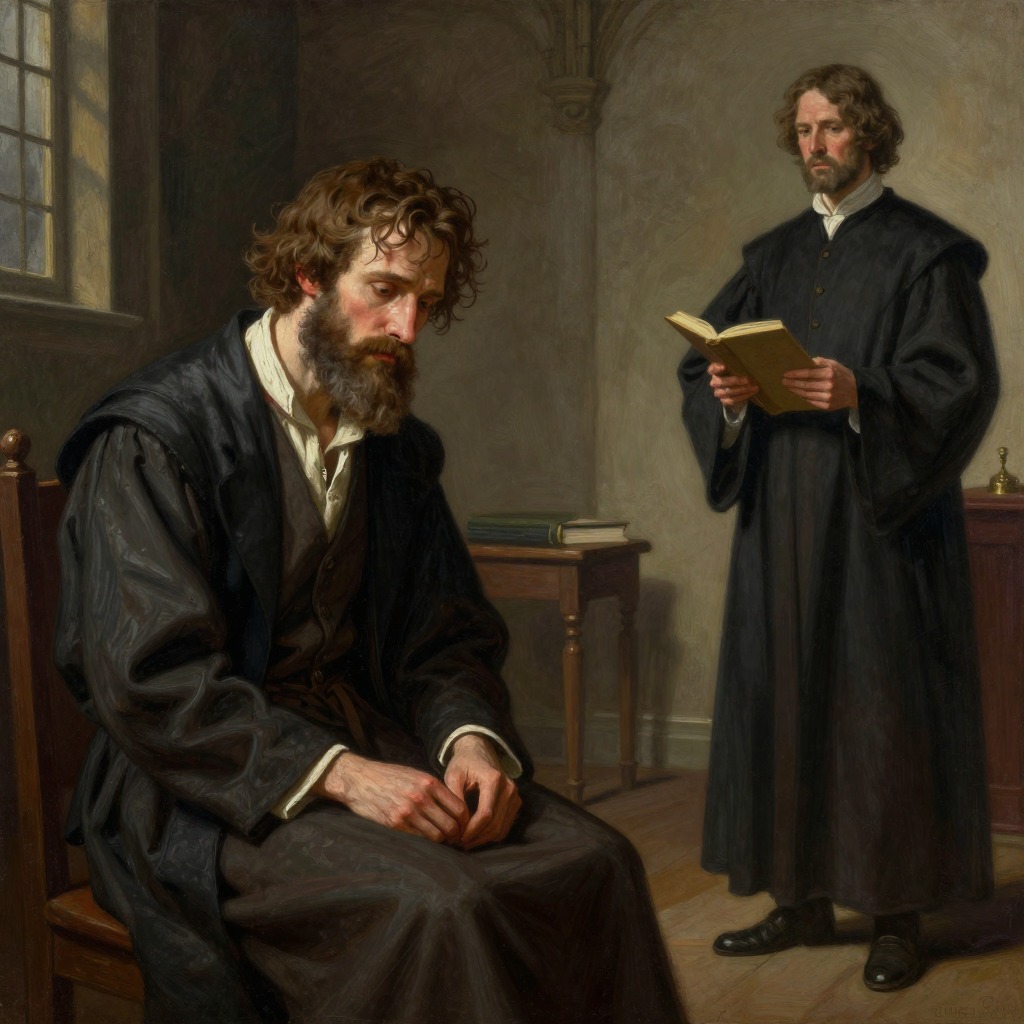
The Scarlet LetterJohn Wilson, the eldest clergyman of Boston, was a great scholar like most of his contemporaries in the profession, and withal a man of kind and genial spirit. This last attribute, however, had been less carefully developed than his intellectual gifts, and was, in truth, rather a matter of shame than self-congratulation with him. He stood, with a border of grizzled locks beneath his skull-cap, while his grey eyes, accustomed to the shaded light of his study, were winking, like those of Hester's infant, in the unadulterated sunshine. He looked like the darkly engraved portraits prefixed to old volumes of sermons, and had no more right than one of those portraits would have to step forth and meddle with a question of human guilt, passion, and anguish.
Role in Hester Prynne's Public Shaming
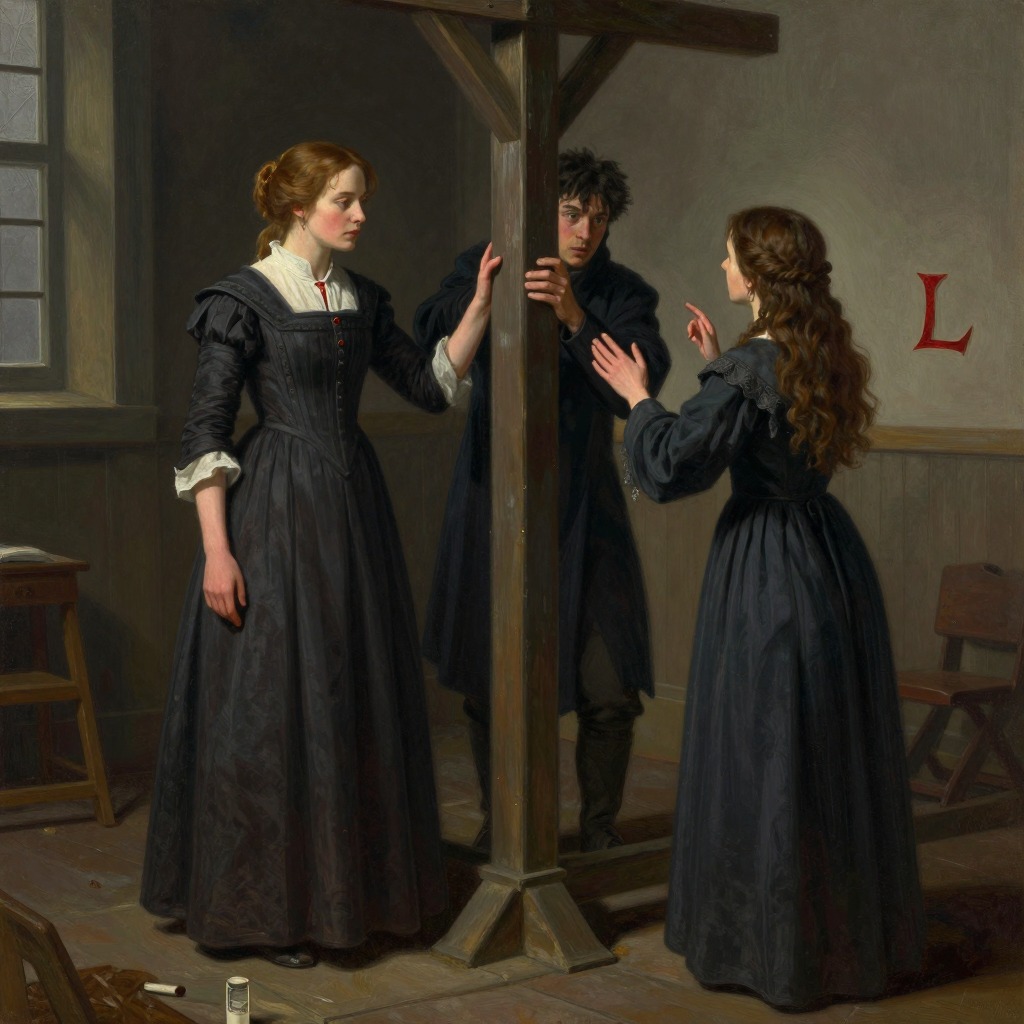
During Hester Prynne's public exposure on the scaffold, it was John Wilson who first addressed her, having striven with his younger brother, Arthur Dimmesdale, to persuade him to exhort her to confession. Wilson laid his hand on the shoulder of the pale young minister beside him, and declared that he had sought to persuade this godly youth to deal with Hester in the face of Heaven and before the wise and upright rulers, as touching the vileness and blackness of her sin. He argued that the shame lay in the commission of the sin, and not in the showing of it forth. When Hester refused to speak, Wilson cried out more harshly, "Woman, transgress not beyond the limits of Heaven's mercy!" and urged her to speak out the name, that her repentance might avail to take the scarlet letter off her breast. After Hester's refusal, Wilson addressed the multitude a discourse on sin, in all its branches, with continual reference to the ignominious letter, dwelling upon it so forcibly that it assumed new terrors in their imagination.
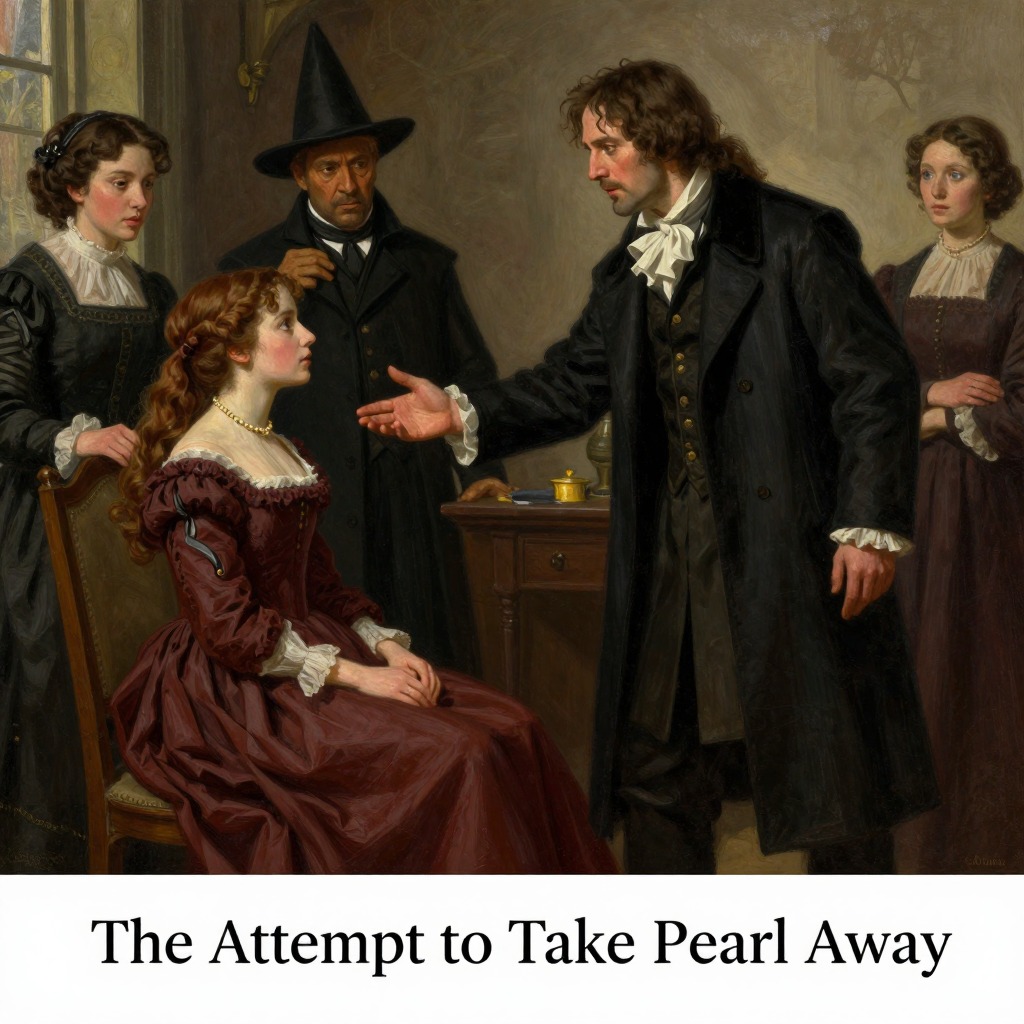
The Attempt to Take Pearl Away
Years later, when Governor Bellingham and others sought to deprive Hester of her child Pearl, John Wilson was present at the Governor's mansion. He appeared behind the Governor's shoulders, his beard white as a snow-drift, and suggested that pears and peaches might yet be naturalised in the New England climate. Nurtured at the rich bosom of the English Church, Wilson had a long established and legitimate taste for all good and comfortable things, and however stern he might show himself in the pulpit, the genial benevolence of his private life had won him warmer affection than was accorded to any of his professional contemporaries. When the Governor asked him to examine Pearl to see whether she had had such Christian nurture as befits a child of her age, Wilson seated himself in an arm-chair and made an effort to draw Pearl betwixt his knees. But the child, unaccustomed to the touch or familiarity of any but her mother, escaped through the open window. Wilson, not a little astonished, essayed to proceed with the examination, asking Pearl who made her. When Pearl gave a fantastical answer, Wilson declared the matter awful, and the Governor was ready to take the child away. It was only Arthur Dimmesdale's impassioned plea that saved the situation, and Wilson ultimately supported his younger brother, saying, "And there is a weighty import in what my young brother hath spoken."
Later Appearances and Significance
John Wilson appears again during Dimmesdale's midnight vigil, when he passes the scaffold, having just come from the death-chamber of Governor Winthrop. He is muffled in his Geneva cloak, holding a lantern before his breast, and Dimmesdale, in his agony, almost calls out to him. Wilson also appears at the Election Day procession, where he steps forward to offer support to the tottering Dimmesdale, but is repelled. After Dimmesdale's death, Wilson, along with Governor Bellingham, serves as executor of Roger Chillingworth's will, which bequeaths a considerable amount of property to Pearl. Wilson's character thus embodies the Puritan establishment's blend of intellectual rigor, personal kindliness, and institutional sternness, and his actions consistently uphold the social and religious order while showing a measure of personal warmth.