Roof
The ShiningThe Roof of the Overlook Hotel is the physical and symbolic space where Jack Torrance performs his caretaking duties, confronts his past, and experiences a pivotal hallucination that signals his psychological unraveling. It is the site of his most productive labor and his most dangerous lapse, a place where the boundary between work and obsession, healing and madness, begins to dissolve.
Identity and Function
The Roof is a broad, gently sloping expanse on the western side of the Overlook, accessible by a ladder and a trapdoor leading into the attic. It offers a spectacular, panoramic view of the surrounding Rocky Mountains, a vista that Jack finds both soothing and intoxicating. His primary task there is reshingling a section of the west roof, a job assigned by Stuart Ullman. The work is physical, repetitive, and solitary, and Jack initially finds it restorative. He feels himself "healing from the troubled wounds of the last three years" as he works in the crisp autumn air, the view from the roof even surpassing that from the Presidential Suite. The Roof becomes a retreat where he can think, plan his play, and feel a sense of accomplishment.
The Wasp Attack and Its Aftermath
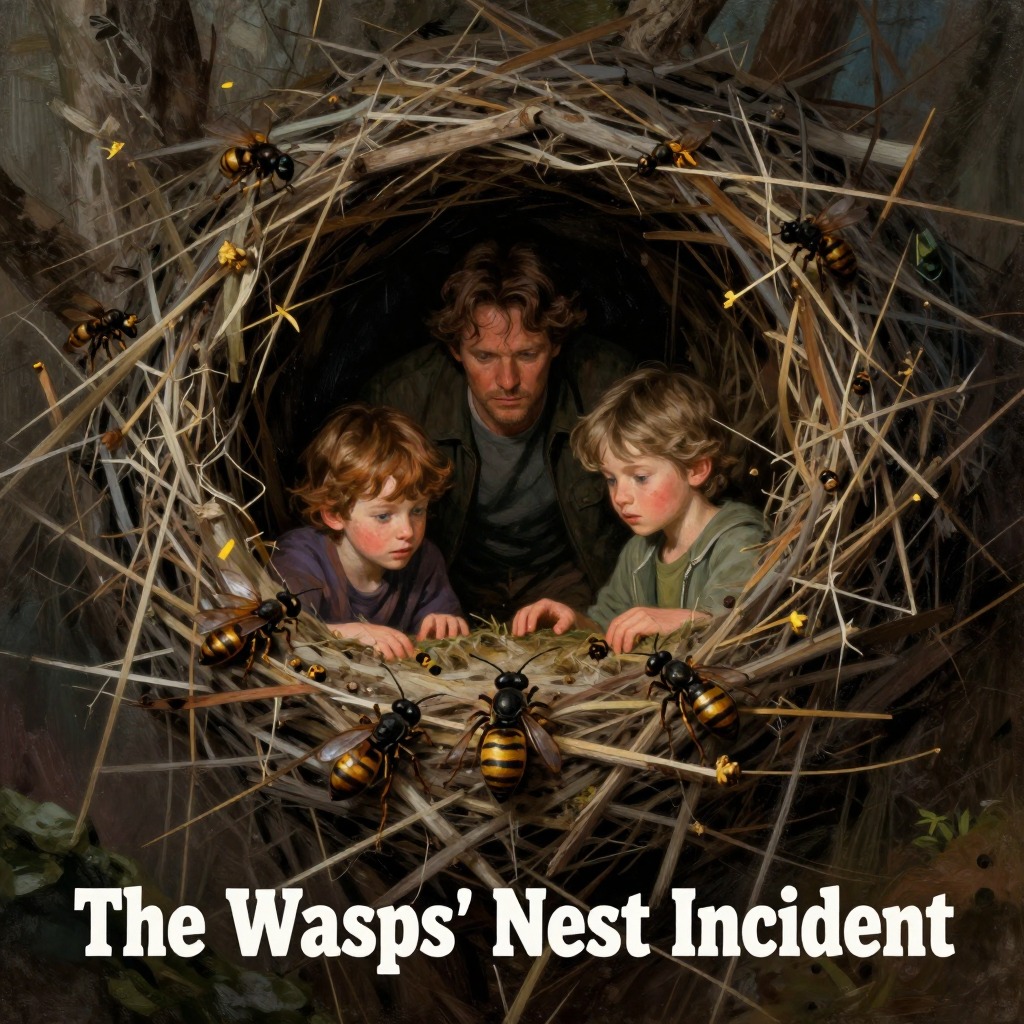
On October 20, while pulling out rotted flashing, Jack uncovers a large wasps' nest. He is stung once, a painful surprise that triggers a cascade of memories and self-analysis. The nest, a "damn big one" nearly two feet through, becomes a powerful symbol for Jack. He reflects on his own life, seeing the wasps' nest as a metaphor for the "Great Wasps' Nest of Life"—the hidden, painful forces that have driven him to alcoholism, violence, and the loss of his job. He thinks of his broken arm inflicted on Danny, the beating of George Hatfield, and his own father's abuse. The sting, he muses, is like the sudden, overwhelming eruption of his own temper, a force that can destroy conscious thought and civilized behavior. He resolves to fight back, retrieving a bug bomb from the equipment shed and returning to destroy the nest. The incident, however, leaves a residue of unease. The wasps' nest, once destroyed, is given to Danny as a trophy, but later, wasps inexplicably re-emerge from it, stinging the boy and shattering Jack's sense of control. The Roof, a place of healing, becomes the origin of a new, inexplicable threat.
Hallucination and Psychological Crisis
Later, after the snow has fallen and the family is isolated, Jack's experience on the Roof is echoed in a terrifying hallucination. While trimming the hedge animals in the playground, he sees them move, their positions shifting when he is not looking. The rabbit, which he had just trimmed, is now on all fours; the lions are closer to the path; the dog is crouched as if to spring. Jack is frozen, his mind reeling. He recognizes the hallucination as a sign of his own mental breakdown, a direct result of the pressure he feels from Al Shockley's demand that he abandon his book project about the hotel. He later rationalizes the experience, telling himself it was a "signal that his own sense of self-respect could only be pushed so far before disintegrating entirely." The Roof, the site of his earlier productive labor, is now linked to the hotel's malevolent influence, a place where reality itself begins to warp.
Narrative Significance
The Roof functions as a liminal space in the novel, a threshold between Jack's conscious, rational self and the unconscious forces that the Overlook Hotel amplifies. It is where he is most productive and most vulnerable. The wasp attack and the subsequent hallucination are not isolated incidents but part of a pattern: the hotel's gradual corruption of Jack's mind, using his own history of violence and addiction against him. The Roof, like the hotel itself, is a place of work and duty, but it is also a place where the past erupts into the present, and where the boundary between the real and the imagined begins to dissolve. It is a stage for Jack's private drama, a drama that will ultimately consume him.