
Aramis's Struggle Between Faith and the Sword
The Three MusketeersExplores Aramis's internal conflict between his religious vocation and his life as a Musketeer, culminating in his retreat to a monastery.
increasing Bearing strength in each event
 decreasing
Bearing strength in each eventdecreasingThe Theological Debate
A Crisis of Faith
The Wound and the Calling
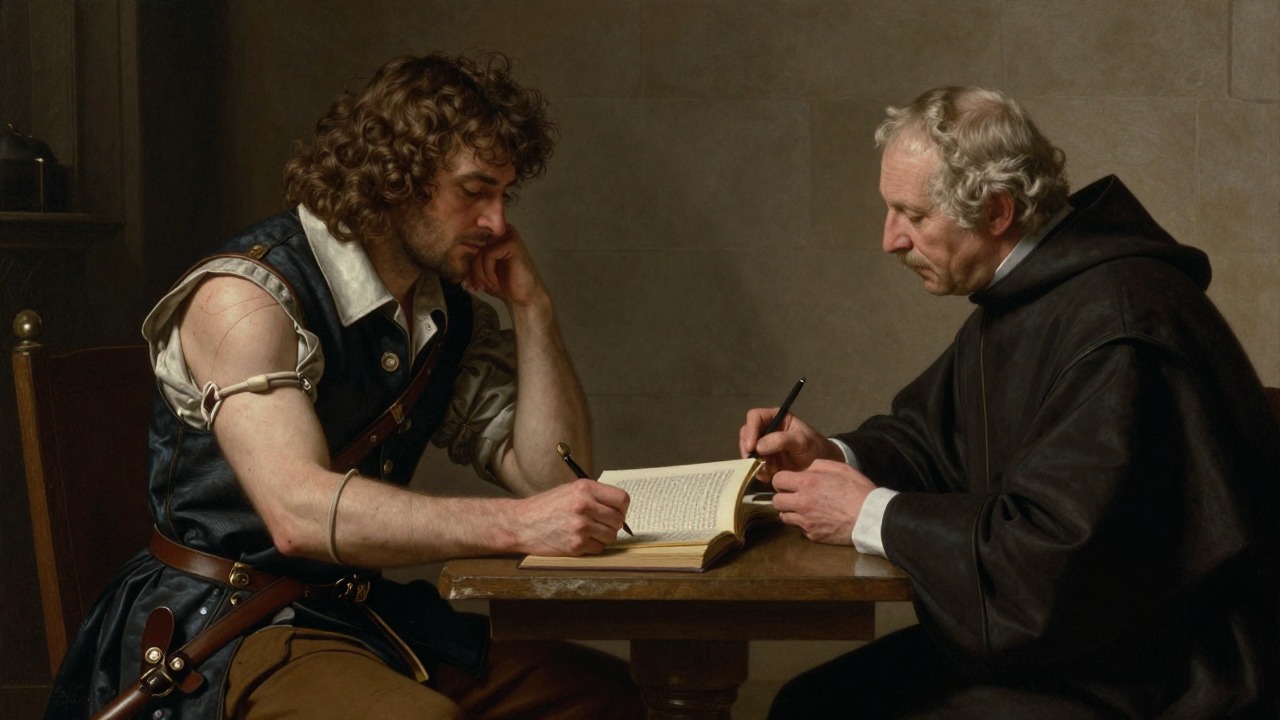
After being wounded in the shoulder during the journey to England, Aramis is forced to convalesce at Crevecoeur. During his recovery, he becomes deeply involved in theological discussions with a Jesuit and a curate. He considers writing a thesis on a religious subject, and his servant Bazin, who longs for his master to become a priest, encourages this turn.
The Letter from Tours
Just as Aramis seems ready to abandon the Musketeers, d'Artagnan arrives with a letter from his mysterious cousin, Marie Michon. The letter, which is actually from Mme. de Chevreuse, rekindles his worldly passions. He abandons his theological studies and rejoins his friends, but the conflict between faith and love remains unresolved.
A Temporary Decision
Aramis continues as a Musketeer, but his heart is never fully in it. He writes poetry, engages in courtly love affairs, and maintains his connection to the Church through Bazin. His character is defined by this duality: he is a man of action who yearns for contemplation.
The Secret Benefactor
A Mysterious Gift
The Three Horses
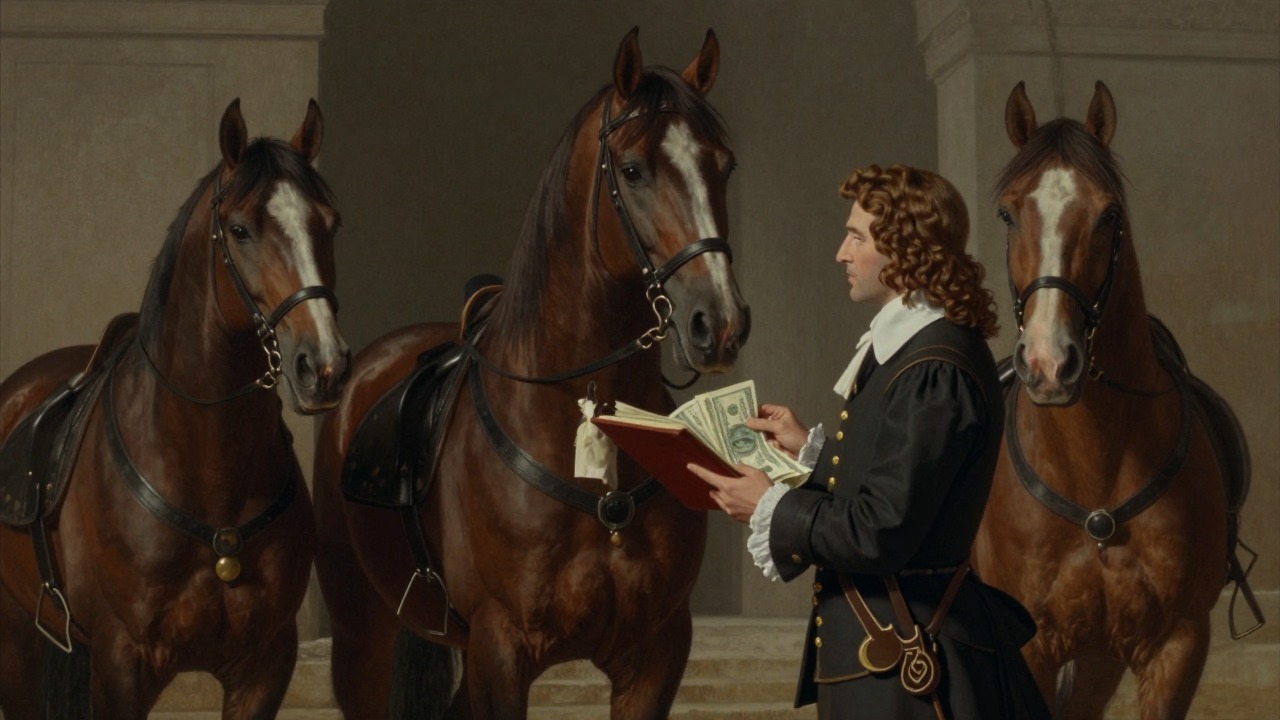
Aramis receives a magnificent horse from an unknown benefactor, which he suspects is from Mme. de Chevreuse. He also receives a large sum of money, supposedly from his publisher, but actually from the same source. These gifts allow him to equip himself splendidly for the campaign, but they also tie him more closely to the worldly life he claims to want to escape.
The Letter to Marie Michon
When the friends need to send a warning to the queen about Milady's plot, Aramis writes to his "cousin" Marie Michon, who is actually Mme. de Chevreuse in disguise. This letter, full of coded language, successfully alerts the queen and helps thwart the cardinal's plans. Aramis's network of romantic and political connections proves invaluable.
The Pull of the Church
Despite his involvement in these intrigues, Aramis continues to feel the pull of the Church. After the siege, he disappears for a time, and his friends later learn that he has entered a monastery. His final choice reflects his lifelong struggle: he ultimately chooses the spiritual over the temporal.
Retreat to the Monastery
A Final Vocation
The Disappearance
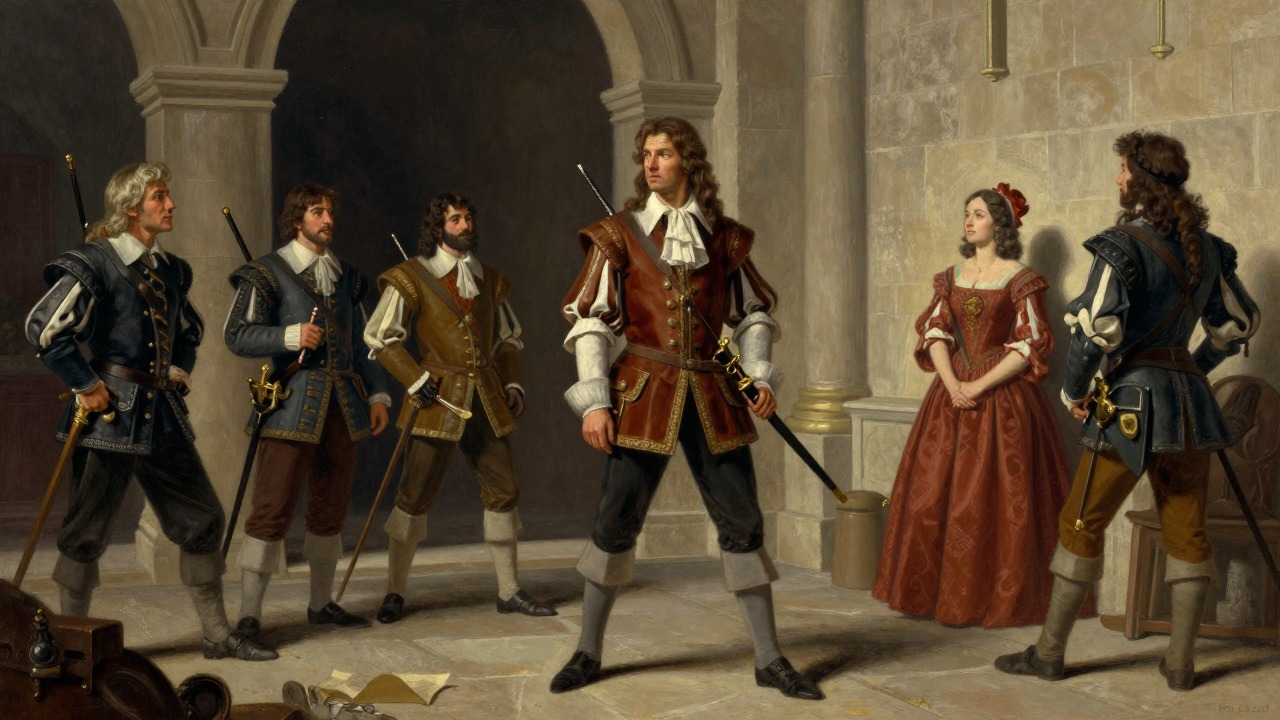
After the events of the siege and the death of Milady, Aramis withdraws from the Musketeers. He makes a journey to Lorraine and then vanishes. His friends, including d'Artagnan, lose contact with him. Only later, through Mme. de Chevreuse, do they learn that he has entered a monastery, though the exact location remains unknown.
Bazin's Joy
Bazin, who has always dreamed of serving a churchman, becomes a lay brother and follows his master into religious life. For Aramis, this is the fulfillment of a long-deferred vocation. He had been a Musketeer only temporarily, and now he returns to his true calling.
A Life of Contemplation
Aramis's story ends not with a dramatic death or a happy marriage, but with a quiet retreat from the world. His arc represents the theme of spiritual seeking, contrasting with the worldly ambitions of his friends. He finds peace in faith, leaving behind the violence and intrigue of the court.
during the journey to find Athos
during the siege of La Rochelle
after the siege of La Rochelle, around 1629
