
The Legal Order and Private Justice
The Three MusketeersThis flow traces the novel's movement from official arrest and interrogation toward improvised judgment and execution.
increasing Bearing strength in each event
 decreasing
Bearing strength in each eventdecreasingThe Mousetrap

Law as Ambush
Secret Procedure
Richelieu's agents turn Bonacieux's residence into a system for trapping visitors.
Justice Without Transparency
Arrest precedes explanation. The machinery of authority operates through fear, secrecy, and the assumption that everyone is already suspect.
Athos's Substitution
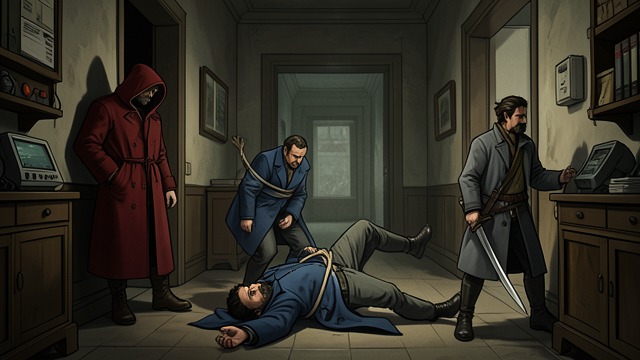
Friendship Confounds the State
Voluntary Misidentification
Athos allows himself to be arrested in place of d'Artagnan.
Tactical Loyalty
The deception buys time and proves that private allegiance can obstruct official investigation without requiring open rebellion.
Richelieu's Carte Blanche

Authority Without Explanation
Written Immunity
Richelieu signs a formula authorizing an unnamed bearer to act for the good of the state.
Ambiguous Power
The document can shield violence or authorize it. Its flexibility mirrors the political system's refusal to separate law from expediency.
Private Tribunal

A Court of Companions
Collective Accusation
The four Musketeers and Lord de Winter present separate charges against Milady.
Moral Consensus
No formal court hears the case. Their certainty comes from accumulated wounds, testimony, and the impossibility of trusting public institutions.
River Execution

Judgment Beyond the Law
Sentence Enforced
The Executioner of Lille kills Milady across the Lys while the others watch and pray.
Uneasy Pardon
Each accuser pardons her before the execution. Mercy changes neither the sentence nor the moral discomfort of acting as judges.
after Bonacieux's arrest
the night of Constance's rescue
December 3 1627
the night of Milady's capture
the same night
