
The Four Companions as a Moral System
The Three MusketeersThis flow traces how the four friends form a counter-institution based on loyalty, mutual trust, and shared risk.
increasing Bearing strength in each event
 decreasing
Bearing strength in each eventdecreasingAthos's Authority

Natural Leadership
Quiet Command
Athos recognizes d'Artagnan's courage before the others and moderates the group's impulses.
Moral Center
His authority comes from self-control and suffering rather than rank. The younger man gradually adopts his judgment.
Porthos's Display
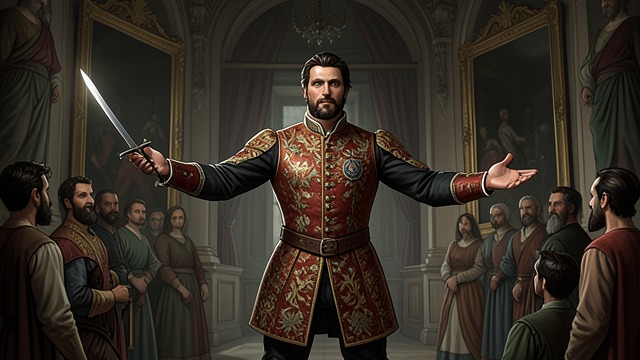
Pride as Performance
Visible Confidence
Porthos seeks admiration through clothing, stories, and romantic claims.
Hidden Dependence
His vanity is comic, but his loyalty is physical and immediate. He repeatedly risks himself when the group is threatened.
Aramis's Secrecy

Elegance Under Pressure
Concealed Attachments
Aramis protects lovers, letters, and religious ambitions behind polished manners.
Contribution to the Group
His discretion and intelligence make him indispensable, even when his divided identity seems unserious to Porthos.
D'Artagnan's Acceptance

The Outsider Joins
Chosen Solidarity
D'Artagnan claims that his heart is that of a Musketeer before he possesses the uniform.
Institutional Consequence
His loyalty earns friendship first and official rank much later. Belonging is achieved through action rather than title.
Divergent Futures

Brotherhood After Separation
Different Destinations
Athos retires, Porthos marries, Aramis enters religious life, and d'Artagnan becomes lieutenant.
Shared Legacy
Their individual stories resolve differently, but their moral system remains the foundation of d'Artagnan's identity.
the first Paris duels
the first weeks in Paris
the handkerchief dispute
the duel at the Carmes-Deschaux
the epilogue
