
Porthos and Material Success
The Three MusketeersThis flow traces Porthos's comic pursuit of money, display, and social advancement through romantic manipulation and marriage.
increasing Bearing strength in each event
 decreasing
Bearing strength in each eventdecreasingDisplayed Baldric
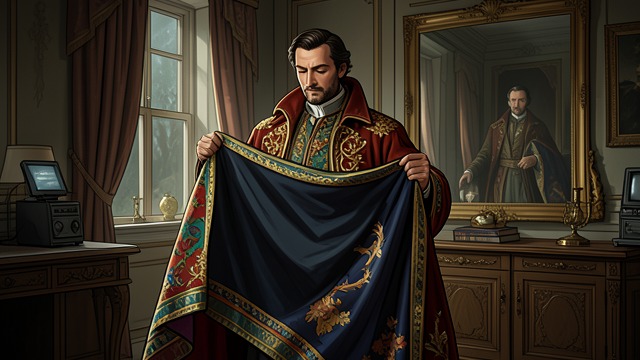
Appearance as Capital
Public Splendor
Porthos displays a magnificent baldric whose hidden buff backing reveals the gap between appearance and means.
Social Strategy
His identity depends upon being seen as wealthy and desired. Clothing becomes his first weapon in the court economy.
Chantilly Loss

Pride Meets Chance
Gambling Defeat
Porthos loses his money and horse after provoking a stranger at Chantilly.
Concealed Injury
He pretends to have strained his knee rather than admit defeat. His comic vanity masks real dependence on luck and patronage.
The Procurator's Dinner
A Feast of Disappointment
Miserly Household
Porthos expects abundance but receives thin soup, old poultry, beans, and diluted wine.
Romantic Calculation
He endures the meal because Madame Coquenard may finance his equipment. Appetite becomes another form of bargaining.
Equipment Bargain

Wealth Through Flattery
Manipulating Avarice
Porthos persuades Madame Coquenard to promise money, a horse, and a mule by presenting himself as a nobleman abandoned by lesser women.
Social Performance
His romance is transactional, but he also exposes the emotional vulnerability beneath his boastfulness.
Marriage Reward

Fortune Secured
The Widow's Coffers
After Monsieur Coquenard dies, Porthos marries the widow and gains access to the fortune he had coveted.
Comic Fulfillment
His material ambition succeeds through a marriage that makes the earlier financial maneuver appear prophetic rather than merely ridiculous.
d'Artagnan's first morning at Treville's hotel
the first journey toward England
after the return from England
the weeks before May 1
after the campaign
