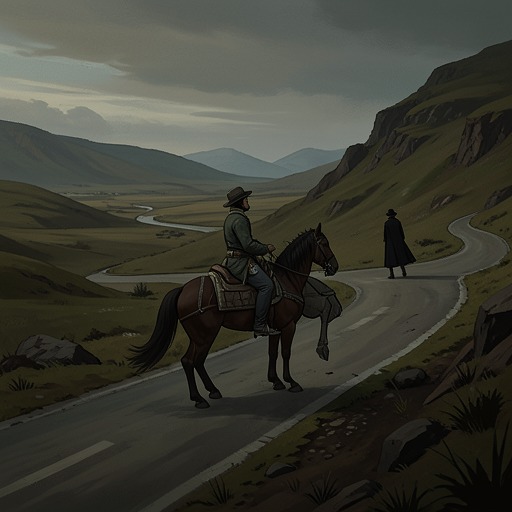
Athos cellar imprisonment
The Three MusketeersAthos cellar imprisonment is a reversal in which an attempted arrest becomes a self-imposed siege. Mistaken for a notorious coiner traveling with disguised companions, Athos fights his way into an inn’s cellar, seals himself inside, and turns confinement into a position of armed resistance. The episode is comic in its material devastation, but it also exposes the severity beneath Athos’s composure: he would rather remain isolated, armed, and unreachable than submit to a false authority or allow strangers to control him.
Causes and the Mistaken Arrest
The episode begins with official misinformation. The innkeeper has been warned that a celebrated coiner of bad money will arrive with companions disguised as Guards or Musketeers. The authorities provide him with descriptions of the travelers’ horses, lackeys, and faces, and reinforce the inn with six men so that the supposed counterfeiters can be seized. The precision of the description allows d’Artagnan to recognize that the order must have come from an informed source, even though the innkeeper cannot identify the true origin of the operation.
Athos resists the arrest with immediate violence. While retreating, he disables two men with his pistols, puts another out of action with his sword, and strikes the innkeeper unconscious with the flat of the blade. He then discovers the open door to the cellar stairs, takes the key, and barricades himself inside. The action is therefore both an escape and a transformation of space: the cellar, intended as a storage area, becomes Athos’s fortress. The innkeeper insists that Athos was not deliberately left to die, but the practical result is nevertheless imprisonment, with the accused man controlling the only approach to his refuge.
The error becomes undeniable when the innkeeper reports the affair to the governor. The governor denies having issued the orders, threatens the innkeeper with hanging if his name is invoked, and makes clear that the wrong man has been arrested while the intended suspect has escaped. Athos has thus been caught in a scheme whose authority is false or misapplied. His confinement is not the consequence of a lawful judgment; it is the accidental outcome of intelligence, disguise, and official confusion.
The Cellar as a Fortified Position
The innkeeper and his servants cannot simply enter the cellar. When they attempt to descend, Athos and Grimaud load their weapons and announce that they possess forty charges, which they will fire to the last before permitting anyone to cross the threshold. Athos’s threat is not empty bravado. The cellar door is protected by fagots, planks, and empty casks arranged as counterscarps and bastions, giving the improvised defense the appearance of a deliberate military work. The language of siege turns a private quarrel over access to wine into a miniature campaign, with Athos as commander and the innkeeper’s household as a frustrated besieging force.
The fortress also depends on controlled communication. Food is passed through the air hole at the end of a fork, and the innkeeper dares not approach more closely. Athos’s isolation therefore has a ritual and logistical structure: the prisoner receives only what he requests, while the guards remain outside the range of his weapons. His refusal to surrender is so complete that the innkeeper appeals to d’Artagnan as if rescue from Athos were a sacred service, hoping that the younger Musketeer can persuade his friend to leave the cellar.
The crisis intensifies when two English gentlemen, exhausted by their ride and desperate for food and drink, demand access to the inn’s provisions. One proposes breaking down the door and killing Athos if necessary. D’Artagnan immediately draws his pistols and forbids the attack. From inside, Athos calmly invites the supposed “devourers of little children” to enter, and the Englishmen, despite their apparent courage, hesitate before the door. The unseen man in the cellar has acquired the dimensions of a legendary monster: the darkness, the locked entrance, the loaded weapons, and the uncertainty about his condition magnify his power.
D’Artagnan resolves the standoff by promising the Englishmen that they will receive everything they want within ten minutes, then sends them upstairs. Once alone, he addresses Athos as a friend and asks him to open the door. Athos agrees at once. The defensive structure is dismantled from within amid the noise of fagots being removed and posts groaning, and his surrender depends not on force but on trust. D’Artagnan’s arrival changes the meaning of the cellar: to strangers it remains an impregnable prison, but to Athos’s companion it can become a door opened on request.
Release and Material Devastation
When the broken door is removed, Athos appears pale and surveys the surroundings with a rapid, cautious glance. D’Artagnan embraces him and tries to draw him out, only to discover that Athos is staggering. The apparent injury is not a wound. Athos explains that he is dead drunk, having undertaken an extraordinary campaign against the inn’s stores. He claims to have drunk at least a hundred and fifty bottles, while Grimaud has drunk from the cask rather than imitating his master bottle for bottle.
The cellar’s condition confirms the scale of the occupation. The innkeeper and his wife descend with lamps into a space that has been forbidden to them for so long and find the defenses breached, puddles of oil and wine, the bones and fragments of consumed hams, and a corner filled with broken bottles. A tun continues to yield its last contents because its faucet has not been replaced. Of fifty large sausages hanging from the joists, scarcely ten remain. Athos’s imprisonment has therefore converted the inn’s inventory into both sustenance and ammunition: the provisions keep the besieged alive, while the empty casks and the resulting barricades help hold the besiegers away.
Grimaud emerges behind Athos with his musketoon on his shoulder and his head shaking, soaked front and back in the innkeeper’s best olive oil. The grotesque image extends the episode’s comic reversal. The men who were supposed to be detained as criminals have occupied the best apartment, while the owners are left to inspect a cellar resembling a ravaged battlefield. The innkeeper’s fear of financial ruin is not abstract; the loss of wine, oil, meat, sausages, and trade threatens the continued existence of the hostelry, which must refuse travelers food and drink while its essential supplies remain inaccessible or destroyed.
Athos’s Concealed History
The cellar episode also prepares the disclosure that follows it. Once restored to sobriety, Athos becomes guarded again, and d’Artagnan finds that the previous night’s revelations have not disappeared merely because they were spoken under the influence of Burgundy. Athos acknowledges that he had been very drunk, judging by his swollen tongue and trembling pulse, and suggests that he may have uttered a thousand extravagances. Yet d’Artagnan remembers the account with extraordinary clarity. The contrast establishes a pattern that extends beyond the cellar: Athos’s alcohol loosens a sealed history, but his sober self immediately withdraws behind discretion and silence.
At d’Artagnan’s insistence, Athos tells the story as belonging to a friend rather than to himself. This friend, a count from Berry, fell in love at twenty-five with a beautiful sixteen-year-old girl who had recently arrived in the country with her brother, a curate. Their origins were obscure, although their appearance and conduct led people to assume that they were of good extraction. The count possessed the power, as local seigneur, to seduce or force the girl without fear of effective opposition, but his honor led him to marry her instead. Athos’s bitter judgment of this decision turns marriage, conventionally an act of protection and devotion, into the beginning of a concealed catastrophe.
The story is deliberately incomplete when first told. Its indirect form, its drunken delivery, and Athos’s next-day refusal to confirm its details leave d’Artagnan with knowledge that feels both intimate and unstable. The cellar has therefore served two functions at once: it is a physical refuge from mistaken authority and a pressure chamber in which Athos’s emotional defenses briefly fail. The episode’s laughter does not erase the gravity of what emerges from it; rather, the comic excess makes the later melancholy more striking.
Narrative Function and Contrast
Athos cellar imprisonment is built on a sequence of reversals. A government warning produces the wrong arrest; the arrested man becomes the jailer of those who intended to hold him; a storage cellar becomes a fortified redoubt; provisions intended for guests become the resources of a besieged commander; and a feared prisoner is finally released through friendship rather than coercion. The episode turns the mechanics of confinement inside out, making control depend on the person supposedly deprived of it.
Its comedy is grounded in concrete hardship. The innkeeper’s household is not merely embarrassed but cut off from its wine, beer, oil, spices, bacon, and sausages, while travelers cannot be fed and the business approaches ruin. Athos’s victory is accordingly double-edged: his tactical independence is impressive, but it leaves behind waste, debt, and a spectacle of destruction. The cellar resembles a battlefield because the scene translates military habits into domestic space, where barricades, ammunition, provisions, and threatened assaults all exist on a miniature scale.
The episode also clarifies the bond between Athos and d’Artagnan. The English gentlemen are held back by the reputation created by the sealed door, loaded weapons, and unseen threats. D’Artagnan, by contrast, does not treat Athos as a monster to be overcome. He speaks to him as a trusted companion, and Athos opens the door immediately. That difference separates force from loyalty: the cellar yields not to superior arms but to recognition.
Significance within the Larger Story
The miniature siege anticipates the book’s broader military and political conflicts. Later, the Siege of La Rochelle is shaped by fortifications, starvation, disrupted supplies, weather, naval loss, intelligence, and the endurance of enclosed communities. In the cellar, those same pressures appear in comic domestic form: a defended threshold, dwindling stores, improvised engineering, and a struggle whose outcome depends as much on logistics as on courage. The inn’s ruined inventory is a small-scale counterpart to the larger narrative’s insistence that war is measured through food, transport, illness, and material exhaustion as well as through heroic combat.
The event also offers a counterpoint to the more consequential imprisonments and deceptions surrounding Milady the English spy. Athos’s confinement is accidental, openly armed, and ended by mutual trust; Milady’s captivity is entangled with manipulation, fabricated suffering, political persecution, and the deliberate concealment of identity. The comparison highlights the novel’s recurring concern with the instability of testimony. The innkeeper reports an official story that proves false, Athos presents a personal history under the mask of a friend, and later accounts by Milady claim victimhood in order to control Felton. In each case, authority depends on who speaks, what is concealed, and when the listener learns to doubt.
Athos cellar imprisonment therefore stands as more than a comic interlude. It reveals Athos’s instinctive resistance to false power, his capacity to transform confinement into command, and the destructive extravagance concealed beneath his calm exterior. It also opens the emotional history that d’Artagnan will continue trying to understand, while foreshadowing the novel’s larger pattern in which locked spaces, disputed identities, and unreliable explanations convert private crises into political danger.