Meeting at the Red Dovecot
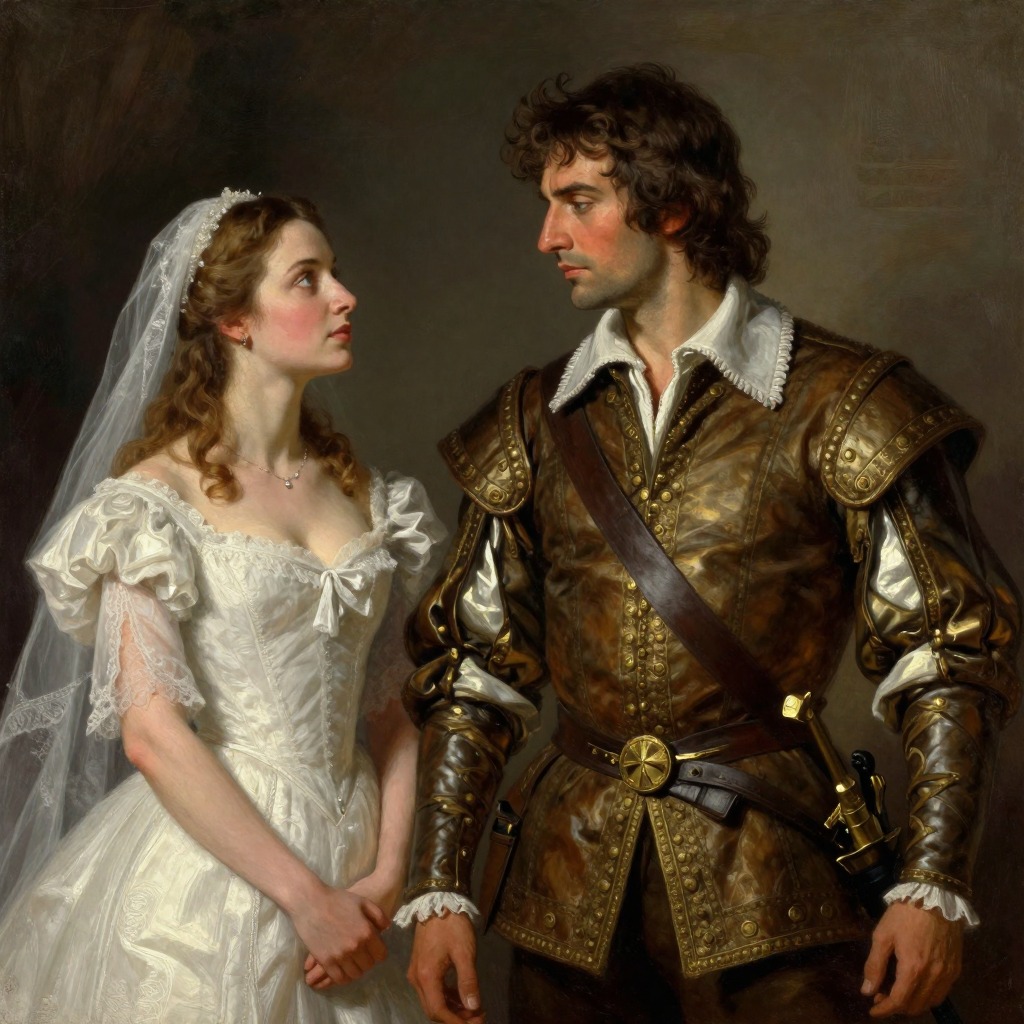
The Three MusketeersThe Meeting at the Red Dovecot is a pivotal nocturnal encounter in which Cardinal Richelieu, while traveling incognito, is intercepted by Athos, Porthos, and Aramis, leading to a tense confrontation that reveals the cardinal's secret plans and ultimately allows Athos to overhear a damning conversation between Richelieu and Milady, securing the evidence that will seal her fate.
Background and Approach
On the evening of December 3, 1627, Athos, Porthos, and Aramis were returning from a drinking place called the Red Dovecot, which Athos had discovered two days earlier on the route to Jarrie. Mounted on their battle steeds, enveloped in war cloaks, and with hands upon their pistol butts, they were quite on their guard, fearing an ambuscade. About a quarter of a league from the village of Boisnau, they fancied they heard the sound of horses approaching them. They immediately halted, closed in, and waited, occupying the middle of the road. As the moon broke from behind a cloud, they saw at a turning of the road two horsemen who, on perceiving them, stopped in their turn, appearing to deliberate whether they should continue their route or go back. The hesitation created suspicion, and Athos, advancing a few paces in front of the others, cried in a firm voice, "Who goes there?"
The Confrontation
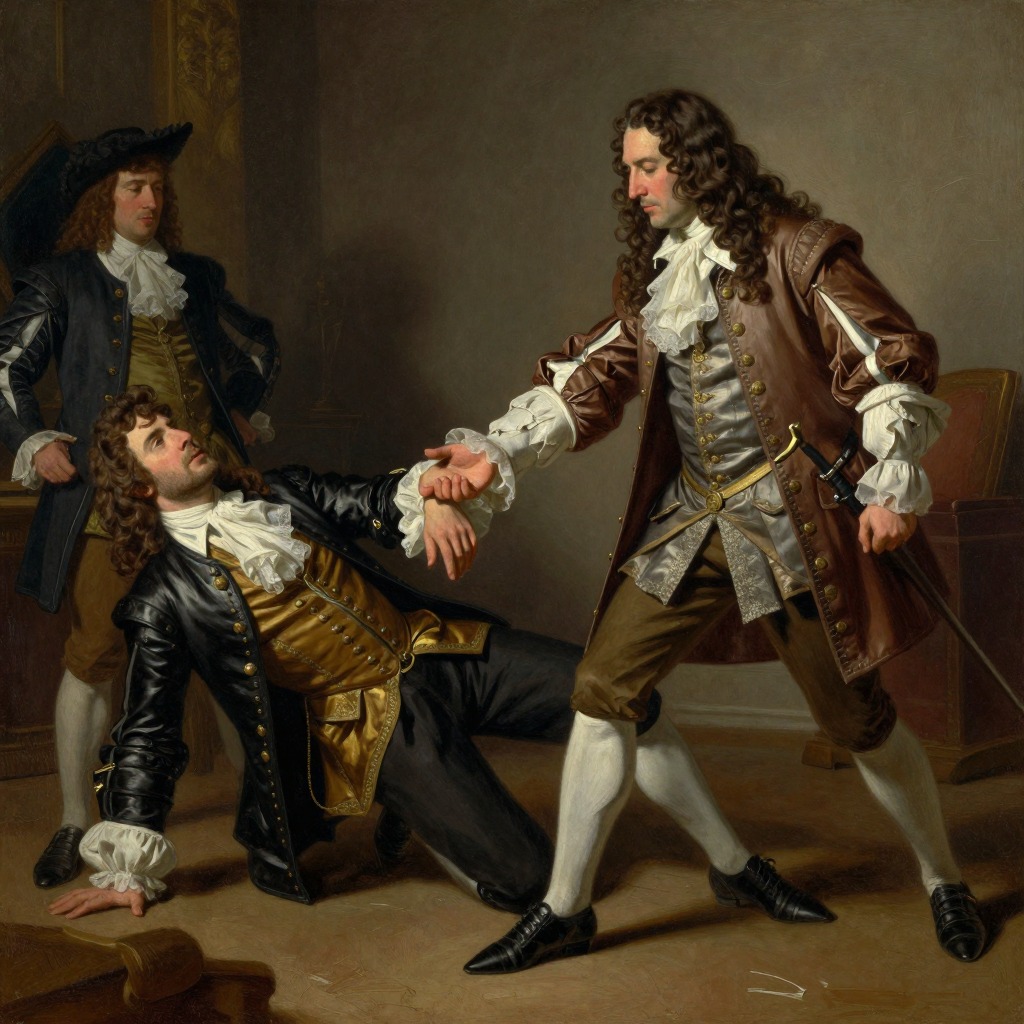
The two riders proved to be Cardinal Richelieu himself, accompanied by his attendant. When Athos demanded an answer, a clear voice accustomed to command replied, "Beware of what you are about, gentlemen!" Athos, suspecting a superior officer making his night rounds, identified himself and his companions as King's Musketeers of the company of Treville. The cardinal, letting his cloak fall and uncovering his face, revealed himself. He demanded Athos's name, and upon hearing it, declared, "I know you, gentlemen, I know you. I know you are not quite my friends, and I am sorry you are not so; but I know you are brave and loyal gentlemen, and that confidence may be placed in you." He then requested the honor of their company as an escort, saying he would have an escort to excite envy in his Majesty if they should meet him. The three Musketeers bowed to the necks of their horses. Athos, with characteristic calm, informed the cardinal that they had already had a quarrel at the Red Dovecot with four ill-looking faces, and that Aramis had received a slight sword wound in the arm. The cardinal, knitting his brow, inquired about the results of the quarrel. Athos explained that he had thrown one man out of a window, breaking his thigh; Porthos had broken another's shoulder with a bench; and Aramis, after being treacherously wounded, had run his sword through his attacker. The cardinal, impressed by their account, remarked, "The devil, gentlemen! Three men placed hors de combat in a cabaret squabble!" He then asked the cause of the quarrel, and Athos replied that the men were drunk and had tried to force the door of a lady who had arrived at the cabaret that evening. The cardinal, showing a certain degree of anxiety, asked if the lady was young and handsome, and whether she was alone. Athos replied that they had not seen her, but that she had a cavalier shut up with her who did not show himself, presumably a coward. The cardinal, quoting the Gospel, said, "'Judge not rashly,' says the Gospel."
The Cardinal's Secret Meeting
The cardinal, having heard the Musketeers' account, led them to the silent, solitary inn. Ten paces from the door, he made a sign for his esquire and the three Musketeers to halt. A saddled horse was fastened to the window shutter. The cardinal knocked three times in a peculiar manner. A man enveloped in a cloak came out immediately, exchanged some rapid words with the cardinal, mounted his horse, and set off in the direction of Surgeres, which was likewise the way to Paris. The cardinal then told the Musketeers, "You have told me the truth, my gentlemen, and it will not be my fault if our encounter this evening be not advantageous to you." He alighted, and the three Musketeers did likewise. The cardinal threw the bridle of his horse to his esquire, and the Musketeers fastened their horses to the shutters. The host, who stood at the door, believed the cardinal was only an officer coming to visit a lady. The cardinal asked for a chamber on the ground floor where the gentlemen could wait near a good fire, and the host opened the door of a large room with an excellent chimney. The cardinal told them to wait for him, as he would not be more than half an hour, and ascended the staircase without further inquiry.
Athos Overhears the Cardinal and Milady
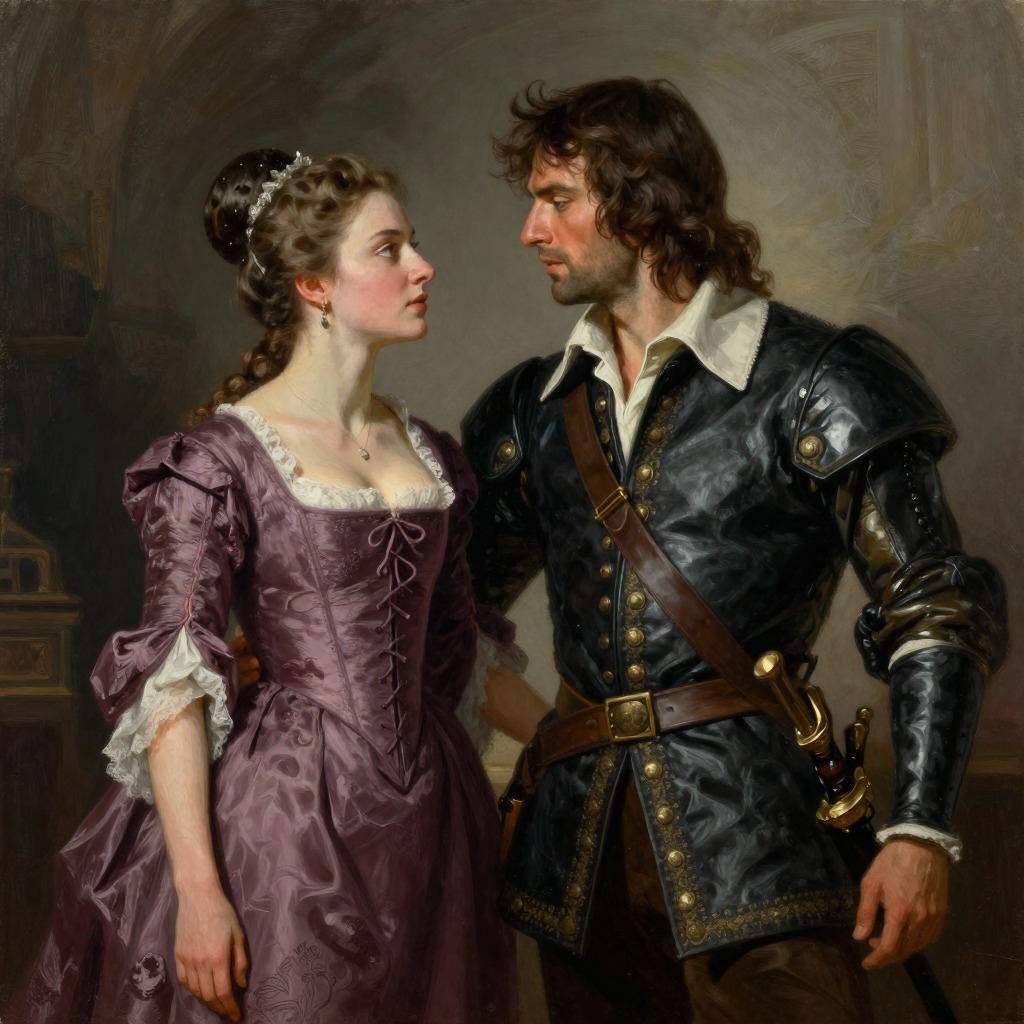
While Porthos and Aramis began to play dice, Athos walked about in a contemplative mood. He passed and repassed before the pipe of a stove, broken in halves, the other extremity passing into the chamber above. Every time he passed, he heard a murmur of words, which at length fixed his attention. He went close to it and distinguished some words that appeared to merit so great an interest that he made a sign to his friends to be silent, remaining himself bent with his ear directed to the opening of the lower orifice. He heard the cardinal address someone as "Milady," a name that made the Musketeer start. The cardinal then outlined a mission for Milady: she was to go to London and seek Buckingham, presenting herself frankly and loyally as a negotiator. The cardinal instructed her to tell Buckingham that he was acquainted with all the preparations the duke had made, but that they gave him no uneasiness, since at the first step he took, the cardinal would ruin the queen. He detailed the proofs he would present: the report of Bois-Robert and the Marquis de Beautru upon the interview at the residence of Madame the Constable; the details of Buckingham's coming into and going out of the palace on the night he introduced himself as an Italian fortune teller; the adventure at Amiens; the arrest of Montague; and the letter from Madame de Chevreuse found in Buckingham's lodging. If the duke persisted, the cardinal hinted at the possibility of an assassination, recalling the knife stab in the Rue de la Feronnerie that killed Henry IV. He spoke of finding a woman, handsome, young, and clever, who had cause of quarrel with the duke, and who would place the knife of a fanatic in his hand. Milady, revealing her own hatred, identified d'Artagnan as her enemy and demanded a proof of his connection with Buckingham. The cardinal, after a moment of silence, wrote a note, which Athos later recognized as the carte blanche that would authorize any action against d'Artagnan.
Consequences and Aftermath
Athos, having heard all that was necessary, took his two companions by the hand and led them to the other end of the room. He told them he must be gone, and despite their protests, he left the inn, took his horse, and carefully examined the priming of his pistols. He drew his sword and took the road to the camp, like a forlorn hope. The cardinal, after concluding his meeting, came down and found Porthos and Aramis playing dice. He asked about Athos, and Porthos replied that he had gone as a scout on account of some words of the host. The cardinal made an approving gesture and retraced his route with the same precautions he had used incoming. Athos, however, had not gone far. He turned his horse to the right, made a circuit, and came back within twenty paces of a high hedge to watch the passage of the little troop. Having recognized the laced hats of his companions and the golden fringe of the cardinal's cloak, he waited until the horsemen had turned the angle of the road, and then returned at a gallop to the inn. He gained the landing and entered Milady's chamber, where he confronted her, revealed his identity as the Comte de la Fere, and forced her to surrender the cardinal's signed paper. This paper, which read "It is by my order and for the good of the state that the bearer of this has done what he has done," became the crucial evidence that would later save d'Artagnan's life and seal Milady's fate.